Traditional methods for learning Spanish often feel repetitive and uninspiring, leaving you searching for ways to stay motivated and actually remember what you study. Many learners find themselves stuck memorizing vocabulary lists or struggling to improve their pronunciation, only to forget new words or feel anxious when speaking out loud. The search for effective, enjoyable techniques can feel endless, especially if you want real results in both communication and comprehension.
The good news is that turning to music and songs can change your language journey entirely. Research shows that using songs in the classroom helps you learn new vocabulary through context and repetition, making words easier to remember and boosting your motivation. Karaoke—with its self-paced, engaging format—has also been proven to upgrade your pronunciation and fluency while making practice sessions more enjoyable.
Get ready to discover practical strategies and proven tools that can make Spanish learning fun, memorable, and effective. Each idea ahead is backed by research and real learner success, so you will find new ways to master vocabulary, grammar, pronunciation, and communication skills with the help of music.
Table of Contents
- 1. Learn New Vocabulary with Spanish Song Lyrics
- 2. Enhance Pronunciation Using Karaoke Mode
- 3. Master Verb Conjugations Through Song Repetition
- 4. Test Your Knowledge with Interactive Music Quizzes
- 5. Boost Listening Skills by Analyzing Song Themes
- 6. Connect with Others in Music-Based Spanish Groups
- 7. Practice Real Conversations Inspired by Lyrics
Quick Summary
| Takeaway | Explanation |
|---|---|
| 1. Use Spanish songs to learn vocabulary | Listening to songs helps expand vocabulary through engaging contexts and repeated exposure to words. |
| 2. Practice pronunciation with karaoke | Karaoke transforms language learning into fun performances, improving your Spanish pronunciation and intonation. |
| 3. Utilize songs for verb conjugation | Songs help internalize verb forms through repetition and storytelling, making conjugation easier to remember. |
| 4. Engage in interactive music quizzes | Music quizzes assess language skills, offering immediate feedback and helping to identify areas for improvement. |
| 5. Analyze song themes for listening skills | Examining song themes fosters cultural understanding and enhances your overall listening comprehension in Spanish. |
1. Learn New Vocabulary with Spanish Song Lyrics
Songs offer a dynamic and engaging pathway to expanding your Spanish vocabulary beyond traditional textbook learning. By immersing yourself in musical narratives, you transform language acquisition from a tedious task into an enjoyable cultural experience.
Research demonstrates that music is a powerful educational tool. A systematic review of language intervention studies revealed that songs effectively teach vocabulary by providing contextual exposure and repeated word interactions, significantly enhancing learner motivation and retention.
Here are some strategic approaches to leveraging Spanish song lyrics for vocabulary growth:
- Listen actively: Choose songs with clear pronunciation and themes you find interesting
- Research lyrics: Find printed lyrics to follow along and identify unfamiliar words
- Create vocabulary cards: Write down new words and their meanings
- Practice pronunciation: Sing along to improve accent and word understanding
- Explore song genres: Different styles introduce unique vocabulary sets
Songs transform language learning from studying to experiencing.
When selecting music, consider genres like pop, rock, or traditional Latin American styles that offer rich, conversational language. Platforms like YouTube often provide subtitled music videos that can help you track lyrics and meanings.
Pro tip: Start with slower, more articulate songs and gradually progress to more complex musical styles to build your Spanish vocabulary confidently.
2. Enhance Pronunciation Using Karaoke Mode
Karaoke offers an exciting and interactive approach to mastering Spanish pronunciation. By transforming language learning into a musical performance, you can develop your speaking skills while having fun.
Research demonstrates the powerful impact of karaoke on language learning. One study exploring pronunciation improvement through karaoke found that EFL students significantly enhanced their pronunciation abilities and motivation through these engaging musical exercises.
Here are key strategies to maximize your Spanish pronunciation using karaoke:
- Choose familiar songs: Start with music you already know and enjoy
- Focus on vowel sounds: Spanish has clear, consistent vowel pronunciations
- Practice rhythm and intonation: Pay attention to musical cadence and stress patterns
- Record yourself: Compare your pronunciation with native singers
- Start slow: Begin with slower songs and gradually increase complexity
Karaoke transforms language learning from a classroom exercise to a personal performance.
Most digital language platforms now offer interactive karaoke modes that provide real-time feedback on pronunciation. These tools can help you identify and correct subtle linguistic nuances that traditional learning methods might miss.
Pro tip: Select Spanish songs from different regions to expose yourself to varied pronunciation styles and accents.
3. Master Verb Conjugations Through Song Repetition
Verb conjugations can be one of the most challenging aspects of learning Spanish, but music offers a surprisingly effective solution. By leveraging song repetition, you can transform these complex grammatical structures from intimidating rules into memorable melodic patterns.
Songs provide a natural context for learning verb conjugations by embedding linguistic patterns within engaging musical narratives. Repeated choruses and verses create multiple opportunities to hear and internalize different verb forms across various tenses and personal pronouns.
Here are strategic approaches to using songs for verb conjugation mastery:
- Focus on narrative songs: Choose lyrics that tell a story using multiple verb tenses
- Create conjugation tracking sheets: Note different verb forms as you listen
- Sing along actively: Practice pronouncing each conjugated verb form
- Compare different tenses: Identify present progressive, past, and future conjugations
- Use music genres with clear storytelling: Folk and ballad styles work particularly well
Music transforms verb conjugation from a technical exercise into a memorable experience.
Most Spanish pop and traditional songs naturally incorporate a wide range of verb conjugations. By selecting music that uses diverse grammatical structures, you can create an immersive learning environment that feels more like entertainment than study.
Pro tip: Start with slower, more conversational songs and gradually progress to more complex musical styles to build your verb conjugation confidence.
4. Test Your Knowledge with Interactive Music Quizzes
Interactive music quizzes transform Spanish language learning from a passive experience into an engaging challenge. By combining musical entertainment with targeted assessment, these quizzes help you identify and strengthen your language skills in a fun and dynamic way.
Research highlights the effectiveness of comprehensive language quizzes that cover grammar, vocabulary, and verb conjugations across different proficiency levels. These interactive exercises provide immediate feedback, supporting active recall and reinforcing learning through enjoyable formats.
Here are strategies to maximize your learning with music-based quizzes:
- Choose varied quiz formats: Mix multiple-choice, fill-in-the-blank, and listening comprehension
- Track your progress: Monitor improvement in different language skills
- Focus on weak areas: Use quiz results to guide your learning strategy
- Practice consistently: Complete quizzes regularly to maintain momentum
- Explore different musical genres: Expose yourself to diverse Spanish language contexts
Music quizzes turn language assessment into an exciting game of musical knowledge.
Most digital language platforms now offer specialized quizzes that adapt to your skill level. These tools not only test your knowledge but also help you discover new vocabulary and grammatical structures through musical contexts.
Pro tip: Start with easier quizzes and gradually increase difficulty to build confidence and maintain motivation.
5. Boost Listening Skills by Analyzing Song Themes
Music is more than just entertainment. It is a powerful language learning tool that can transform how you understand Spanish by revealing cultural nuances and contextual language use through song themes and narratives.
Research demonstrates that music listening supports language learning by reducing language anxiety and helping students develop more positive attitudes toward language study. By critically analyzing song themes, you create a deeper connection with the language beyond traditional learning methods.
Here are strategic approaches to enhancing your Spanish listening skills through musical analysis:
- Select diverse musical genres: Explore different styles of Spanish music
- Read lyrics before listening: Understand context and difficult vocabulary
- Note emotional language: Identify how feelings are expressed in Spanish
- Track storytelling techniques: Observe narrative structures in songs
- Compare themes across different artists: Recognize cultural variations
Song themes are windows into the cultural soul of a language.
Most Spanish songs tell complex stories that provide rich linguistic and cultural insights. By treating each song as a mini-narrative, you transform passive listening into an active learning experience that builds comprehensive language comprehension.
Pro tip: Start with slower, more narrative-driven songs and gradually progress to more complex musical styles to build your listening confidence.
6. Connect with Others in Music-Based Spanish Groups
Language learning transforms from a solitary experience into a vibrant social journey when you join music-based Spanish language groups. These collaborative environments offer more than just linguistic practice they create opportunities for meaningful cultural connections and shared musical experiences.
Research reveals that music-mediated group activities significantly enhance language learning by promoting social bonding, interpersonal skills, and emotional engagement. Participating in group musical settings helps learners develop communication competencies beyond traditional classroom interactions.
Here are strategic ways to leverage music-based Spanish language groups:
- Join online language exchange communities: Find groups focused on Spanish music
- Participate in virtual karaoke sessions: Practice pronunciation with others
- Attend local Spanish music meetups: Connect with native speakers and fellow learners
- Engage in collaborative playlist creation: Share and discuss Spanish music
- Take group music and language workshops: Learn together through structured activities
Shared musical experiences create powerful language learning connections.
Digital platforms and local community centers increasingly offer music-focused language learning groups that cater to different skill levels and musical preferences. These environments provide safe spaces to practice Spanish while enjoying cultural expression through music.
Pro tip: Start with online groups that have structured activities to build confidence before transitioning to more interactive, spontaneous musical exchanges.
7. Practice Real Conversations Inspired by Lyrics
Song lyrics are more than just musical poetry they are powerful conversation catalysts that can transform your Spanish language skills from textbook learning to authentic communication. By using song themes as conversation starters, you create dynamic opportunities for real world language practice.
Research demonstrates that song lyrics support communication skills by providing contextual linguistic frameworks that bridge memorized language and spontaneous dialogue. These musical narratives offer rich emotional and cultural backdrops for meaningful conversations.
Here are strategies to turn song lyrics into conversation practice:
- Select songs with relatable themes: Choose music with universal emotional experiences
- Prepare discussion questions: Draft conversation prompts based on song meanings
- Practice storytelling: Recreate narrative elements from song lyrics
- Role play song scenarios: Act out potential conversations suggested by lyrics
- Discuss cultural contexts: Explore social meanings behind musical narratives
Lyrics are bridges connecting language learning to real human experiences.
Most Spanish language platforms now offer interactive tools that help learners transform song content into meaningful dialogue practice. These resources provide structured approaches to converting musical narratives into conversational opportunities.
Pro tip: Start with slower, more narrative-driven songs and gradually progress to more complex musical styles to build your conversational confidence.
Below is a comprehensive table summarizing practical methods to enhance Spanish language learning through music as discussed in the article.
| Key Focus Area | Strategies | Benefits |
|---|---|---|
| Vocabulary Enrichment | Listen to songs, research lyrics, create vocabulary cards, practice pronunciation, explore genres | Engaging approach to learning words and phrases in context, enhancing retention and auditory exposure. |
| Improving Pronunciation | Use karaoke with familiar songs, practice vowel sounds, record oneself, study rhythm and intonation | Boosts accent and speaking skills through interactive and fun activities. |
| Mastering Verb Conjugations | Focus on narrative songs, make conjugation sheets, compare tenses, sing during practice | Facilitates understanding of complex grammatical structures through repetition and practical examples. |
| Testing Knowledge | Participate in interactive quizzes, track progress, focus on weaker areas, maintain a regular schedule | Gamifies learning while providing assessments and feedback on vocabulary, grammar, and listening. |
| Enhancing Listening Skills | Analyze song themes, read lyrics in advance, focus on emotions and narrative styles | Improves comprehension and cultural awareness through in-depth engagement with song content. |
| Connecting Through Music Groups | Join language exchange communities, participate in karaoke sessions, take group workshops | Encourages collaborative learning and builds communication skills within a social environment. |
| Promoting Real Conversations | Use song themes for dialogs, create discussion questions, role-play scenarios | Enables authentic communication by fostering conversational proficiency and exploring cultural contexts. |
Transform Your Spanish Learning Through Music and Social Connection
Struggling to master Spanish vocabulary, pronunciation, and real conversation with traditional methods? This article highlights common challenges like memorizing verb conjugations and practicing authentic dialogue inspired by song lyrics. If you want to turn those hurdles into engaging, music-driven growth, Canary offers an innovative platform designed just for you. The power of singing along with lyrics, interactive karaoke for pronunciation, and quizzes to test your skills all come together in one seamless experience.
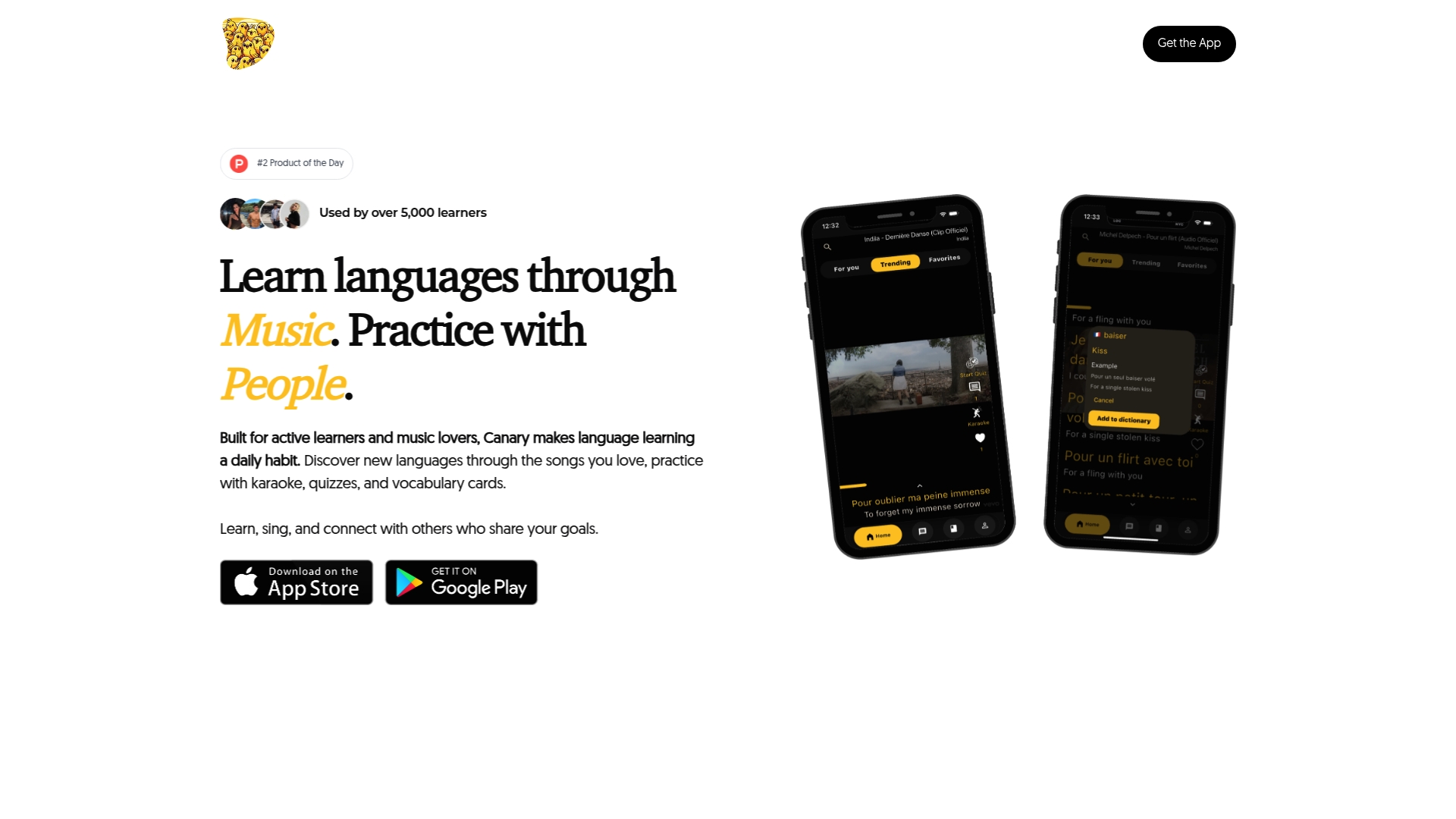
Start infusing your daily language learning with joy and cultural immersion. Join Canary and explore how you can practice naturally with music and connect globally with fellow learners. Don’t wait to make language practice entertaining and effective. Discover interactive features that help you build confidence, boost your vocabulary retention, and deepen your listening skills through vibrant musical stories. Check out Canary’s platform now and turn every Spanish song into a powerful learning moment.
Frequently Asked Questions
How can I use Spanish song lyrics to improve my vocabulary?
Using Spanish song lyrics can significantly enhance your vocabulary by exposing you to new words in context. Listen actively to songs, research and follow along with the lyrics, and create vocabulary cards for unfamiliar words to reinforce your learning.
What are effective ways to practice Spanish pronunciation with karaoke?
Karaoke is a fun way to practice Spanish pronunciation by allowing you to sing along with familiar songs. Focus on vowel sounds and rhythm while recording yourself to compare your pronunciation with native speakers.
How do I master verb conjugations through song repetition?
You can master Spanish verb conjugations by focusing on songs that tell a story and using repeated verses to internalize different forms. As you listen to the songs, create conjugation tracking sheets to note the various tenses and practice singing along to reinforce your understanding.
How can I assess my Spanish skills with music-based quizzes?
Music-based quizzes offer an engaging way to assess your Spanish language skills. Take a variety of quiz formats, such as multiple-choice and fill-in-the-blank, to track progress and focus on areas needing improvement, completing these quizzes regularly to enhance retention and skill.
What strategies can I use to analyze song themes for better listening skills?
To analyze song themes effectively, listen to diverse musical genres and read the lyrics beforehand to understand the context. Highlight emotional language and storytelling techniques to deepen your connection with the material and improve comprehension.
How can I connect with others in music-based Spanish groups?
Join online language exchange communities or attend local Spanish music meetups to connect with others who share a passion for music. Participate in karaoke sessions and collaborative playlist creation to enhance your social interactions while learning Spanish.