Learning Spanish or Portuguese can feel overwhelming when traditional study methods leave you tongue-tied and forgetting basic vocabulary. If you want a smarter approach that makes pronunciation practice easier and helps words stick, music might be the key you are missing. Research shows singing and engaging with songs can improve language skills, boost vocabulary retention, and make speaking feel less intimidating. Get ready to discover actionable ways music transforms language learning—these strategies will help you pronounce words correctly, remember important vocabulary, and confidently use Spanish or Portuguese in real conversations.
Table of Contents
- 1. Singing Along for Pronunciation Practice
- 2. Using Song Lyrics to Expand Vocabulary
- 3. Karaoke Sessions to Boost Speaking Confidence
- 4. Music Quizzes for Listening and Understanding
- 5. Vocabulary Cards from Popular Songs
- 6. Connecting with Native Speakers through Music
Quick Summary
| Takeaway | Explanation |
|---|---|
| 1. Singing enhances pronunciation skills | Singing helps your brain learn new sounds, improving pronunciation retention beyond simple repetition. |
| 2. Song lyrics boost vocabulary retention | Learning words through music embeds them in your long-term memory, making recall easier and more meaningful. |
| 3. Karaoke builds speaking confidence | Karaoke transforms language practice into an enjoyable activity, reducing anxiety and improving pronunciation through performance. |
| 4. Music quizzes improve listening comprehension | Quizzing yourself on songs actively engages your brain, enhancing vocabulary retention and understanding of the language. |
| 5. Sharing music fosters connections with native speakers | Discussing music with native speakers creates genuine conversations, making language practice feel more natural and enjoyable. |
1. Singing Along for Pronunciation Practice
Singing activates different parts of your brain than speaking does, which means your mouth and tongue learn new sound patterns more effectively. When you sing, you naturally slow down vowels and stretch consonants, giving your pronunciation muscles time to adjust to Spanish and Portuguese sounds.
Research shows that singing improves pronunciation more than simply reciting lyrics alone. Students who sang songs with familiar melodies developed stronger oral reading skills and clearer accent patterns compared to those who just repeated words. Your brain locks in these new sounds through melody and rhythm, not just repetition.
Here’s what makes singing different from other learning methods:
- Melody creates memory anchors that help you recall pronunciation patterns automatically
- Slower song tempos give your mouth time to shape unfamiliar vowel sounds
- Rhythm forces proper syllable stress and intonation patterns
- Emotional connection to the song increases retention by up to 67 percent
- Group singing sessions add confidence and natural conversation flow
When you sing a song, your pronunciation improvements stick around far longer than when you simply repeat words in isolation.
Start with songs that match your current level. Choose tracks where you can already understand most lyrics, then focus on mimicking the singer’s exact pronunciation. Pay attention to how native speakers shape their mouth around rolled Rs in Spanish or the nasal sounds in Brazilian Portuguese.
The practical approach works like this: pick one verse of a song you love, listen to it five times without singing, then sing along while recording yourself. Listen back and compare your pronunciation to the original artist. Adjust specific sounds on your next attempt.
Active singing in group settings further strengthens your phonological processing and spoken language production, meaning your accent improves faster when you sing with others who are also learning. This community aspect transforms pronunciation practice from a solo exercise into an engaging, social experience.
Pro tip: Record yourself singing the same song weekly and listen to your progress over a month—you’ll notice your accent shifting closer to native pronunciation, which builds momentum and motivation to keep singing.
2. Using Song Lyrics to Expand Vocabulary
Song lyrics stick in your memory far better than vocabulary lists ever will. When words are paired with melody and emotion, your brain treats them as important information worth storing long-term. This is why you remember song lyrics from years ago but forget words from yesterday’s textbook.
Songs effectively teach vocabulary because they combine repetition with emotional engagement. Students who learned vocabulary through songs remembered studied phrases significantly better than those using traditional instruction methods. The combination of rhythm, melody, and meaning creates multiple memory pathways in your brain.
Here’s why songs outperform standard vocabulary drills:
- Repetition happens naturally through the song structure without feeling forced
- Context clues embedded in lyrics help you understand word meanings instantly
- Emotional connection makes words feel personally relevant and memorable
- Native speaker pronunciation and accent patterns are built into the learning experience
- Musical patterns act as memory hooks that trigger recall automatically
Vocabulary learned through song lyrics stays in your long-term memory because your brain stores it with emotional and auditory information, not just text.
Start by choosing Spanish or Portuguese songs where you already understand the general theme. Read the lyrics first to identify 5 to 10 new words, then listen to the song multiple times. Notice how native speakers pronounce each word and use it within the musical context.
Create your own vocabulary system by writing down new words from songs you love, then group them by category or emotional context. When you encounter these words again in conversations with native speakers, they feel familiar because you’ve heard them sung repeatedly.
Research demonstrates that students taught with song lyrics achieved higher vocabulary scores compared to those using non-musical methods. This evidence shows that songs aren’t just enjoyable—they’re measurably more effective for building lasting vocabulary knowledge that transfers to real conversations.
Pro tip: Focus on one song per week, learning its lyrics deeply before moving to the next one, rather than jumping between many songs—depth of engagement with single songs creates stronger vocabulary retention than surface-level exposure to multiple tracks.
3. Karaoke Sessions to Boost Speaking Confidence
Karaoke removes the pressure of speaking a new language by letting you perform rather than converse. When you’re singing along to a backing track, your brain focuses on matching the melody and rhythm instead of worrying about making mistakes. This psychological shift transforms speaking practice from stressful to enjoyable.
The combination of audio, visuals, and lyrics in karaoke creates a multisensory learning experience. Your eyes follow the text, your ears hear native pronunciation, and your mouth shapes the sounds all at once. This simultaneous engagement burns new speech patterns into your muscle memory far faster than traditional conversation practice.
Karaoke sessions significantly improve pronunciation while building your confidence to speak without anxiety. Students who practiced English through karaoke reported feeling more comfortable speaking aloud and more motivated to continue practicing. The enjoyable setting removes the self-consciousness that often blocks language learners from speaking out loud.
Here’s what karaoke does for your speaking skills:
- Removes judgment and perfectionism from pronunciation practice
- Provides immediate audio feedback by hearing yourself versus the original singer
- Builds muscle memory for mouth and tongue positioning
- Increases motivation through the fun, performance-based approach
- Creates accountability through recording yourself and reviewing progress
When you sing in karaoke, you practice speaking without the fear of judgment, which is the single biggest barrier preventing learners from actually speaking out loud.
Start by recording yourself singing one Spanish or Portuguese song you love. Listen back and compare your pronunciation to the original artist. Notice which syllables you rush, which vowels you miss, and where your accent differs from the native speaker.
Speech recognition technology in karaoke apps now provides real-time pronunciation feedback, showing you exactly which words need adjustment. This targeted feedback helps you make specific improvements rather than guessing what sounds wrong. Students using these tools reported increased motivation and measurably better pronunciation results.
Pro tip: Record the same karaoke song weekly for four weeks and compare your first recording to your final one—the dramatic improvement in your confidence and pronunciation will motivate you to tackle harder songs and eventually real conversations with native speakers.
4. Music Quizzes for Listening and Understanding
Music quizzes transform passive listening into active comprehension practice. Instead of just enjoying a song, you’re forced to pay attention to specific details like vocabulary, grammar patterns, and meaning. This focus sharpens your ear for the language in ways casual listening never can.
When you quiz yourself on song content, your brain treats the information as important enough to store. The combination of entertainment and assessment creates dual engagement that strengthens both vocabulary retention and listening comprehension. You’re learning without feeling like you’re studying.
Music listening reduces language anxiety while simultaneously enhancing your overall listening skills. The familiar, enjoyable context of songs makes comprehension feel less intimidating than formal listening exercises. This psychological comfort means you retain more information and feel more confident understanding native speakers.
Here’s what music quizzes accomplish for your ear:
- Train your brain to catch specific words and phrases within natural speech
- Build vocabulary through context clues in song narratives
- Improve your ability to understand different accents and speaking styles
- Create accountability that keeps you engaged with the material
- Provide immediate feedback on what you understood versus missed
Music quizzes work because they combine entertainment, comprehension practice, and assessment all at once—turning passive listening into active learning.
Start by listening to a Spanish or Portuguese song once without looking at lyrics. Then listen again while reading the lyrics and answering basic comprehension questions. What is the song about? Who is singing? What emotions are expressed? These simple questions force your brain to process meaning, not just sounds.
Interactive quizzes enhance vocabulary retention by combining entertainment with focused listening practice. Many language platforms now include music quiz features that let you test yourself on specific songs. These quizzes identify your weak areas so you can focus on vocabulary or grammar patterns you struggle with.
Pro tip: Take the same music quiz twice with one week in between—the first time, don’t worry about your score, just focus on listening carefully; the second time, you’ll notice dramatic improvement because your brain has processed the song content and language patterns during that week.
5. Vocabulary Cards from Popular Songs
Vocabulary cards paired with song lyrics create a powerful memory system that combines visual and auditory learning. Your brain processes the word on the card while simultaneously recalling the melody and context from the song, creating multiple retrieval pathways for remembering new vocabulary.
Traditional flashcards work well, but flashcards sourced from lyrics you love work even better. When you see the word “amor” on a card, your brain automatically pulls up the melody and emotional context of the song where you heard it. This dual coding makes recall faster and retention longer-lasting.
Vocabulary cards enhance word retention by leveraging both visual and auditory memory systems simultaneously. Research shows that learners who use cards derived from songs they enjoy acquire vocabulary faster and remember it longer than those using generic flashcards. The emotional connection to the music strengthens neural pathways associated with the word.
Here’s why song-based vocabulary cards outperform standard methods:
- Words are learned in authentic, meaningful context rather than isolation
- Melody provides an automatic memory anchor for faster recall
- Emotional engagement increases brain attention and retention
- Spaced repetition becomes enjoyable when cards remind you of songs you love
- Visual card plus auditory memory equals stronger long-term storage
Vocabulary cards created from song lyrics work because they combine what your eyes see with what your ears remember, creating storage in multiple areas of your brain.
Create your own vocabulary cards by extracting 10 to 15 new words from one Spanish or Portuguese song you’re learning. Write the word in the target language on the front and your native language translation plus the song title on the back. Review these cards for two minutes daily, but also listen to the song whenever you get the chance.
Song-based vocabulary instruction delivers measurable results when learners combine card review with active listening to the original tracks. The repetition from both the cards and the music reinforces word recognition and memory encoding. Students using this combined approach consistently outperform those using cards alone.
Pro tip: Create vocabulary cards from a new song every week, but spend the first three weeks reviewing cards from previous songs—this overlapping schedule ensures you’re constantly reinforcing older vocabulary while learning new words, preventing forgetting and building real fluency.
6. Connecting with Native Speakers through Music
Music creates a universal conversation starter that bridges the gap between language learners and native speakers. When you share your passion for a Spanish or Portuguese song with a native speaker, you’re not asking for a lesson—you’re sharing something you both love. This shifts the dynamic from intimidating to genuine.
Native speakers are naturally drawn to discussing music. They love talking about their favorite artists, explaining what songs mean to them, and sharing why certain tracks matter culturally. This gives you authentic conversation practice without the pressure of formal language exchange.
Shared musical interests lower the psychological barriers that prevent language learners from speaking with native speakers. Music reduces language anxiety while simultaneously increasing motivation to communicate. When you bond over music, speaking feels like connecting with a friend rather than performing for a teacher.
Here’s how music opens doors to native speaker connections:
- Common musical interests provide natural conversation topics that flow organically
- Discussing song lyrics lets you practice vocabulary in context native speakers actually use
- Cultural knowledge about artists deepens your intercultural understanding
- Shared passion creates genuine relationships rather than transactional exchanges
- Native speakers feel respected when you engage authentically with their culture
When you connect with native speakers through music, you stop being a learner asking for help and become a fan sharing passion—that psychological shift changes everything.
Start by identifying Spanish or Portuguese artists whose music resonates with you personally. Follow them on social media, join fan communities, and participate in conversations about their work. When you interact with native speakers in these spaces, you’re already speaking the same language metaphorically, which makes the actual language practice feel natural.
Reach out to native speakers with specific questions about song lyrics or cultural context. Instead of saying “teach me Spanish,” say “I love this song by [artist], but I’m confused about this line—what does it really mean?” This approach invites genuine conversation rather than a formal lesson.
Dica profissional: Join music-focused language exchange communities online where native speakers gather to discuss their favorite songs—these spaces attract people who actually enjoy talking about music, making them perfect for natural conversations that improve your language skills while building real friendships.
Below is a comprehensive summary table highlighting strategies for utilizing music to enhance language learning effectiveness as discussed in the article.
| Strategy | Implementation | Benefits |
|---|---|---|
| Singing for Pronunciation Practice | Sing along with slow-tempo songs that match your current comprehension level, recording yourself for comparison and improvement. | Improves pronunciation, accent accuracy, and rhythm comprehension. |
| Using Song Lyrics for Vocabulary Expansion | Learn new vocabulary by listening to songs, identifying unfamiliar words, and associating them with their musical and contextual meaning. | Boosts vocabulary retention and contextual understanding organically. |
| Karaoke for Speaking Confidence | Perform karaoke with backing tracks, paying attention to pronunciation and rhythm, while recording sessions for gradual improvement. | Builds confidence in speaking and accelerates pronunciation skills. |
| Music Quizzes for Active Listening | Engage in quizzes based on song lyrics to focus on vocabulary and comprehension details while listening. | Enhances listening abilities, attention to context, and comprehension skills. |
| Vocabulary Cards from Popular Songs | Create flashcards using lyrics from chosen songs, combining visual, auditory, and contextual memory aids for word retention. | Facilitates stronger vocabulary recall through multi-sensory learning. |
| Connecting with Native Speakers through Music | Share song preferences and engage with native speakers about lyrics and cultural context to foster meaningful interactions. | Natural engagement improves conversational skills and intercultural understanding. |
Unlock Your Language Potential with Music and Community
Struggling to improve your pronunciation, vocabulary, or speaking confidence in Spanish or Portuguese can feel frustrating and isolating. This article highlights how integrating music—through singing, karaoke, quizzes, and vocabulary cards—helps break down these barriers by making language learning engaging and memorable. If you want to transform traditional study routines into exciting, social experiences that build real-world skills, there is a solution designed just for you.
Canary is an innovative platform that combines song-based learning with interactive features to help you practice pronunciation, expand vocabulary, and sharpen your listening skills naturally. Whether you want to record yourself singing for immediate feedback or join a community of learners sharing their favorite tracks, Canary makes language practice enjoyable and culturally immersive every day.
Discover how music can make your language learning stick by visiting Canary’s main site.
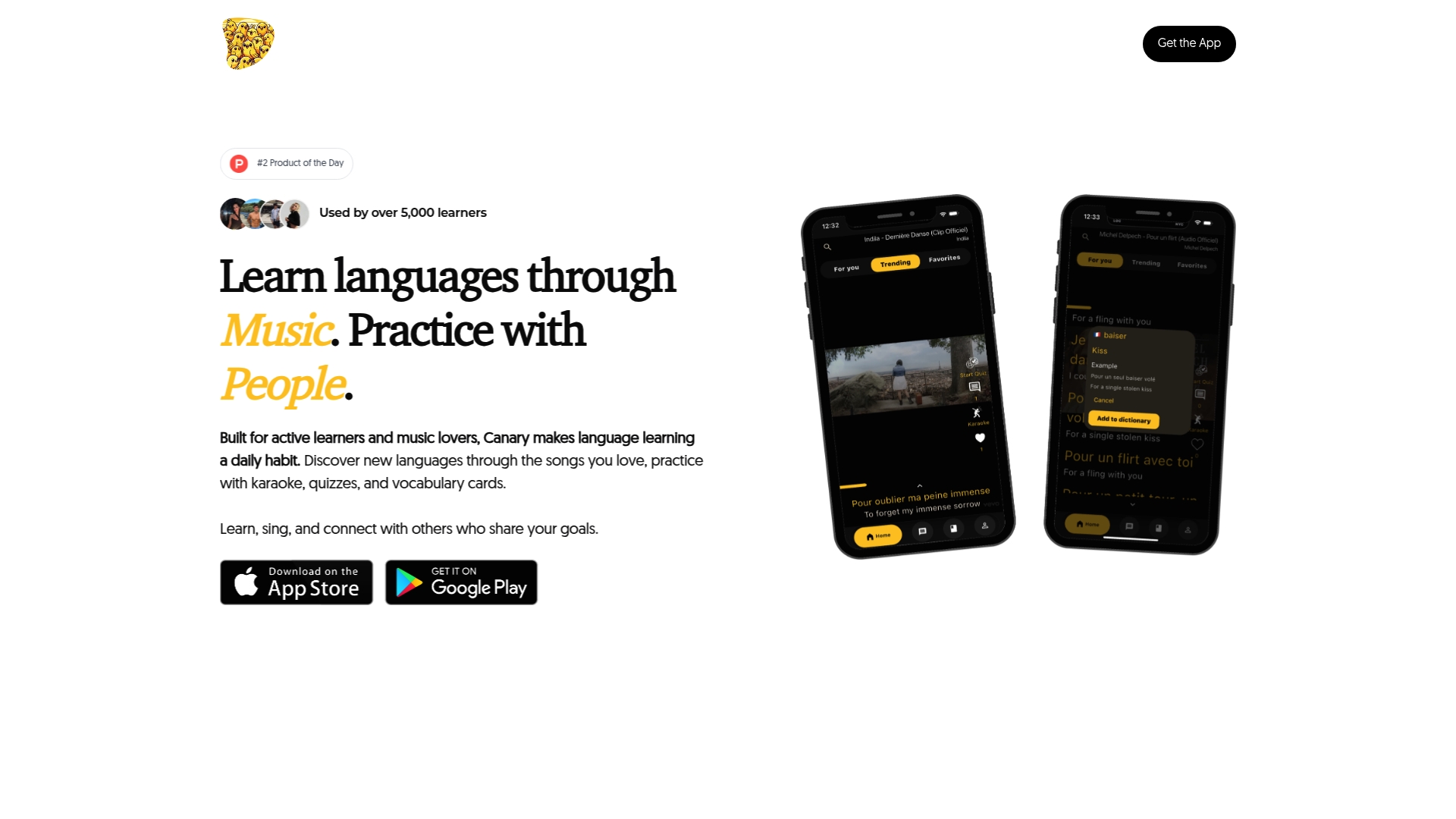
Take your passion for music and language to the next level. Join Canary now to start singing, quizzing, and connecting with international learners who share your goals. Don’t wait to build confidence and achieve the fluency you want—explore how our unique approach turns hard work into fun progress at https://singwithcanary.com.
Frequently Asked Questions
How can I use singing to improve my pronunciation in Spanish or Portuguese?
Singing helps improve pronunciation by activating different parts of your brain that aid in learning sound patterns. Start by choosing songs you enjoy, listen to them multiple times, and then sing along while recording yourself to compare your pronunciation with the original artist.
What are effective ways to expand my vocabulary using song lyrics?
Using song lyrics is a fun way to expand your vocabulary because the melody helps your brain store words more effectively. Choose songs where you understand the general theme, pick out new words, and listen repeatedly to reinforce their meanings within the context of the song.
How does karaoke help boost my confidence in speaking a new language?
Karaoke provides a fun, low-pressure environment for practicing speaking a new language by focusing on performance rather than conversation. Start by singing your favorite Spanish or Portuguese songs, record your sessions, and listen back to track your improvements over time.
What is the benefit of incorporating music quizzes into my language learning routine?
Music quizzes turn passive listening into active learning, helping you enhance both vocabulary retention and listening skills. Begin by playing quizzes after listening to a song to assess your comprehension, then revisit the material to strengthen your understanding further.
How can I create effective vocabulary cards using popular song lyrics?
Vocabulary cards made from song lyrics enhance memory retention by combining auditory and visual learning. Extract words from songs you love, write the foreign word on one side and its translation on the back, then review these cards daily to reinforce your vocabulary regularly.
How can I connect with native speakers through music to improve my language skills?
Music serves as a universal conversation starter that can help you connect with native speakers in an enjoyable way. Identify artists you admire, engage in discussions about their music on social media or forums, and ask specific questions about lyrics to foster authentic conversations.