TL;DR:
- Focusing on intelligibility rather than accent perfection helps learners communicate more effectively in a new language.
- Techniques like shadowing, slowing speech, practicing minimal pairs, and engaging with real conversations significantly improve pronunciation skills over time.
Getting your point across matters more than sounding like a native speaker. Yet most language learners spend months drilling vocabulary and grammar while overlooking the one thing that determines whether people actually understand them: pronunciation. These tips for improving pronunciation are built around a simple truth — intelligibility beats accent perfection every time. Whether you’re a beginner working through your first foreign sounds or an intermediate learner polishing your flow, the strategies ahead are grounded in research and real-world results.
Table of Contents
- Key takeaways
- 1. Build the right mindset and framework first
- 2. Use the shadowing technique to match native rhythm
- 3. Practice minimal pairs to target problem sounds
- 4. Slow down your speaking rate deliberately
- 5. Exaggerate articulation to build lasting muscle memory
- 6. Use technology and AI tools for real-time feedback
- 7. Master rhythm, stress, and intonation patterns
- 8. Practice with language partners and real conversations
- 9. Use music and singing to lock in pronunciation
- 10. Evaluate which methods suit your style and layer them over time
- My honest take on pronunciation progress
- Practice pronunciation the fun way with Singwithcanary
- FAQ
Key takeaways
| Point | Details |
|---|---|
| Intelligibility is the real goal | Focus on being understood clearly, not on eliminating your accent entirely. |
| Shadowing accelerates progress | Imitating native speakers in real time builds rhythm, intonation, and muscle memory fast. |
| Short daily sessions beat long occasional ones | Focused 15-20 minute sessions build stronger neural pathways than sporadic practice. |
| Suprasegmentals shape natural speech | Rhythm, stress, and intonation patterns matter as much as individual sounds. |
| Music and social practice sustain motivation | Singing and speaking with real people keep learning enjoyable and consistent. |
1. Build the right mindset and framework first
Before you try a single pronunciation drill, get your expectations straight. The most common mistake learners make is chasing a “native accent” as if that’s the finish line. It isn’t. Intelligibility, not nativeness, is the actual goal of pronunciation training. Listeners can follow a non-native accent perfectly well when rhythm, stress, and articulation are clear. In fact, pushing too hard for accent erasure can make speech sound forced and harder to follow.
The building blocks of good pronunciation are phonemes (individual sounds), stress (which syllable gets emphasis), and rhythm (the overall beat of a sentence). Think of them as three separate instruments in one band. Miss one, and the whole song sounds off.
Here are the core practices to put in place from day one:
- Record yourself speaking and listen back critically. Visual and auditory self-feedback helps you catch errors your ear filters out in real time.
- Practice in front of a mirror to watch your mouth shape, lip position, and jaw movement.
- Set a daily schedule of 15 to 20 focused minutes rather than hour-long weekend sessions.
- Approach progress with patience. Pronunciation improvement is gradual and cumulative, not sudden.
Pro Tip: Don’t wait until you sound “good enough” to speak with real people. Early feedback from listeners accelerates your improvement far more than solo practice alone.
2. Use the shadowing technique to match native rhythm
Shadowing is one of the most powerful pronunciation improvement techniques available, and it costs nothing. The method is simple: listen to a native speaker and repeat what they say almost simultaneously, matching their pace, pitch, and rhythm as closely as possible. You’re not just copying words. You’re absorbing the music of the language.
A 2025 study on shadowing found that mean pronunciation scores jumped from 37.65 to 70.03 after just six structured sessions. That’s not a minor bump. That’s a transformation.
Here’s how to build a practical shadowing routine:
- Pick a short audio clip of 30 to 60 seconds from a podcast, audiobook, or YouTube video with a clear speaker.
- Listen to the full clip once without speaking.
- Play it again and speak along, overlapping with the speaker in real time.
- Record your attempt, then compare it to the original.
- Repeat the same clip three to five times before moving on to new material.
Pro Tip: Choose content that matches your interests. Shadowing a cooking show works just as well as shadowing a news anchor, and you’ll stick with it longer.
3. Practice minimal pairs to target problem sounds
Minimal pairs are word sets that differ by only one sound, like “ship” and “sheep,” or “bet” and “bat.” They’re one of the sharpest tools for phonemic awareness training because they force your ear and mouth to recognize and produce the exact difference between two similar sounds.
Most learners have three to five sounds that consistently trip them up based on their native language. A Spanish speaker might confuse “b” and “v.” A Japanese speaker might struggle with “r” versus “l.” Identifying your personal trouble sounds and drilling them in context, not in isolation, is far more effective than working through every phoneme in the language.
Use any quality pronunciation dictionary that includes audio examples alongside phonetic transcriptions. Hearing the correct sound while reading the symbol builds the connection between what you see, what you hear, and what your mouth produces.
4. Slow down your speaking rate deliberately
Speed is the enemy of clarity. When you speak too fast, sounds merge together in a process linguists call coarticulation. The words blur into one another, and listeners have to work harder to decode what you said. Slowing your pace to 130 to 150 words per minute gives your articulators the time they need to hit every sound accurately.
Here’s the counterintuitive part: slowing down actually sounds more confident and natural to listeners, not hesitant. Speakers who rush through sentences signal nervousness. Speakers who pace themselves signal control.
Try these exercises to build comfortable slow speech:
- Read a paragraph aloud and time yourself. Aim for 130 to 150 words per minute consistently.
- Add a deliberate pause after every comma and period. This creates natural breathing room.
- Record and compare. Most learners are shocked at how much faster they speak than they think.
- Practice counting breaths during speech. Exhale steadily while speaking to prevent the pace from creeping up.
Pro Tip: If slowing down feels unnatural at first, practice with a metronome app. Set it to a comfortable beat and time your syllables to it. Your pace will stabilize within a week.
5. Exaggerate articulation to build lasting muscle memory
Precise articulation means your lips, tongue, jaw, and teeth hit their marks cleanly on every sound. Most learners mumble through sounds that feel difficult, hoping context will carry the meaning. It usually doesn’t.

Over-articulating final consonants, even beyond what sounds natural during practice, is one of the most effective pronunciation improvement tips for clarity. When you stop dropping the “t” in “first” or the “d” in “second,” your speech immediately becomes crisper. The exaggeration during practice gets dialed back naturally once the muscle memory sets in, landing at a clear but natural-sounding endpoint.
Open your mouth fully when practicing vowels. Many learners keep their jaw too tight, which muffles sounds and reduces carrying power. Warm-up exercises like saying “ma, me, mi, mo, mu” while exaggerating the mouth shape train the muscles to move with intention.
6. Use technology and AI tools for real-time feedback
Modern tools put a pronunciation coach in your pocket. Google Translate’s pronunciation practice feature, launched in 2026 for Android, listens to your speech and gives immediate feedback on accuracy for English, Spanish, and Hindi learners. That kind of instant response loop would have cost money or required a tutor a decade ago.
Beyond single apps, here’s how to build a tech-supported practice stack:
- Use pronunciation dictionaries with audio playback (Forvo is useful for hearing real speakers across dozens of languages).
- Try speech recognition tools as a proxy for clarity. If your phone’s voice-to-text can transcribe you accurately, real humans likely can too.
- Explore innovative language teaching tools that combine phonetic feedback with interactive exercises.
- Record weekly “pronunciation selfies.” A 60-second clip of you speaking naturally, kept over time, is one of the clearest ways to see genuine progress.
The best approach combines tech feedback with human interaction. Apps catch errors consistently. Real conversations teach you which errors actually matter.
7. Master rhythm, stress, and intonation patterns
Individual sounds are just one piece of the puzzle. Suprasegmental features like rhythm, stress, and intonation carry just as much meaning. Get these wrong, and even perfectly pronounced sounds can confuse listeners.
Word stress tells listeners which syllable carries the meaning. Sentence stress tells them which words matter most. Intonation signals whether you’re asking a question, making a statement, or expressing surprise. Mastering rhythm, stress, and intonation is what separates a speaker who sounds foreign from one who sounds fluent, regardless of accent.
Key practices for building suprasegmental awareness:
- Shadow podcasts and songs specifically to absorb the pitch and rhythm of real speech, not just the words.
- Practice the schwa sound, the unstressed “uh” in words like “banana” or “about.” It appears in nearly every sentence in English and is the single most common vowel sound.
- Use strategic pausing and pitch variation to guide your listener. A two-second pause after a key point gives them time to process before you move on.
- Clap or tap to the beat of natural speech when you shadow, reinforcing the rhythm physically.
8. Practice with language partners and real conversations
Reading tips is easy. Speaking with another person is where the real progress happens. Language partners give you something no app can: unpredictable, real-time responses that force your brain and mouth to adapt on the spot.
The feedback loop in live conversation is irreplaceable. A partner tells you when they didn’t understand you, and that signal is infinitely more valuable than a green checkmark from an app. If you can find a native speaker or advanced learner, great. If not, practicing with someone at your own level still builds confidence and fluency faster than solo work.
Look for language exchange communities, tutoring platforms, or local conversation meetups. Commit to at least two or three live practice sessions per week alongside your solo drills.
Pro Tip: Ask your language partner to signal whenever they didn’t catch a word, rather than guessing from context. That honest signal identifies exactly which sounds need the most work.
9. Use music and singing to lock in pronunciation
Music improves pronunciation through a combination of melody, rhythm, and repetition that bypasses the conscious effort of drill-based learning. When you sing a line, you’re training muscle memory for the sounds, the stress pattern of the phrase, and the emotional tone, all at once.
Singing slows language down naturally, which lets your mouth hit sounds more precisely than in fast speech. Songs also expose you to reduced forms, contractions, and connected speech patterns that textbooks rarely teach.
Here’s how to build a music-based pronunciation practice routine:
- Pick songs in your target language that you genuinely enjoy. Engagement is everything.
- Read the lyrics before listening to understand the words.
- Listen through once for overall rhythm and melody.
- Sing along slowly, pausing to match the singer’s mouth position on difficult sounds.
- Use karaoke-style tools to track which words you’re hitting accurately.
10. Evaluate which methods suit your style and layer them over time
Not every technique works equally well for every learner. Here’s a quick comparison to help you decide where to start and what to add as you progress:
| Technique | Best for | Effort level | Feedback quality |
|---|---|---|---|
| Shadowing | All levels | Medium | Indirect (self-assessed) |
| Minimal pair drills | Beginners and intermediates | Low | Indirect |
| Slowing speech rate | All levels | Low | Direct (visible immediately) |
| AI and app tools | Tech-comfortable learners | Low to medium | Direct and immediate |
| Language partner practice | Intermediate and above | Medium | Direct and human |
| Music and singing | All levels and ages | Low | Indirect but enjoyable |
| Recording and review | All levels | Low | Direct (self-assessed) |
Beginners benefit most from shadowing, minimal pairs, and slowing down. Intermediate learners should layer in conversation practice and tech feedback. Music works at every stage and keeps motivation high across the long haul. The goal is a mixed routine, not picking one method and ignoring the rest.
My honest take on pronunciation progress
I’ve worked with language learners across every level, and the single biggest obstacle I see is not a lack of effort. It’s a misplaced goal. When learners aim to “sound like a native,” they almost always come away discouraged because the target moves every time they get close. When they aim to be clearly understood, something shifts. Progress becomes visible. Conversations start working. Confidence builds on real wins.
What I’ve learned from watching people practice pronunciation is that the psychological component matters enormously. Learners who set realistic expectations stay in the game longer, and longer practice is what actually produces results. Consistent short sessions over months outperform intensive bursts every single time.
My honest recommendation: start with shadowing and recording, add a language partner within the first month, and bring music into your routine as early as possible. Music makes the hard days feel light. And pronunciation is a lifelong skill, which means you need methods that don’t burn you out by week three.
— Ben
Practice pronunciation the fun way with Singwithcanary
If you’re looking for a place to put these strategies into daily practice, Singwithcanary was built for exactly that.
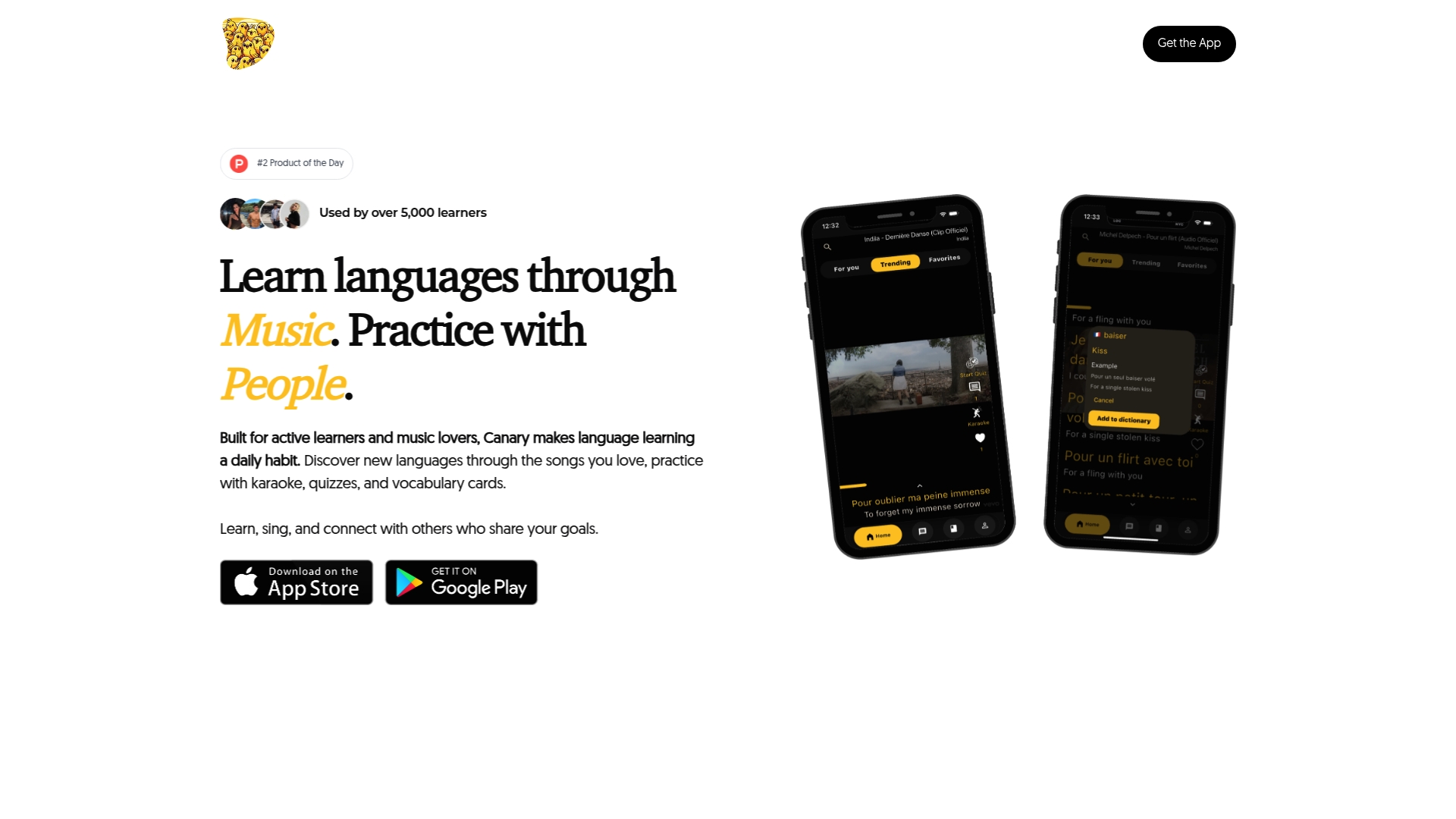
Singwithcanary combines song-based learning with karaoke-style exercises, vocabulary cards, and community features that let you practice pronunciation with music in a way that actually sticks. The platform is designed for all ages and levels, offering structured routines that build from individual sounds to full conversational rhythm. You get the repetition of traditional drills wrapped in the engagement of music, plus a global community to practice with in real time. If you want to explore how lyrics can become your most effective pronunciation teacher, the step-by-step lyrics guide is a great place to start.
FAQ
What are the most effective tips for improving pronunciation?
The most effective tips for improving pronunciation include shadowing native speakers, slowing your speech rate to 130 to 150 words per minute, drilling minimal pairs, and practicing with real conversation partners. Combining these methods produces faster results than using any single approach.
How long does it take to see real pronunciation improvement?
Most learners notice meaningful improvement within four to eight weeks of consistent daily practice. Focused 15 to 20 minute sessions every day build neural pathways faster than occasional long sessions.
Does music actually help with pronunciation?
Yes. Music and rhythm-based learning improve pronunciation by reinforcing stress patterns, connected speech, and muscle memory for difficult sounds through enjoyable repetition. Singing a song 10 times produces more retention than repeating a drill phrase 10 times for most learners.
Should I try to eliminate my accent completely?
No. Speech intelligibility research consistently shows that being clearly understood matters far more than accent elimination. Focusing on accent erasure can actually make speech sound unnatural and harder to follow.
What is the shadowing technique and how do I start?
Shadowing means repeating what a native speaker says almost simultaneously, matching their rhythm and intonation. Start with a 30 to 60 second audio clip, listen once, then speak along with the recording and compare your attempt to the original.