TL;DR:
- Ear training for German involves active listening, mimicking, and speaking to recognize native speech patterns. Consistent daily practice with shadowing and graded content significantly improves comprehension and pronunciation within weeks. Incorporating live conversation, music, and interactive tools accelerates progress and helps bridge gaps between classroom learning and real speech.
Ear training for German learners is the active practice of teaching your brain to recognize, predict, and reproduce native German speech patterns. Reading German well does not prepare you for real conversations. Native speakers compress sounds, drop syllables, and speak at speeds that catch most learners completely off guard. The good news is that structured auditory practice, built around techniques like shadowing and graded listening, produces measurable gains in both comprehension and pronunciation within weeks. The Goethe-Institut and recent 2026 research both confirm that consistent, active practice is the fastest path to understanding real German.
What does effective ear training for German learners involve?
Effective auditory practice for German is not about playing podcasts in the background while you cook. It is a deliberate, active process that combines three core skills: listening, mimicking, and speaking out loud.
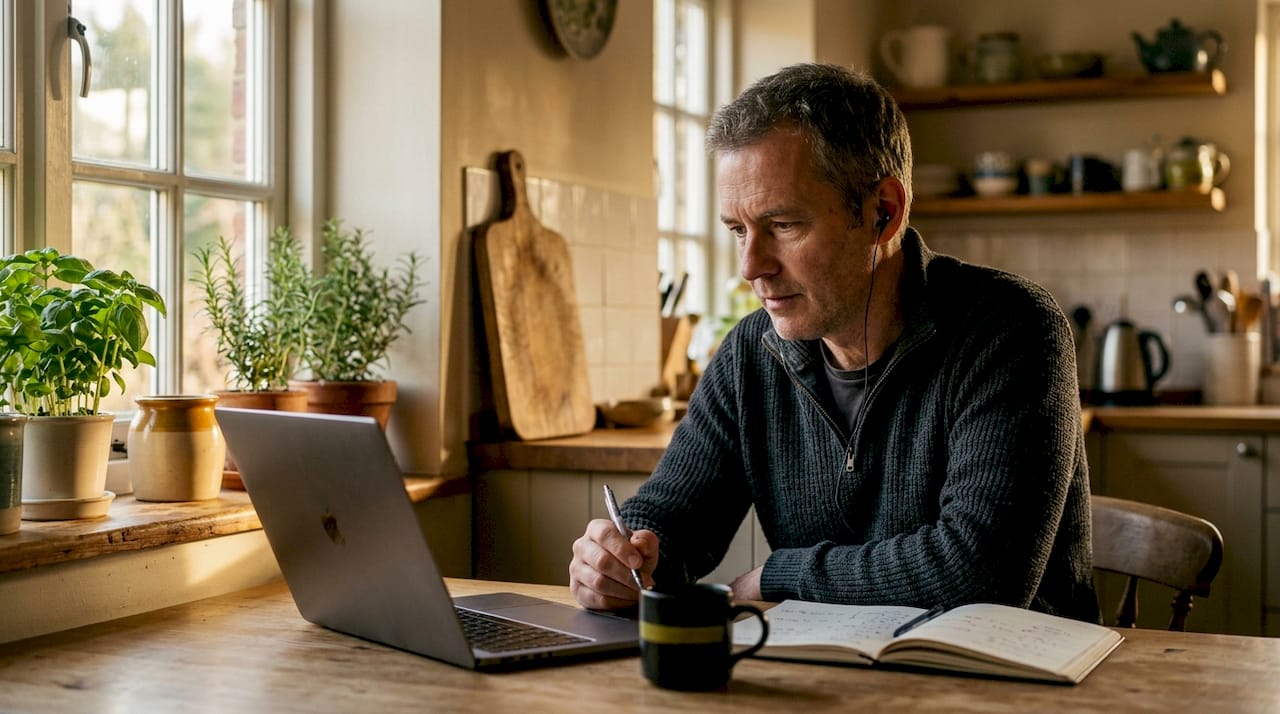
Shadowing is the most powerful technique in this toolkit. You listen to a short German audio clip and speak along with it simultaneously, matching the speaker’s rhythm, speed, and intonation. Shadowing locks in native rhythm and intonation in a way that silent reading never can. Think of it as a muscular workout for your mouth and ears at the same time.
A well-structured session follows a clear progression:
- Listen once without speaking. Focus on the overall rhythm and any sounds you do not recognize.
- Listen again with the transcript. Match what you hear to what you read.
- Shadow out loud. Speak along with the audio, even if you miss words. Speed and rhythm matter more than perfection here.
- Record yourself. Play it back and compare your output to the original.
- Repeat the clip. Clip length of 30–60 seconds is ideal, repeated multiple times per session.
Most learners notice rhythm improvements by week 2 of daily practice. Native-speed listening gains typically appear by week 4. That timeline holds when sessions run at least 10 minutes per day, five days a week.
Pro Tip: Record your shadowing attempts on your phone. Listening back reveals pronunciation gaps your ear misses in real time.
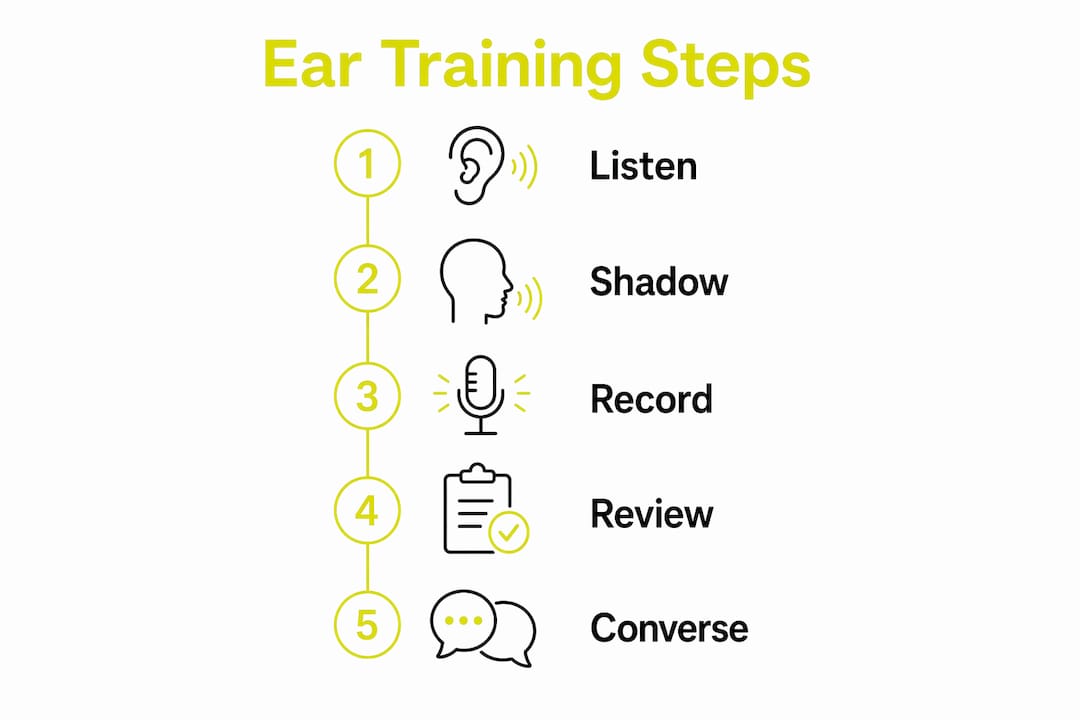
The third component is live conversation. Listening and shadowing build the skill. Speaking with real people under pressure tests it. Without that final step, your ear training stays theoretical.
How do you choose German listening exercises and materials?
Picking the wrong material is the single biggest reason learners plateau. The content needs to be challenging enough to push your ear but not so difficult that you lose the thread entirely.
The right difficulty level for shadowing follows a clear rule:
- Understand at least 70% of the content before you shadow it. Starting too difficult hinders muscle memory and slows ear training progress significantly.
- Use graded content first. Slow German podcasts, A2 to B1 level news programs, and structured language learning audio all work well for beginners and intermediate learners.
- Transition to authentic German gradually. Once you handle graded content comfortably, move to unscripted interviews, YouTube vlogs, or German radio.
- Use transcripts actively. Do not just read along. Cover the transcript, listen, then check. This is called a cloze method and it forces your brain to predict words.
- Practice minimal pairs. German sounds like “ü” versus “u” or “ch” versus “sch” require focused discrimination drills. Isolating these pairs trains your ear to hear distinctions that do not exist in English.
Music is a particularly underrated tool here. Music improves auditory discrimination and rhythm perception, and it makes the whole process more engaging. Song lyrics repeat phrases in memorable melodic patterns, which helps learners internalize pronunciation and intonation naturally. Platforms like Singwithcanary use exactly this approach, combining song-based learning with vocabulary cards and karaoke-style practice.
The Goethe-Institut offers free pronunciation training structured across three difficulty levels, covering listening, practice, and testing with progress tracking. It is one of the most credible free resources available for German pronunciation training.
Pro Tip: Push yourself to slightly harder materials every week. Your ear adapts to native speech nuances only when it is forced to work.
Understanding how ear training boosts language skills through music can help you build a smarter, more enjoyable practice routine.
What mistakes slow down German ear training progress?
Most learners make the same four errors. Each one creates a ceiling that stops progress cold, especially around the B1 level.
- Passive listening without active output. Playing German audio while commuting feels productive. Passive listening requires 3–5 times longer than active methods like shadowing to build comparable skills. Your brain needs the feedback loop of speaking to lock in what it hears.
- Repeating the same easy clips. Comfort is the enemy of progress. Listening to content you already understand 95% of trains nothing new. Learners must push to harder materials weekly to force the ear to adapt.
- Skipping shadowing entirely. Many learners find shadowing awkward or embarrassing. That discomfort is the point. Shadowing is a physical skill. You cannot build it by reading about it or listening quietly.
- Neglecting live conversation. Shadowing trains your ear in a controlled environment. Real conversations introduce unpredictable accents, speeds, and vocabulary. Without regular speaking practice, comprehension gains stay fragile.
Common learner mistakes like these cause plateauing that feels mysterious but is entirely predictable. Fixing them is straightforward once you name them.
The solution to all four mistakes is the same: combine graded listening, shadowing, and live conversation in a daily routine. That combination, practiced consistently, is what separates learners who break through from those who stay stuck.
How do music and interactive tools enhance German listening practice?
Music and technology each solve a different problem in German ear training. Music builds rhythm awareness and emotional engagement. Interactive tools provide feedback that solo practice cannot.
| Method | Primary benefit | Best used for |
|---|---|---|
| Music and song lyrics | Rhythm and intonation internalization | Daily habit building and pronunciation feel |
| Shadowing with audio clips | Speed and accent matching | Active listening and output training |
| AI pronunciation feedback | Real-time error correction | Identifying specific sound gaps |
| Live conversation practice | Unpredictable speech comprehension | Testing and consolidating all skills |
Music works because it repeats. A German song you listen to ten times drills the same phonetic patterns into your memory without feeling like a drill. Incorporating songs and musical exercises helps learners internalize pronunciation and intonation naturally. The rhythm of music also mirrors the rhythm of speech, which makes the transition to understanding spoken German more intuitive.
AI-driven pronunciation tools like Speech Champion use real-time feedback to support simultaneous pronunciation and listening practice. Learners using this kind of tool report improved comprehension as a direct side effect of the pronunciation feedback loop. That makes sense: when you hear your own errors corrected instantly, your ear recalibrates faster.
The most effective daily routine combines all four methods. Start with a song or graded audio clip. Shadow it out loud. Use an AI tool to check your pronunciation on tricky sounds. End with a short live conversation, even five minutes with a language partner. A daily 30-minute routine built this way produces measurable fluency gains in weeks, not months.
Understanding the foundational techniques for ear training in language learning gives you the framework to use all these tools together effectively. You can also explore how audio editing techniques sharpen listening discrimination, a skill that transfers directly to language learning.
Key Takeaways
Consistent, active ear training that combines shadowing, graded listening, and live conversation is the fastest proven path to understanding native German speech.
| Point | Details |
|---|---|
| Active beats passive | Passive listening takes 3–5 times longer than shadowing to build equivalent comprehension skills. |
| Match material to level | Shadow content you understand at least 70% of to build muscle memory without confusion. |
| Push difficulty weekly | Moving to harder materials each week forces your ear to adapt to real native speech patterns. |
| Music accelerates learning | Songs reinforce rhythm and intonation naturally, making pronunciation habits stick faster. |
| Live conversation is non-negotiable | Shadowing builds the skill; speaking with real people under pressure tests and consolidates it. |
Why I think most German learners are training their ears wrong
The most common complaint I hear from German learners is some version of “I understand everything in class but nothing when a native speaks.” That gap is not a mystery. It is the direct result of training almost exclusively with controlled, slow, clearly enunciated audio and then expecting that to transfer to real speech.
Real German does not sound like a textbook recording. It sounds like someone talking fast with their mouth half closed while also making a cup of coffee. The sounds compress, the syllables blur, and the intonation rises and falls in ways that no grammar book prepares you for. The only fix is deliberate exposure to that real speech, combined with the physical practice of producing it yourself.
What I have found actually works is a short, daily session built around a single piece of authentic audio. Not an hour on the weekend. Not a passive podcast during your commute. Ten focused minutes every day, where you listen, shadow out loud, and then speak. That consistency compounds faster than any other approach I have seen.
The frustration most learners feel around the B1 level is real, but it is also a sign that the easy gains are done. Getting past it requires mixing graded and authentic content progressively, not retreating to easier material for comfort. The Goethe-Institut’s three-step model of listening, practicing, and testing is a solid framework for this phase. It keeps you honest about where your gaps actually are.
My honest advice: stop optimizing your playlist and start opening your mouth. The ear trains fastest when the mouth is working too.
— Ben
Singwithcanary makes German ear training part of your daily routine
German learners who build a daily listening and speaking habit make the fastest progress. The challenge is making that habit feel worth showing up for every day.
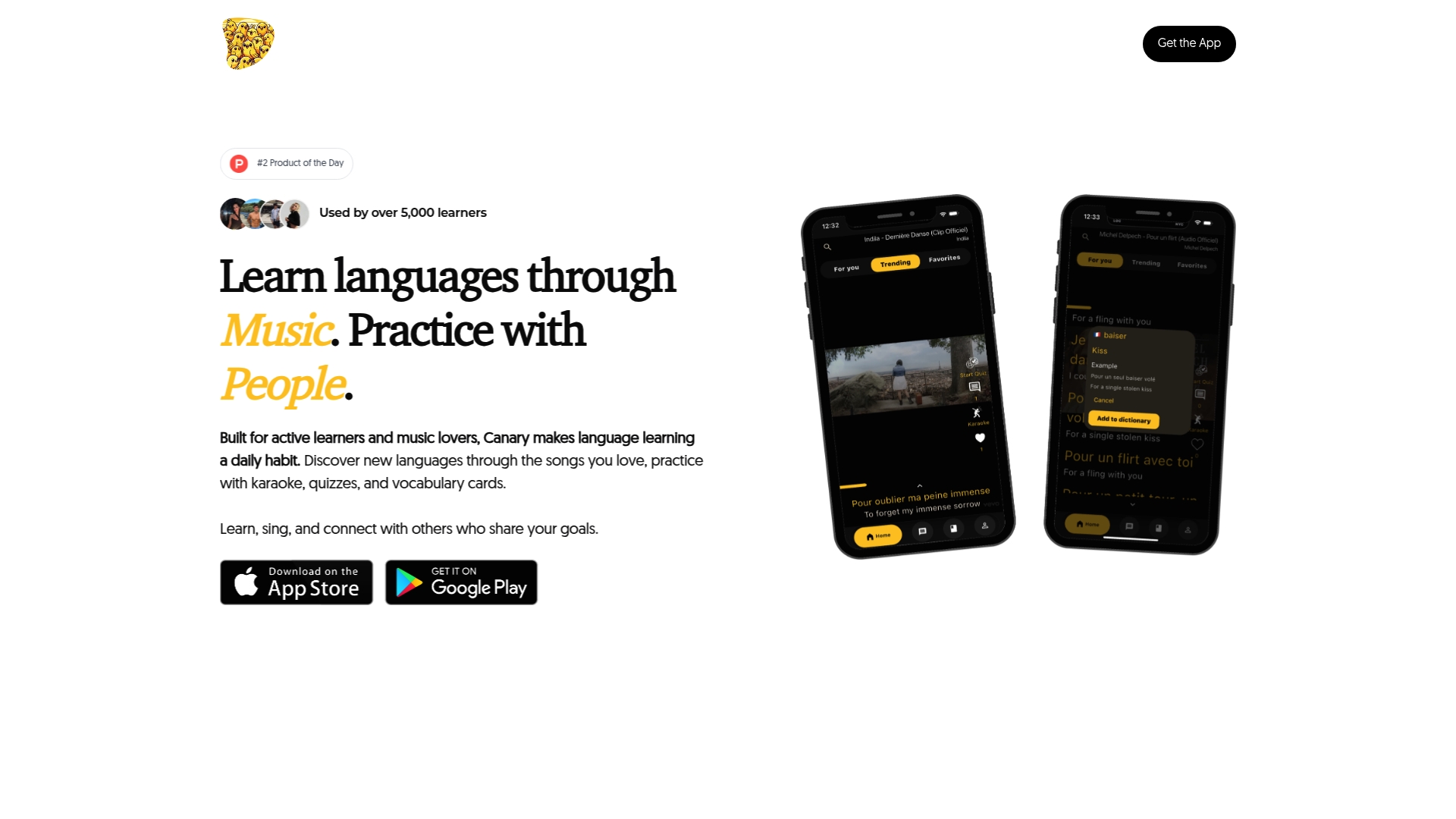
Singwithcanary combines music, karaoke-style practice, vocabulary cards, and interactive quizzes into a single platform built for exactly this kind of daily practice. You learn German through real songs, which means rhythm and pronunciation are baked into every session. The social features let you practice with other learners around the world, giving you the live conversation component that solo study cannot replace. If you want to learn languages with music in a way that actually sticks, Singwithcanary is built for that. You can also check out the song of the week feature to start building your ear with fresh German audio every week.
FAQ
What is ear training for German learners?
Ear training for German learners is the active practice of teaching your brain to recognize and reproduce native German speech patterns, including compressed sounds, natural rhythm, and intonation. It combines listening drills, shadowing, and live conversation to close the gap between classroom German and real spoken German.
How long does it take to see results from German ear training?
Most learners notice rhythm improvements within two weeks of daily shadowing practice. Native-speed listening comprehension gains typically appear by week four when sessions run at least 10 minutes per day.
Is shadowing the best method for German pronunciation training?
Shadowing is the most effective single technique for German pronunciation training because it trains listening and speaking simultaneously. It builds the muscle memory required for native rhythm and intonation in a way that silent study cannot replicate.
Can music really improve German listening comprehension?
Music improves auditory discrimination and rhythm perception, both of which are core components of listening comprehension. Repeated exposure to German song lyrics internalizes pronunciation patterns naturally and makes the learning process more consistent.
How do I choose the right German listening exercises for my level?
Choose audio content you understand at least 70% of before attempting to shadow it. Start with graded podcasts or structured language audio, then transition to authentic German content like unscripted interviews or vlogs as your comprehension improves.