TL;DR:
- Karaoke is an effective tool for learning German because it combines listening, speaking, and emotional engagement.
- It helps build vocabulary, improve pronunciation, and reinforce grammar through music-based repetition and real-time rhythm matching.
Karaoke is one of the most effective and underused tools for learning German, combining auditory input, vocal repetition, and emotional engagement in a single activity. The benefits of karaoke for German learners go well beyond entertainment. Music-based learning stores new vocabulary and grammar rules in memory more durably than rote memorization, giving singers a measurable edge over textbook-only learners. Singing along to German lyrics trains your ear, sharpens your accent, and builds the kind of confidence that grammar drills simply cannot replicate. If you want a fun way to learn German that actually works, karaoke belongs in your practice routine.
What are the real benefits of karaoke for German learners?
Karaoke works because it forces you to do three things at once: listen carefully, read the lyrics, and produce speech at native speed. That combination activates more learning pathways than any single study method. Research confirms that music stimulates memory pathways, accelerating language acquisition better than static textbook methods. That means the words you sing today are more likely to stick tomorrow.

German is a language with strict word stress, compound nouns, and a rhythm that feels foreign to English speakers. Karaoke forces you to match that rhythm in real time. You cannot slow down a song the way you can pause a grammar exercise. That pressure, applied consistently, builds fluency faster than passive study.
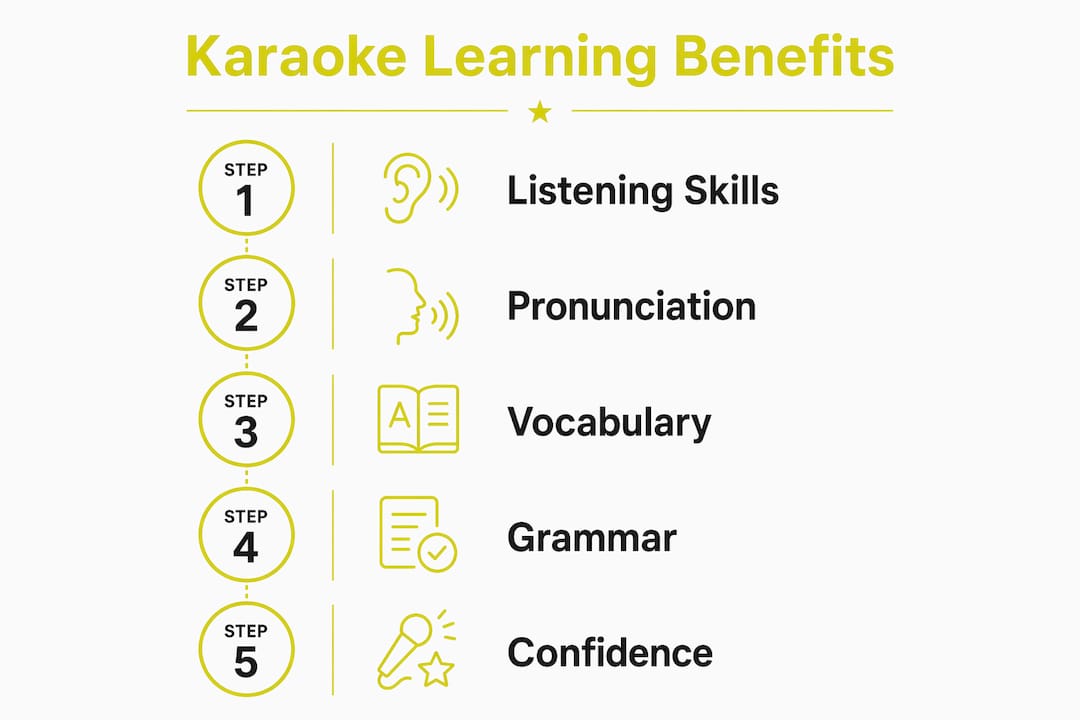
The social dimension matters too. Singing in front of others, even just one friend, reduces the fear of making mistakes. That reduced anxiety is called a lower affective filter in language acquisition theory. When your guard is down, you absorb more. Karaoke creates that condition naturally, without any special setup.
How does karaoke improve German pronunciation and accent?
Pronunciation is where most German learners struggle longest. The language has sounds like the front rounded vowels in “über” and “schön,” the guttural “ch,” and consonant clusters that English mouths resist. Karaoke addresses these directly.
Singing along to native-speed lyrics reduces first-language accent influence and improves speaking fluency. The reason is muscle memory. When you repeat a sound dozens of times across a three-minute song, your mouth learns the shape of that sound. Speech drills ask you to repeat isolated syllables. Songs ask you to produce those same sounds in natural, flowing context.
Here is what karaoke specifically trains in German pronunciation:
- Vowel length and stress: German distinguishes short and long vowels in ways that change meaning. Songs lock those patterns into your ear.
- Sentence rhythm: German puts the verb in second position and stacks information differently than English. Singing trains you to feel that structure.
- Consonant clusters: Words like “Streichholzschächtelchen” are extreme examples, but everyday German clusters become manageable through repeated singing.
- Intonation patterns: Questions and statements sound different in German. Songs model those patterns naturally.
Singing with native speakers in karaoke contexts improves natural speech patterns and confidence. That improvement transfers directly to conversation.
Pro Tip: Start with songs you already know in English that have been covered by German artists. Rammstein, Peter Fox, and Nena all offer clear diction and strong rhythmic patterns that are ideal for pronunciation practice.
How does singing German songs build vocabulary and grammar?
Vocabulary learned through music sticks because of the way the brain encodes emotional and musical experiences. Enjoyment of preferred music leads to subconscious learning and improved recall. You are not trying to memorize “Schmetterling” (butterfly). You are singing it, and it arrives without effort the next time you need it.
Grammar is the harder sell for most learners. German has four cases, three genders, and verb conjugations that seem designed to frustrate. Music solves this by embedding rules into patterns you repeat without thinking. Music-based lessons make grammar less intimidating by embedding rules into catchy songs, motivating consistent practice. Students who resisted grammar drills responded positively to musical mnemonic devices.
Song lyrics also expose you to colloquial German that textbooks ignore. Slang, contractions, regional expressions, and idioms all appear in popular music. That exposure prepares you for real conversations in ways that formal curricula rarely do.
Structured resources exist specifically for this purpose:
| Resource | What it offers |
|---|---|
| Goethe-Institut “Musik liegt in der Luft” | Structured song-based exercises with grammar and vocabulary focus |
| German pop playlists with lyrics | Exposure to current colloquial language and natural speech patterns |
| Karaoke songbooks for learners | Annotated lyrics with vocabulary notes and pronunciation guides |
| Song-based vocabulary cards | Spaced repetition tools tied directly to lyrics you already know |
The Goethe-Institut resource in particular is worth noting. It pairs songs with exercises that target specific grammar points, making it a structured complement to casual karaoke practice.
Why does karaoke boost motivation and confidence in German learners?
Language anxiety is one of the biggest barriers to fluency. Learners who fear judgment speak less, practice less, and progress more slowly. Karaoke directly counters that cycle.
The informal and fun nature of karaoke reduces the affective filter, boosting motivation and retention. A lower affective filter means your brain is more open to absorbing new language. Singing in a relaxed setting, whether at home or with friends, creates exactly that condition.
“Music makes language come naturally to you. It removes the pressure of performance and replaces it with the pleasure of participation.”
The social benefits of singing German extend beyond the moment. When you sing with others, you build shared references, inside jokes, and a sense of community around the language. That community keeps you coming back. Motivation is the single biggest predictor of long-term language success, and karaoke feeds it consistently.
Emotional engagement also deepens recall. Words and phrases tied to a song you love carry emotional weight. That weight makes them easier to retrieve in conversation. You do not just know the word “Sehnsucht” (longing). You feel it through the music, and that feeling anchors the meaning permanently.
Practical tips for using karaoke effectively in German practice
The method matters as much as the activity. Karaoke used randomly produces random results. Karaoke used with intention produces real progress.
- Choose songs you genuinely enjoy. Choosing music you love increases lyric retention and learner motivation immensely. Enjoyment is not a bonus. It is the mechanism.
- Match difficulty to your level. Beginners should start with children’s songs and pop ballads with clear diction. Intermediate learners can move to faster rap or dialect-heavy folk music.
- Pair karaoke with spaced repetition. Short daily sessions mixing timed and untimed word games yield durable vocabulary acquisition. Sing a song, then review its key vocabulary with a spaced repetition tool the same day.
- Use lyrics as a reading exercise. Before singing, read through the lyrics and look up unfamiliar words. After singing, write out the words you struggled with from memory.
- Record yourself. Playback reveals pronunciation errors you cannot hear in real time. It is uncomfortable at first and genuinely useful.
- Practice daily in short sessions. Twenty minutes of focused karaoke practice every day outperforms two hours once a week. Consistency builds the neural pathways that produce fluency.
Platforms like Singwithcanary combine karaoke with vocabulary tools and pronunciation feedback, making it easier to apply these principles without assembling separate resources yourself.
Pro Tip: After singing a song three times, try speaking the lyrics out loud without the music. This transfers the pronunciation gains from singing into natural speech.
Key takeaways
Karaoke accelerates German learning because it combines pronunciation training, vocabulary retention, grammar exposure, and emotional engagement in a single, repeatable activity.
| Point | Details |
|---|---|
| Pronunciation gains are real | Singing at native speed builds muscle memory for German sounds faster than drills. |
| Music encodes vocabulary deeply | Words learned through songs you enjoy are recalled more reliably than memorized lists. |
| Grammar becomes approachable | Musical mnemonic devices help learners absorb German case rules without textbook resistance. |
| Motivation stays higher | Karaoke lowers anxiety and creates social connection, keeping practice consistent over time. |
| Daily short sessions win | Twenty minutes of karaoke practice daily outperforms infrequent marathon study sessions. |
Why I think karaoke is the most underrated German learning tool
Most learners treat pronunciation as a finishing touch. They spend months on grammar and vocabulary, then try to fix their accent at the end. That sequence is backwards. Pronunciation shapes how you hear the language, and how you hear it shapes how well you absorb everything else. Karaoke fixes pronunciation from day one, which makes every subsequent lesson easier.
I have watched learners struggle with German’s verb-second rule for months in grammar books, then internalize it naturally after two weeks of singing along to pop songs. The melody carries the structure. Your brain stops fighting the rule and starts feeling it.
Solo karaoke and social karaoke serve different purposes. Singing alone at home lets you repeat difficult lines without embarrassment. Singing with others builds the nerve to produce German in front of people, which is ultimately what fluency requires. Both matter. Neither replaces the other.
The learners who progress fastest are not the ones with the best grammar books. They are the ones who practice daily and actually enjoy it. Karaoke makes daily practice something you look forward to. That consistency, sustained over months, is what separates conversational German speakers from perpetual beginners.
Start with one song you love. Sing it badly. Sing it again. The progress will surprise you.
— Ben
Singwithcanary: learn German through music and karaoke
Singwithcanary is built for learners who want to practice German the way it actually sounds, not the way it looks on a grammar worksheet.
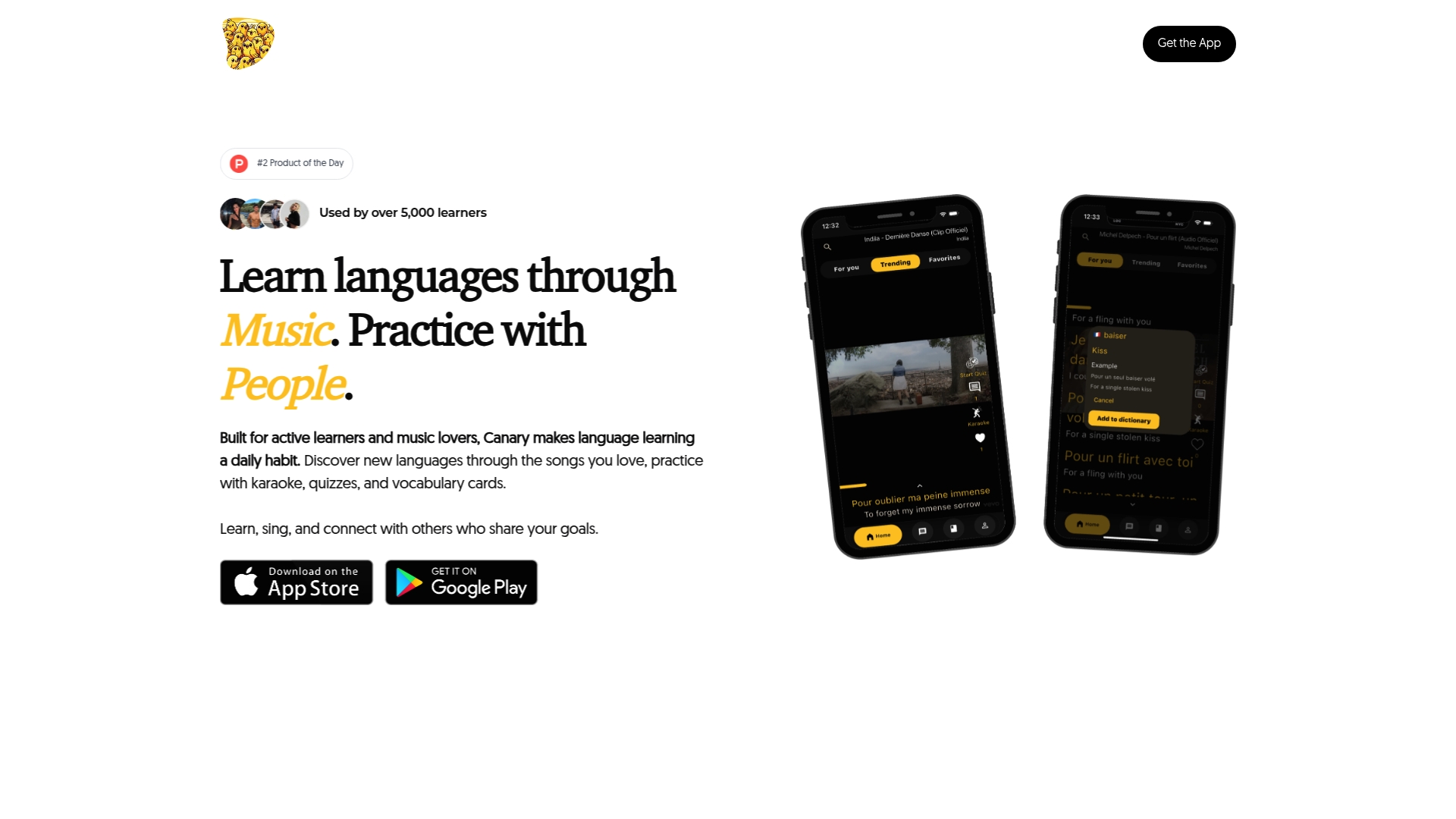
The platform combines educationally designed German karaoke tracks with vocabulary cards, pronunciation exercises, and a community of learners practicing together. Every song is a lesson. Every session builds the kind of ear training and speaking confidence that textbooks cannot replicate. Whether you are a beginner finding your footing or an intermediate learner working on accent reduction, Singwithcanary gives you the tools to learn languages with music in a way that keeps you coming back. Sign up and start your first song today at Singwithcanary.
FAQ
Does karaoke actually help you learn German faster?
Yes. Music stimulates memory pathways that accelerate language acquisition beyond what static textbook methods achieve. Learners who sing regularly internalize vocabulary, grammar patterns, and pronunciation more quickly than those who study passively.
What German songs are best for beginners?
Beginners benefit most from songs with clear diction, slower tempos, and simple vocabulary. Children’s songs, classic pop ballads by artists like Nena, and structured resources from the Goethe-Institut are strong starting points before moving to faster or dialect-heavy material.
How does karaoke improve German pronunciation specifically?
Mimicking native-speed lyrics trains your mouth and ear to produce authentic German stress, rhythm, and intonation patterns. Repeated vocal practice builds muscle memory for sounds that English speakers find difficult, such as front rounded vowels and consonant clusters.
Can karaoke help with German grammar, not just vocabulary?
Yes. Embedding grammar rules into songs makes them easier to absorb than textbook drilling. Learners who resist grammar exercises often respond well to musical mnemonic devices, internalizing case rules and verb placement through repeated singing.
How often should I use karaoke to see results in German?
Daily short sessions produce better results than infrequent long ones. Consistent daily practice combined with spaced repetition vocabulary review gives you the most durable gains in both vocabulary and pronunciation over time.