TL;DR:
- French articles indicate gender, number, and specificity of nouns, making them essential for correct grammar. Mastering the three types and agreement rules helps avoid common mistakes and sounds natural in conversation.
French articles are small words placed before nouns that signal gender, number, and specificity, making them the foundation of correct French grammar. Every noun in French requires an article, and choosing the wrong one changes your meaning or marks you immediately as a non-native speaker. The good news is that French articles follow clear, learnable patterns. This guide covers french articles explained for beginners in plain terms, walking you through the three main types, agreement rules, common mistakes, and practical strategies to use articles naturally from day one.
What are the three types of French articles and when to use each?
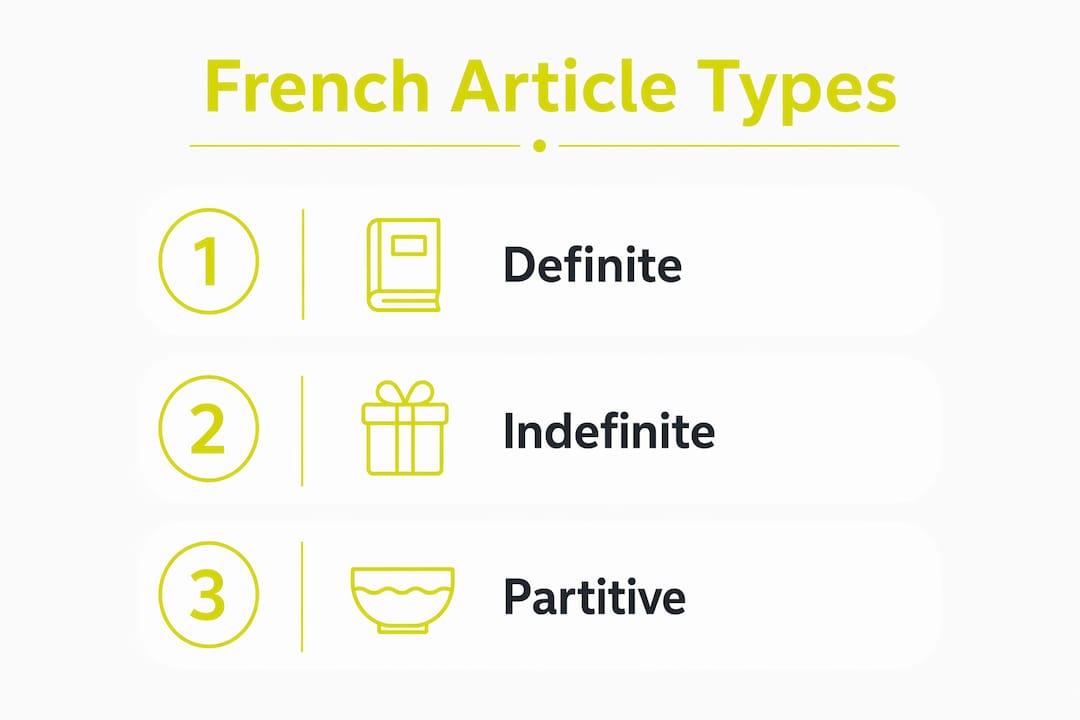
French has three article categories: definite, indefinite, and partitive. Each one signals something different about the noun it introduces, and each type shows gender and number agreement through its specific form.
Definite articles: le, la, l’, les

Definite articles point to something specific or already known to both speaker and listener. Think of them as the equivalent of “the” in English, but used far more often. French uses definite articles in general statements where English drops the article entirely. “I love cheese” becomes “J’aime le fromage,” not “J’aime fromage.”
The four forms are:
- Le for masculine singular nouns (le livre, the book)
- La for feminine singular nouns (la table, the table)
- L’ for any singular noun starting with a vowel or silent h (l’ami, l’heure)
- Les for all plural nouns regardless of gender (les livres, les tables)
Indefinite articles: un, une, des
Indefinite articles introduce a noun that is new, unspecified, or one of many. They translate roughly to “a,” “an,” or “some” in English. Use them when you are mentioning something for the first time or when the specific identity does not matter.
- Un for masculine singular nouns (un chat, a cat)
- Une for feminine singular nouns (une maison, a house)
- Des for all plural nouns (des chats, some cats)
Partitive articles: du, de la, de l’, des
Partitive articles express an unspecified or partial quantity of an uncountable noun. They translate to “some” or “any” in English and are used for things you cannot count individually, like water, bread, or music.
| Article | Gender and number | Example |
|---|---|---|
| Du | Masculine singular | Je bois du café (I drink some coffee) |
| De la | Feminine singular | Elle mange de la soupe (She eats some soup) |
| De l’ | Vowel or silent h | Il boit de l’eau (He drinks some water) |
| Des | All plurals | Nous mangeons des légumes (We eat some vegetables) |
The key distinction between indefinite and partitive comes down to countability. “Un pain” means one specific loaf of bread. “Du pain” means some bread, an unspecified amount you cannot count.
How do French articles agree with gender, number, and vowel sounds?
Article agreement is mandatory in French and reflects both the gender and number of the noun. Gender in French is largely arbitrary and does not follow logical rules. You must accept it and learn each noun with its article attached.
The agreement rules work like this:
- Masculine singular nouns take le, un, or du
- Feminine singular nouns take la, une, or de la
- Any singular noun beginning with a vowel or silent h takes l’ (elision) for definite articles, and de l’ for partitive articles
- Plural nouns always take les (definite) or des (indefinite or partitive)
Elision is one of the most useful patterns to internalize early. When a definite article meets a vowel sound, the article contracts to avoid two vowel sounds colliding. “Le ami” becomes “l’ami.” “La école” becomes “l’école.” This rule applies to both masculine and feminine nouns, which is why plural articles matter more than gender at that stage.
The plural forms les and des remove gender distinctions entirely. Once a noun is plural, you do not need to remember whether it is masculine or feminine to choose the right article. That makes plural sentences slightly easier to construct while you are still building your gender vocabulary.
Pro Tip: Learn every new French noun with its article as one unit. Instead of memorizing “chat” (cat), memorize “le chat.” This wires the gender directly into your memory and prevents agreement errors later.
Common agreement challenges include nouns that look feminine but are masculine (like “le problème”) and nouns that end in silent letters that change pronunciation patterns. The safest strategy is to learn French with music and song lyrics, where article-noun pairs repeat in natural, memorable contexts.
Common mistakes beginners make with French articles
Most article errors fall into four predictable patterns. Knowing them in advance saves you weeks of confusion.
-
Mixing up indefinite and partitive articles. Both can translate to “some” in English, which causes beginners to swap them. The fix is simple: ask whether the noun is countable. “Des pommes” (some apples) uses indefinite because you can count apples. “De la farine” (some flour) uses partitive because flour is uncountable.
-
Forgetting the negation rule. Indefinite and partitive articles change to “de” after negation, except with verbs expressing preference. “Je mange du pain” (I eat some bread) becomes “Je ne mange pas de pain” (I don’t eat bread). Skipping this rule is one of the clearest markers of a non-native speaker.
-
Using the wrong article with adjectives before nouns. When an adjective precedes a plural noun, “des” often changes to “de.” “Des grandes maisons” (some big houses) becomes “de grandes maisons” in careful French. This rule trips up intermediate learners who have already mastered basic article forms.
-
Translating directly from English. French uses definite articles far more frequently than English does. Statements of general preference always use definite articles in French. “I like music” is “J’aime la musique,” not “J’aime musique.” English speakers instinctively drop the article, which produces ungrammatical French.
Pro Tip: When you write a French sentence, run a quick mental check: did I use a definite article for any general preference verb like “aimer,” “adorer,” or “détester”? Those verbs always require “le,” “la,” or “les,” never partitive or indefinite.
A practical memory aid for the negation rule: picture the article shrinking under pressure. Negation squeezes “du,” “de la,” and “un/une/des” down to the smallest possible form, which is just “de.” The only exception is when the verb expresses love or preference, because those feelings do not shrink under negation.
How to apply French articles correctly in everyday use
The fastest path to correct article use is a three-question decision process you run before every noun. Ask yourself: Is the noun specific or general? Is it singular or plural? Does it start with a vowel sound?
Those three questions cover the majority of article choices you will face in conversation and writing. Here is how to apply them:
- Specific or known noun? Use a definite article (le, la, l’, les).
- New or unspecified countable noun? Use an indefinite article (un, une, des).
- Uncountable noun expressing quantity? Use a partitive article (du, de la, de l’).
- Plural noun? Use “les” for definite, “des” for indefinite or partitive.
- Noun after a preference verb? Always use a definite article, regardless of quantity.
Verbs expressing preference always require definite articles even when the English equivalent would use no article at all. “J’aime le fromage” means “I like cheese” as a general statement. “Je mange du fromage” means “I’m eating some cheese” right now. One word changes the entire meaning from a general attitude to a specific action.
Articles also control the flow of information in conversation. French article usage reflects whether information is new or already known to the listener. Introducing a dog with “un chien” signals new information. Referring back to it as “le chien” signals that both speaker and listener now share that reference. Mastering this distinction makes your French sound natural rather than textbook-correct.
To build fluency with articles, practice with real sentences rather than grammar drills alone. Fun French learning activities that use authentic language, such as songs, short videos, and conversation practice, expose you to article-noun pairs in context. That repetition builds the automatic recognition that grammar rules alone cannot create.
Key Takeaways
French articles are the single most reliable signal of noun gender, number, and specificity, and mastering all three types is the fastest way to make your French grammar sound correct.
| Point | Details |
|---|---|
| Three article types | Definite (le/la/l’/les), indefinite (un/une/des), and partitive (du/de la/de l’/des) each serve a distinct purpose. |
| Agreement is mandatory | Every article must match the noun’s gender and number; learn each noun with its article as one unit. |
| Negation changes articles | Indefinite and partitive articles become “de” after negation, except after preference verbs like “aimer.” |
| Preference verbs use definite | Verbs like “aimer” always take definite articles, even in general statements where English drops the article. |
| Context drives choice | Ask three questions before every noun: specific or new? singular or plural? vowel sound or not? |
Why articles are the most underrated part of French grammar
Most beginners treat French articles as a minor detail to sort out later. That is a mistake I have seen slow down learners for months. Articles are not decoration. They are the primary signal for grammatical gender in real usage, and gender is embedded in every French sentence.
The shift that actually accelerates progress is stopping the search for logic in gender. French gender is largely arbitrary. The word “le problème” is masculine despite its feminine-looking ending. “La main” (the hand) is feminine despite no obvious reason. Accepting that articles carry the gender information, rather than the noun itself, frees you from a frustrating and unwinnable search for patterns.
The second shift is treating articles and nouns as inseparable pairs. When you improve your French listening skills, you start hearing “le chat” and “la maison” as single chunks, not as article plus noun. That chunking is how native speakers process language. It is also how you build the automatic article use that makes French feel natural rather than calculated.
The negation rule is the one detail I would tell every beginner to memorize on day one. Dropping “du” to “de” after negation is a small change that native speakers notice immediately. Getting it right signals fluency even when the rest of your grammar is still developing.
— Ben
Singwithcanary makes French article practice feel natural
Learning French articles through grammar tables works up to a point. The real fluency comes from hearing and using articles in context, which is exactly where music-based learning has a clear advantage.
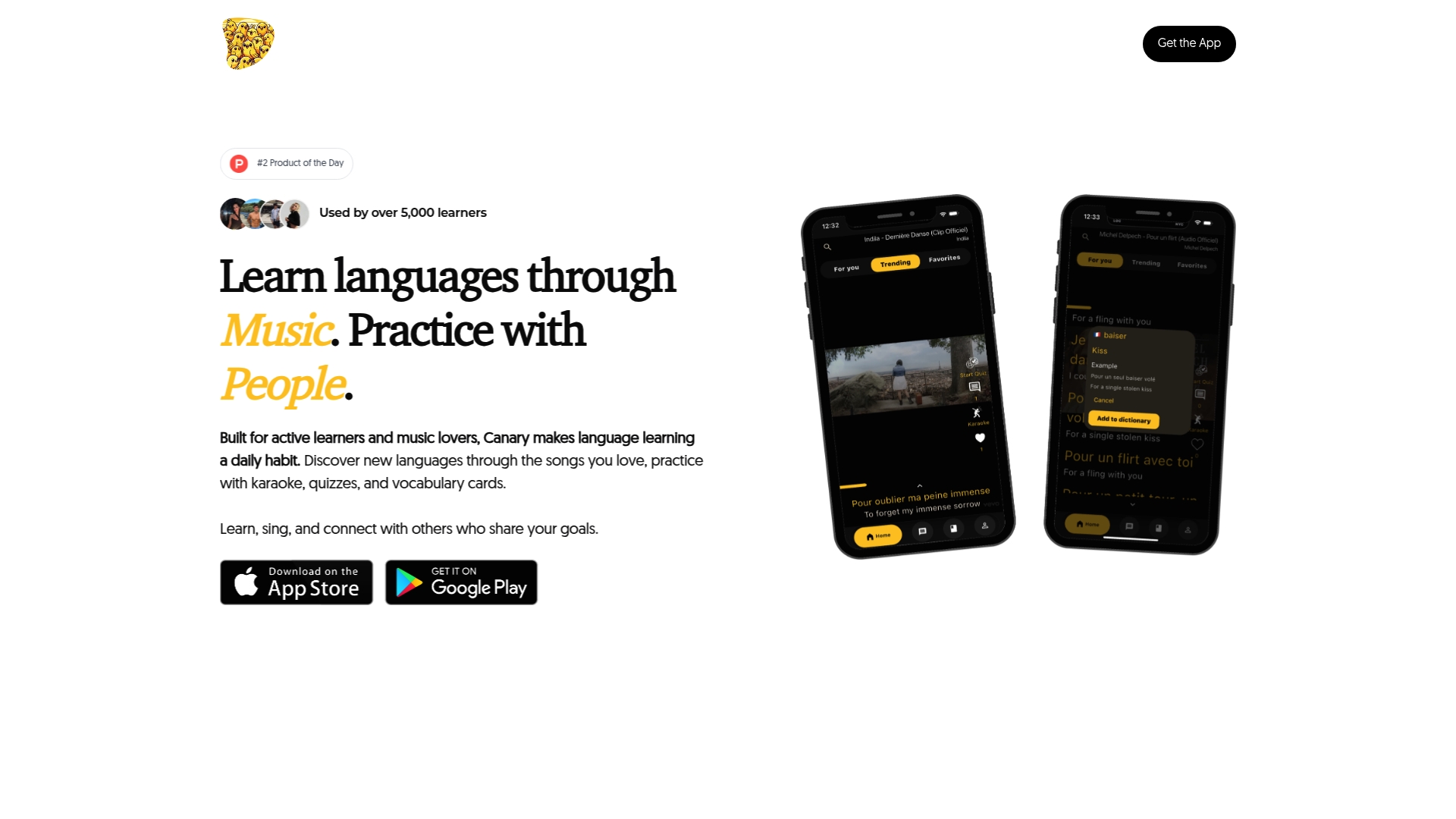
Singwithcanary combines song lyrics, karaoke, vocabulary cards, and quizzes to put article-noun pairs in front of you the way native speakers actually use them. You hear “le café,” “de la musique,” and “des amis” in real sentences set to music, which builds the automatic recognition that drills alone cannot replicate. The platform also connects you with a global community for live conversation practice, so you apply what you learn immediately. Start learning French with music on Singwithcanary and hear the difference articles make in real French sentences.
FAQ
What are the three types of French articles?
French has definite articles (le, la, l’, les), indefinite articles (un, une, des), and partitive articles (du, de la, de l’, des). Each type signals a different level of specificity and quantity for the noun it precedes.
Why do French articles change after negation?
Indefinite and partitive articles become “de” or “d’” after a negative verb because negation removes the quantity or specificity the article originally expressed. The exception is preference verbs like “aimer,” which keep the definite article even in negative sentences.
How do I know which article gender to use?
French noun gender is largely arbitrary and must be memorized. The most reliable method is to learn each noun with its article as a single unit from the start, rather than trying to guess gender from the noun’s spelling or meaning.
What is elision and when does it apply?
Elision is the contraction of “le” or “la” to “l’” before a noun starting with a vowel or silent h. It applies to all singular nouns regardless of gender, so “le ami” becomes “l’ami” and “la école” becomes “l’école.”
Why does French use articles more than English?
French uses definite articles in general statements where English omits them entirely. Saying “I love music” in French requires “J’aime la musique,” not “J’aime musique.” This frequency difference is one of the most common sources of error for English-speaking beginners.