Choosing the right French learning method can feel overwhelming with countless apps, courses, and techniques competing for your attention. If you love music and want to improve your French pronunciation and vocabulary, you’re in luck. Integrating music into your language learning makes the process engaging and effective, helping you internalize sounds and words naturally. This article explores five proven French learning methods that use songs as their foundation, giving you clear criteria to evaluate which approach fits your goals and learning style best.
Table of Contents
- How To Evaluate French Learning Methods With Music
- Top 5 French Learning Methods Using Songs
- Comparing Music-Based French Learning Methods
- Choosing The Best Music-Driven Method For You
- Learn French With Music At Singwithcanary.com
Key takeaways
| Point | Details |
|---|---|
| Music boosts retention | Combining songs with visual aids improves vocabulary retention by 40%. |
| Pronunciation flows naturally | Singing creates smooth phrasing that mimics authentic French speech patterns. |
| Musical background helps | Musicians learn new French words faster through superior auditory processing. |
| Regular practice matters | Daily singing and listening sessions accelerate reading and comprehension skills. |
| Song selection is critical | Clear pronunciation and repetitive structures benefit beginners most. |
How to evaluate French learning methods with music
Effectiveness in music-based French learning depends on how well the method uses songs to create engagement and retention. The best approaches combine auditory input with visual reinforcement, giving you multiple pathways to absorb new vocabulary and pronunciation patterns. Choosing songs with clear pronunciation and repetitive structures is crucial for beginners who need consistent exposure to foundational sounds.
Suitability varies widely based on your current proficiency level and musical background. Intermediate learners can handle more complex lyrics and faster tempos, while absolute beginners need slower, clearer material. Consider whether the method emphasizes both listening comprehension and active speaking practice, as passive listening alone won’t develop your pronunciation muscles.
When evaluating types of language learning methods for music lovers, look for these core features:
- Interactive elements that require you to sing along or repeat phrases
- Visual lyrics synchronized with audio to reinforce word recognition
- Vocabulary breakdown and context explanations for unfamiliar terms
- Progression systems that gradually increase difficulty
- Opportunities to practice with others or receive feedback
Visual aids in music-based methods significantly boost comprehension and recall. When you see lyrics while hearing them sung, your brain creates stronger neural connections between written words, sounds, and meanings. This multimodal approach works especially well for French, where spelling and pronunciation often diverge dramatically.
Pro Tip: Test a method for one week before committing. Track how many new words you retain and whether your pronunciation confidence improves. If you’re not noticing progress within seven days, the approach likely isn’t suited to your learning style.
Top 5 French learning methods using songs
Method 1 centers on repetitive song singing for vocabulary and pronunciation enhancement. This approach has you learn complete songs by heart, singing along repeatedly until the words and melodies become automatic. Music-based language learning enhances vocabulary and pronunciation through repetition and rhythm, creating muscle memory for difficult French sounds. You’ll notice the biggest gains in liaison patterns and vowel accuracy.
Method 2 uses music videos with lyrics for combined visual and auditory learning. Platforms that display synchronized lyrics while playing French songs let you read, listen, and watch simultaneously. Research shows combining music with visual aids boosts vocabulary retention by 40% compared to audio-only approaches. This method works exceptionally well for learning French with music naturally, as you absorb cultural context through video imagery.

Method 3 employs psychoacoustic training using harmonic sounds to refine speech sound categorization. This specialized technique uses musical intervals and tones to help your brain distinguish between similar French phonemes. While more technical than other approaches, it delivers measurable improvements in accent reduction for learners with musical backgrounds who struggle with specific sound pairs.
Method 4 combines choral singing and creative writing to boost reading and language skills. Group singing sessions followed by lyric analysis and creative exercises engage multiple learning modalities. This social approach keeps motivation high and provides immediate feedback from fellow learners, making it ideal for those who thrive in community settings.
Method 5 focuses on learning through authentic French songs to experience real-world pronunciation and intonation. Songs improve listening comprehension by exposing learners to real-world pronunciation, liaisons, and accents that textbooks can’t replicate. This method prioritizes French vocabulary retention with music by selecting songs that feature high-frequency words in natural contexts.
| Method | Primary Focus | Best For | Key Advantage |
|---|---|---|---|
| Repetitive singing | Pronunciation & memory | Beginners | Builds automatic recall |
| Lyric videos | Visual & auditory | Visual learners | 40% better retention |
| Psychoacoustic training | Sound discrimination | Musicians | Precise accent work |
| Choral singing | Social engagement | Group learners | Immediate feedback |
| Authentic songs | Real-world exposure | Intermediate+ | Natural speech patterns |
Pro Tip: Combine methods for maximum impact. Start your week with repetitive singing practice, use lyric videos for new vocabulary midweek, and join a virtual singing group on weekends for music-infused pronunciation practice with real people.
Comparing music-based French learning methods
Each method delivers distinct benefits based on your learning priorities and current skill level. Engagement levels vary significantly, with social methods like choral singing providing external motivation while solo repetitive practice requires stronger self-discipline. Visual learners gain the most from lyric video approaches, while auditory processors excel with pure singing repetition.
Vocabulary retention rates differ across methods due to how they encode information. Methods combining multiple sensory inputs generally outperform single-channel approaches, which explains why lyric videos show 40% better retention than audio-only practice. Pronunciation impact depends heavily on whether the method includes active speaking components versus passive listening.
Some methods favor beginners who need clear, slow material with frequent repetition. Others suit intermediate learners ready for authentic songs with complex grammar and faster delivery. Musical expertise positively influences novel word learning through superior speech processing, giving musicians an advantage in psychoacoustic training and complex song analysis.
Visual aids enhance comprehension across all applicable methods by creating dual coding in memory. When you see “je voudrais” while hearing it sung, you’re more likely to recall both the spelling and pronunciation later. This effect compounds over time as you build a mental library of word-sound-image associations.
Psychoacoustic training excels in speech sound discrimination but may require some musical background to maximize benefits. Learners without pitch recognition skills might find this approach frustrating initially. Choral singing suits those seeking social or group settings, offering accountability and community that solo methods lack. Consider your personality and schedule when comparing music learning methods to find sustainable options.
Choosing the best music-driven method for you
Assess your current French level and musical skills before committing to a specific method. Beginners should prioritize approaches with clear, repetitive songs that feature high-frequency vocabulary and slower tempos. If you can already hold basic conversations, challenge yourself with authentic French pop or chanson that exposes you to colloquial expressions and natural speech speeds.
Intermediate learners gain the most from exploring complex songs paired with psychoacoustic training to refine stubborn pronunciation issues. This combination addresses both vocabulary expansion and accent reduction simultaneously. Your musical background matters too; if you play an instrument or sing regularly, you’ll adapt faster to rhythm-based learning and pitch discrimination exercises.
Incorporate daily song practice for fluency by setting aside 15-20 minutes each morning or evening. Consistency beats intensity in language learning, so brief daily sessions outperform occasional marathon practice. Start with one or two songs per week, mastering them completely before adding new material.
Social or group singing enhances motivation and immersion by adding accountability and real-time interaction. Virtual singing sessions let you practice with native speakers and fellow learners worldwide, creating a supportive community around your French journey. This social dimension often makes the difference between giving up after a few weeks and building a lasting habit.
Pro Tip: Match method to context. Use repetitive singing during commutes, lyric videos during focused study time, and group sessions for weekend practice. This variety prevents boredom while targeting different skill areas throughout your week.
Learn French with music at singwithcanary.com
Ready to transform your French learning with music? Sing With Canary offers a complete platform designed specifically for music lovers who want to master French through songs. The platform combines interactive karaoke, vocabulary cards, and quizzes to reinforce what you learn from each song, giving you multiple ways to practice and retain new material.
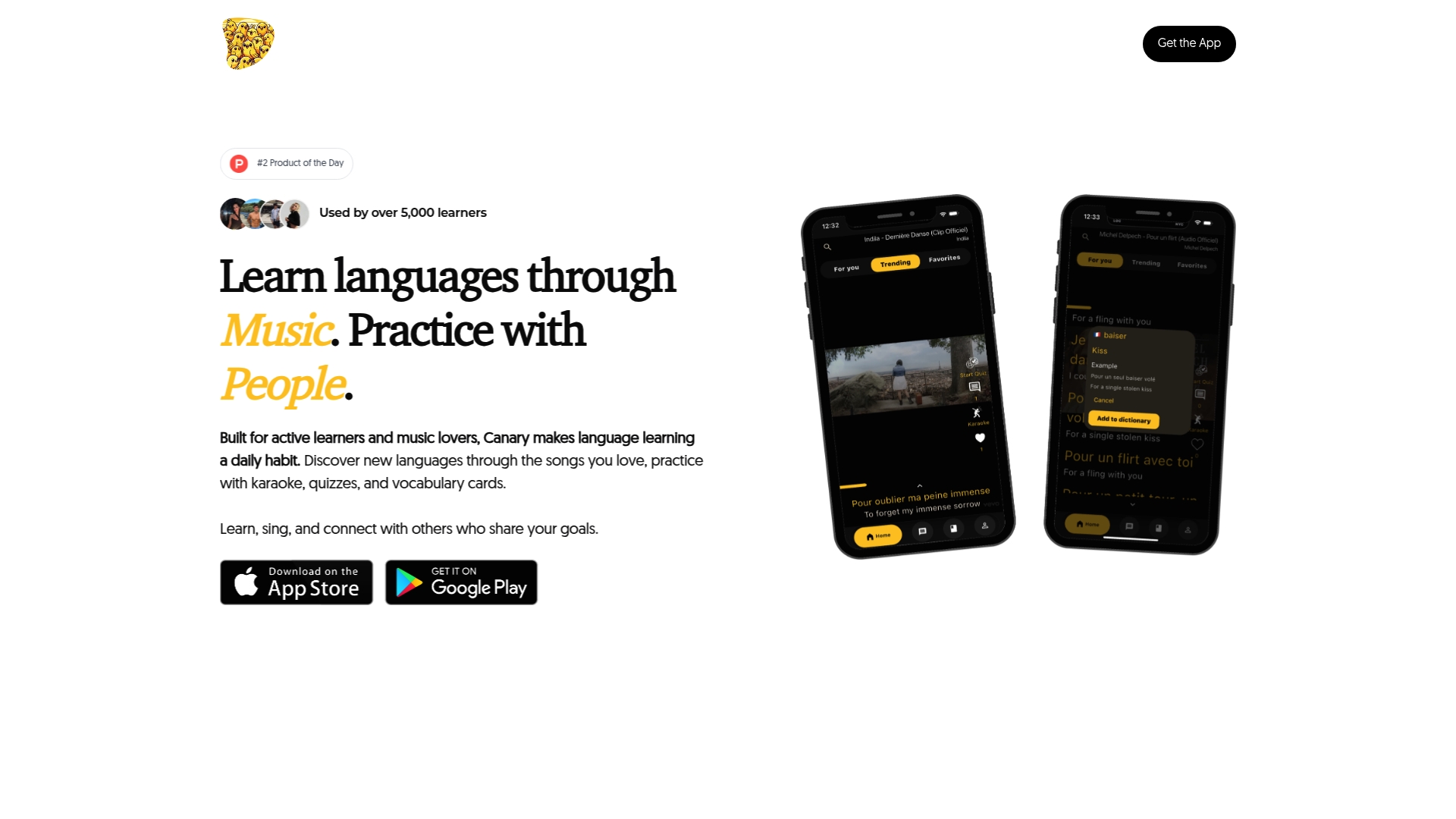
You’ll find carefully curated French songs with synchronized lyrics, pronunciation guides, and vocabulary breakdowns that make learning feel effortless. The platform supports learners from beginner to intermediate levels, letting you progress at your own pace while building genuine fluency. Daily practice routines keep you on track, while social features connect you with other learners for motivation and feedback.
Explore proven music learning methods for language lovers and discover how daily language practice with songs accelerates your progress. Join thousands of music enthusiasts who’ve made French learning enjoyable and effective by learning languages with music at Sing With Canary.
FAQ
What are the best French songs for intermediate learners?
Choose songs with clear pronunciation and moderately challenging vocabulary that pushes your current level without overwhelming you. Classic French chansons by artists like Édith Piaf or Jacques Brel offer timeless vocabulary, while contemporary pop with repetitive choruses helps reinforce common phrases. Visual lyrics synchronized with audio help you associate written words with their sounds, making unfamiliar terms easier to remember. Look for best French songs for learning that match your interests to maintain motivation.
How does singing improve French pronunciation?
Singing encourages smooth legato phrasing that mimics natural French speech flow. Singing creates a legato line which helps pronunciation flow naturally, training your mouth muscles to connect words smoothly. Repetition through songs reinforces muscle memory for difficult sounds like the French “r” or nasal vowels, making them automatic over time. Rhythmic patterns in music aid accurate intonation and liaison usage, teaching you when to link words together just as native speakers do. Regular singing improves French pronunciation by making practice enjoyable and memorable.
Can musical training accelerate French vocabulary learning?
Musicians typically learn new French words faster due to better auditory processing and pattern recognition skills. Musical expertise improves processing of nonnative words and speech sound discrimination, giving trained musicians an edge in distinguishing similar sounds. Pitch and rhythm training enhance word categorization and recall by creating stronger neural pathways for sound-meaning associations. Even non-musicians benefit significantly from music integration, though they may progress at a different pace initially. Explore how musical training and vocabulary learning work together to optimize your practice routine.
How many songs should I practice weekly for noticeable progress?
Start with one to two songs per week, fully mastering each before adding new material. Complete mastery means singing without reading lyrics, understanding every word, and pronouncing each phrase naturally. This focused approach builds deeper retention than superficially learning many songs. Once you’ve mastered four to six songs over a month, you’ll notice significant improvements in pronunciation confidence and vocabulary recall. Increase gradually to three songs weekly only after consistent success with smaller loads.
Do I need to understand music theory to learn French with songs?
No music theory knowledge is required to benefit from song-based French learning. The methods work through repetition, pattern recognition, and emotional engagement rather than technical musical understanding. However, basic rhythm awareness helps you match French syllable stress and intonation patterns more accurately. Focus on listening carefully and mimicking what you hear rather than analyzing musical structures. Your ear will naturally adapt to French phonetic patterns through consistent exposure and practice.