Struggling to stick with Italian textbooks when your heart beats for rhythm and melody? Music is more than background noise—it becomes a dynamic language teacher when combined with interactive tools like Canary. By harnessing the power of music that genuinely excites you and real-time karaoke practice, you unlock a fun path to better pronunciation and authentic cultural connection. This guide walks you through the first crucial step: building motivation and musical engagement right from your playlist.
Table of Contents
- Step 1: Select Engaging Italian Songs And Set Up Canary
- Step 2: Practice Pronunciation Using Karaoke And Lyric Breakdowns
- Step 3: Expand Vocabulary With Interactive Quizzes And Cards
- Step 4: Test Your Progress Through Social Interactions And Feedback
Quick Summary
| Key Takeaway | Explanation |
|---|---|
| 1. Choose songs you enjoy | Selecting music that excites you keeps motivation high, making the learning process more enjoyable and effective. |
| 2. Utilize karaoke for pronunciation | Canary’s karaoke feature transforms passive listening into active speaking practice, improving pronunciation and fluency. |
| 3. Engage with vocabulary actively | Use interactive quizzes and vocabulary cards to reinforce words from songs, boosting retention and understanding. |
| 4. Seek feedback from peers | Sharing recordings and receiving constructive feedback helps refine pronunciation and build confidence in speaking Italian. |
| 5. Practice consistently and in short bursts | Regular, brief study sessions promote better retention and prevent burnout compared to cramming large amounts at once. |
Step 1: Select engaging Italian songs and set up Canary
Choosing the right songs is the foundation of your Italian learning journey. Your song selection determines whether you’ll stay motivated or lose interest after two weeks.
Start with music that genuinely excites you. This might sound obvious, but many learners pick songs based on difficulty level rather than personal preference. If you love indie pop, don’t force yourself through classical opera. The rhythm and melody you enjoy will make repetition feel natural instead of tedious.
Here’s what to focus on when selecting songs:
- Pick tracks with clear, articulate pronunciation and slower tempos (90-120 BPM works well for beginners)
- Choose songs with repetitive lyrics and melodies, which help cement vocabulary in your memory
- Look for artists with recognizable Italian accents and authentic regional pronunciation
- Mix genres to keep learning fresh and maintain engagement
Music combines rhythm, melody, and repetition to help you memorize vocabulary and improve pronunciation naturally. Beginners benefit from traditional folk songs or slower contemporary tracks, while intermediate learners can tackle more complex arrangements.
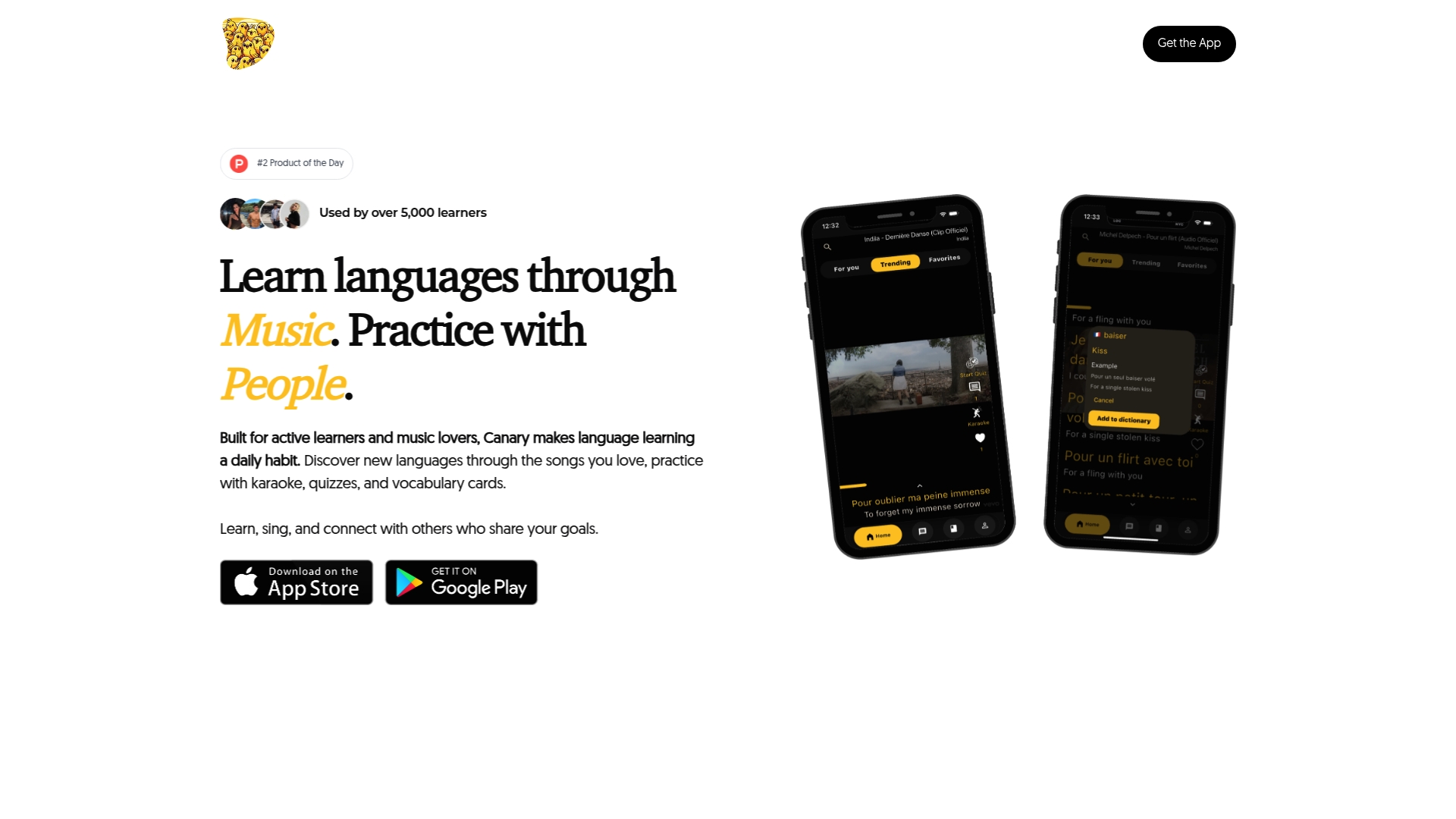
Once you’ve selected songs that appeal to you, setting up Canary takes just a few minutes. Create your account and start by uploading or searching for your chosen songs within the platform. Canary’s integrated karaoke feature lets you practice pronunciation in real-time, while the quiz function reinforces vocabulary from lyrics you’ve already heard.
Selecting music you genuinely love removes the motivation barrier that kills most language-learning efforts.
Build your initial playlist with three to five songs. This prevents overwhelm while giving you enough variety to practice different vocabulary and grammar patterns. Start with beginner-level songs, then gradually introduce more challenging tracks as your ear adapts to Italian rhythms and intonation patterns.
Consiglio professionale Start with one song per week rather than binge-learning five at once; your brain consolidates pronunciation and vocabulary better with spaced repetition, and you’ll actually finish songs instead of abandoning them halfway.
Step 2: Practice pronunciation using karaoke and lyric breakdowns
Now that you have selected your songs, it’s time to actively practice pronunciation. This is where Canary’s karaoke feature transforms passive listening into active speaking practice.

Start by playing your chosen song through Canary’s karaoke mode. The platform will display lyrics as the music plays, allowing you to sing along at your own pace. Don’t worry about perfection on the first attempt. Your goal is to match the artist’s rhythm, intonation, and vowel sounds.
Karaoke improves pronunciation and fluency by requiring you to listen closely and sing accurately, which naturally enhances your listening skills and helps lock vocabulary into memory through repetition. The process also reduces your fear of making mistakes in a low-pressure environment.
Once you’ve sung through the song, move to the lyric breakdown phase. This is where precision matters. Here’s how to approach it:
- Pause the song at short phrases (3-5 words at a time)
- Listen to how each word flows into the next, noting where syllables get stressed
- Repeat the phrase until your mouth shapes the sounds naturally
- Pay attention to vowel sounds, which differ significantly from English
- Record yourself and compare your pronunciation to the original
Focus on specific pronunciation challenges. Italian has distinct sounds that require attention:
- The rolled “r” sound takes practice but becomes natural with repetition
- Double consonants genuinely affect how words sound and must be pronounced deliberately
- Vowel clarity matters more in Italian than in English, where vowels often blur together
- Word stress patterns follow predictable rules once you recognize them
Karaoke combined with lyric breakdowns helps you understand song structure and pronunciation nuances that casual listening misses.
Repeat each song’s breakdown multiple times across different sessions. Your mouth needs time to develop muscle memory for unfamiliar Italian sounds. Spend about 15 to 20 minutes per session rather than marathon practice, which leads to fatigue and diminishing returns.
Pro tip Record yourself performing the karaoke version weekly and listen back to track your progress; you’ll hear accent improvements in real-time that keep you motivated, and you’ll catch pronunciation patterns you need to refine.
Step 3: Expand vocabulary with interactive quizzes and cards
Vocabulary sticks when you engage with it actively, not passively. This step transforms song lyrics into concrete vocabulary knowledge using Canary’s quiz and card system.

After practicing pronunciation, shift your focus to extracting and learning new words from your songs. Canary automatically pulls vocabulary from your selected tracks, but you should also manually flag words that surprised you or felt particularly challenging.
Start by reviewing the vocabulary cards generated from your songs. Each card displays an Italian word, its English translation, and the lyric context where it appears. This context matters tremendously because words behave differently in songs versus everyday speech.
Here’s how to work with the cards effectively:
- Read the Italian word and try recalling the meaning before flipping the card
- Notice the lyric context and how the word functions within the song
- Mark cards as “difficult” or “easy” based on your confidence level
- Create mental images or associations linking the word to the song’s melody or mood
- Review your difficult cards more frequently than the easy ones
Interactive practice quizzes with spaced repetition optimize vocabulary retention by systematically reviewing words at intervals that reinforce long-term memory. Canary’s quiz feature tests your knowledge through multiple formats, preventing the boredom of repetitive flashcards.
Move to the interactive quizzes once you’ve familiarized yourself with the cards. Quizzes force your brain to retrieve information rather than passively recognize it, which builds stronger neural pathways. Canary offers different quiz types to keep learning fresh:
- Multiple choice questions that test comprehension
- Fill-in-the-blank exercises using song lyrics
- Listening quizzes where you identify words by sound alone
- Matching exercises connecting Italian words to English definitions
Take quizzes on a schedule rather than all at once. Aim for three short quiz sessions per week rather than one marathon session. Your brain consolidates vocabulary better when learning is spread across multiple days.
Vocabulary cards combined with interactive quizzes transform song lyrics into lasting knowledge that transfers to real conversations.
Track which words appear in multiple songs. When vocabulary repeats across different tracks, you’re seeing proof that those words matter in Italian music and culture. This repetition accelerates retention without feeling repetitive.
Pro tip Focus your early quiz practice on the 20 percent of words that appear most frequently in your songs; mastering high-frequency vocabulary gives you immediate communicative power and motivation to tackle more challenging material.
Step 4: Test your progress through social interactions and feedback
Solo practice builds foundational skills, but real progress emerges when you practice with others. This step moves you from isolated learning into active social engagement where feedback becomes your most valuable tool.
Canary’s community features connect you with other Italian learners worldwide. Start by joining practice sessions where learners share their karaoke recordings and receive feedback from peers. This isn’t about perfection; it’s about exposure to how others approach the same songs and learning from their pronunciation choices.
When sharing your recordings, you’re not seeking validation. You’re seeking constructive feedback that reveals patterns you might miss alone. A fellow learner might notice that you’re dropping word endings or rushing through certain phrases. That insight, delivered kindly, accelerates improvement faster than any solo practice session.
Peer feedback and social interactions significantly enhance engagement and language growth, enabling learners to practice communication in authentic contexts while receiving corrective guidance that builds confidence and fluency.
Here’s how to approach social feedback productively:
- Share recordings of songs you’ve practiced for at least one week
- Ask for specific feedback on pronunciation challenges you’ve identified
- Listen to others’ recordings and identify what they do well before suggesting improvements
- Accept feedback without defensiveness; it’s about the language, not your ability
- Try the suggested corrections immediately and share a follow-up recording
Beyond peer feedback, pay attention to how Canary tracks your progress metrics. The platform shows improvement in quiz scores, vocabulary retention rates, and pronunciation accuracy over time. These numbers matter because they prove progress when motivation dips.
Timely feedback integrated with social interaction transforms isolated practice into collaborative growth that builds real fluency and confidence.
Engage in conversation-style exchanges where you and another learner discuss the songs you’re learning. Ask each other questions about song meanings, cultural references, or word choices. These exchanges force you to retrieve vocabulary and construct sentences, which solidifies learning in ways quizzes cannot.
Set a goal to share one recording monthly and receive feedback from at least two community members. This consistency builds accountability while keeping the social component sustainable.
Pro tip Focus feedback conversations on specific moments in your recordings rather than broad critiques; asking “How did my rolled R sound in that phrase?” generates more actionable guidance than “How was my pronunciation?” and keeps the interaction constructive and encouraging.
The following table summarizes common mistakes versus best practices for learning Italian with songs:
| Common Mistake | Better Practice | Benefit |
|---|---|---|
| Choosing songs for difficulty only | Selecting music you enjoy | Motivation remains high |
| Marathon practice sessions | Short, frequent study | Improved retention |
| Ignoring lyric context | Focusing on word usage in-song | Faster vocabulary uptake |
| Avoiding feedback | Seeking peer critiques | Clear pronunciation improvements |
Here’s a quick comparison of language learning benefits you experience at each step using Italian songs and Canary:
| Step | Main Skill Improved | Key Motivator | Example Result |
|---|---|---|---|
| Song Selection | Engagement & Listening | Personal taste in music | Consistent daily practice |
| Karaoke Practice | Pronunciation & Fluency | Instant feedback and fun | Clearer spoken Italian |
| Vocabulary Quizzes | Word Retention | Spaced repetition challenge | Recall of lyrics & meanings |
| Social Sharing | Confidence & Accuracy | Community interaction | Constructive correction and growth |
Unlock Your Italian Accent and Fluency With Music and Community
Struggling to find engaging ways to improve your Italian accent and vocabulary can be frustrating. This article highlights common challenges like choosing the right songs, mastering pronunciation through karaoke, and building lasting vocabulary with interactive quizzes. You want a solution that motivates you daily, makes learning fun, and connects you with others who share your passion for Italian music and language.
Canary addresses these exact pain points by combining your love of music with proven language learning techniques. Our platform offers karaoke modes to perfect your pronunciation, vocabulary cards and quizzes for retention, and a vibrant community to practice with real learners worldwide. Whether you are tackling the rolled “r” or navigating tricky word stresses, Canary gives you the tools and social support to overcome these hurdles.
Ready to transform your Italian learning journey into an enjoyable and effective experience? Join thousands of active learners who have improved their accent and fluency through music. Visit Canary language learning now and start building your personalized playlist for real progress. Check out how to Practice Pronunciation with Karaoke and Lyric Breakdowns and explore every feature designed to make learning Italian natural and fun.
Frequently Asked Questions
How can I select the right Italian songs to improve my accent and fluency?
To select the right Italian songs, choose music that you genuinely enjoy. Look for tracks with clear pronunciation, slower tempos, and repetitive lyrics to solidify vocabulary in your memory.
What is the best way to practice pronunciation using karaoke?
Start by using the karaoke feature to sing along with your chosen songs, aiming to match the artist’s rhythm and intonation. Break down the lyrics into short phrases, and repeat them until you feel comfortable pronouncing the words naturally.
How can I actively expand my Italian vocabulary through songs?
Extract new words from the lyrics and use flashcards to reinforce your learning. Set aside time to review difficult vocabulary frequently, and take interactive quizzes to ensure long-term retention.
What benefits do social interactions provide in learning Italian through music?
Engaging with fellow learners through sharing recordings and receiving feedback enhances your pronunciation and fluency. Practicing in community settings helps you gain confidence and offers constructive critiques to refine your skills.
How can I track my progress while learning Italian with music?
Monitor your improvement by checking your quiz scores and vocabulary retention rates on the learning platform. Set specific goals, like sharing recordings monthly and soliciting feedback, to observe how your skills evolve over time.