Tired of memorizing flashcards that never seem to stick? For music fans across the United States and Europe, learning Spanish through songs offers a lively path to mastering tricky pronunciation and real-world vocabulary. Creating a Spanish immersion environment at home with music not only transforms your study routine but makes the process enjoyable and culturally rich. Step by step, you can set up a focused space and discover song-based habits that turn language learning into something you truly look forward to each day.
Table of Contents
- Step 1: Set Up Your Music-Based Learning Environment
- Step 2: Select Spanish Songs For Targeted Practice
- Step 3: Engage With Lyrics Through Karaoke And Quizzes
- Step 4: Expand Vocabulary Using Song-Based Tools
- Step 5: Verify Progress By Practicing With International Peers
Quick Summary
| Essential Insight | Explanation |
|---|---|
| 1. Establish a dedicated learning space | Choose a quiet area to focus on Spanish through music, minimizing distractions for effective pronunciation practice. |
| 2. Curate a playlist suitable for your level | Select songs aligned with your proficiency to improve vocabulary and pronunciation while staying engaged with music you enjoy. |
| 3. Actively engage with lyrics | Use karaoke and quizzes to enhance learning by reinforcing pronunciation and deepening understanding of song meanings. |
| 4. Utilize song-based vocabulary tools | Leverage interactive tools connected to song lyrics to systematically expand your vocabulary and reinforce memory retention. |
| 5. Practice with native speakers | Engage with peers in conversation to gain real-world fluency, cultural insights, and crucial feedback that enhances your learning experience. |
Step 1: Set up your music-based learning environment
You’re about to create a dedicated space where Spanish learning happens naturally through music. This foundation transforms random listening into purposeful language acquisition, making progress consistent and measurable.
Start by choosing a quiet, distraction-free location where you can focus on lyrics and pronunciation. This doesn’t need to be fancy—a corner of your bedroom, a home office, or even a closet works perfectly. The goal is reducing noise that interferes with hearing authentic Spanish pronunciation clearly.
Next, gather your resources strategically. You’ll need three main components:
- Curated playlists matched to your current skill level (beginner, intermediate, or advanced)
- Access to lyrics through websites or apps that let you follow along while listening
- A music player (phone, computer, or speaker system)
Creating a Spanish immersion environment at home accelerates learning by surrounding yourself with the language. Beyond just music, consider adding visual reminders—Spanish posters or vocabulary cards on your wall reinforce learning throughout the day.

Set up a daily listening schedule. Even 20-30 minutes of focused music listening beats occasional marathon sessions. Consistency builds muscle memory for pronunciation and retention far more effectively than sporadic effort.
Technically, ensure your audio quality is good enough to hear pronunciation details. Cheap earbuds can muffle the subtle sounds you need to master Spanish accents. Invest in decent headphones or speakers if budget allows.
Your learning environment should support active listening, not passive background noise—choose quiet spaces and quality audio to catch every pronunciation detail.
Finally, keep a notebook nearby. When unfamiliar words or phrases pop up, jot them down quickly. You’ll review these later, but capturing them fresh from context strengthens vocabulary retention dramatically.
Pro tip: Create a “song of the week” rotation where you replay the same song five times across different days; repetition with variety prevents boredom while cementing pronunciation patterns into muscle memory.
Step 2: Select Spanish songs for targeted practice
Choosing the right songs makes the difference between random listening and deliberate language learning. Your song selection directly impacts vocabulary growth, pronunciation improvement, and motivation to keep practicing.
Start by matching songs to your current proficiency level. Beginners should gravitate toward ballads and children’s songs with clear pronunciation and simple vocabulary. These genres feature repetitive lyrics that reinforce patterns naturally, making them perfect for building foundational skills.
Intermediate learners have more flexibility. You can explore reggaeton, salsa, and pop to encounter slang and idiomatic expressions that real Spanish speakers use daily. Selecting songs for your skill level accelerates progress because you’re challenged appropriately without becoming frustrated.
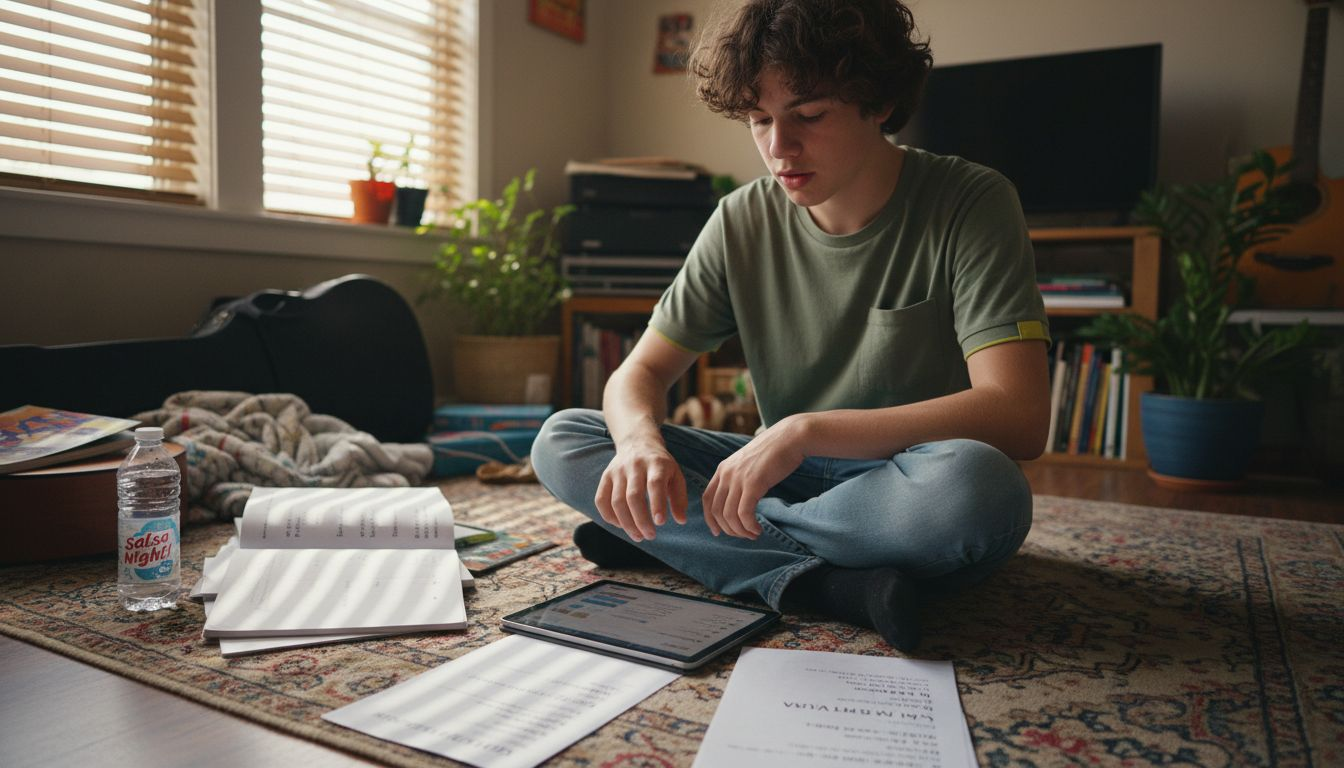
Here’s a quick comparison of popular Spanish song genres for learners:
| Genre | Difficulty Level | Typical Vocabulary | Pronunciation Clarity |
|---|---|---|---|
| Children’s | Beginner | Simple, everyday words | Very clear |
| Ballads | Beginner/Intermediate | Basic to moderate | Clear and slow |
| Reggaeton | Intermediate | Slang, idioms | Fast, sometimes unclear |
| Salsa | Intermediate | Conversational, regional | Rhythmic, moderate |
| Pop | Intermediate/Advanced | Mixed, modern | Varies by artist |
Beyond difficulty level, consider these practical criteria:
- Personal enjoyment: Pick music you genuinely like, not what you think you should listen to
- Lyrical clarity: Avoid heavily produced songs where vocals get buried in effects
- Song length: Start with tracks under 4 minutes to maintain focus
- Artist consistency: Once you find artists you enjoy, explore their full catalog for familiarity
Build a rotating playlist of 5-10 songs at your level. This rotation prevents boredom while giving you enough repetition to absorb vocabulary and patterns. Variety keeps learning fresh; repetition embeds the language in your memory.
Use online resources to preview songs before committing. Spotify, YouTube, and Apple Music let you sample tracks instantly. Read user comments—other learners often recommend songs specifically for language learning.
The best song for learning Spanish is one you actually want to listen to repeatedly—motivation and enjoyment drive retention more than any other factor.
As you build your collection, pay attention to which songs stick with you. Jot down unfamiliar words from songs you love, then research them in context. This natural curiosity accelerates learning dramatically compared to forced vocabulary study.
Pro tip: Start with one song you love and listen to it daily for two weeks straight before adding new tracks; deep familiarity with single songs builds confidence faster than constantly jumping between new material.
Step 3: Engage with lyrics through karaoke and quizzes
Passive listening teaches you only so much. Active engagement with lyrics through karaoke and quizzes transforms songs from background music into powerful learning tools that cement pronunciation and vocabulary in your memory.
Start with karaoke practice. Singing along forces your mouth, tongue, and vocal cords to reproduce Spanish sounds exactly as native speakers pronounce them. This physical repetition builds muscle memory for pronunciation far faster than listening alone.
Here’s how to approach karaoke effectively:
- Sing slowly first: Use YouTube’s playback speed feature to slow songs to 0.75x or 0.5x speed, giving yourself time to match each syllable
- Repeat individual phrases: Pause after short sections and replay them until your pronunciation matches the original
- Record yourself: Use your phone to capture your performance, then listen back to identify weak spots
- Sing with confidence: Don’t worry about sounding perfect; karaoke is practice, not performance
Once you’ve sung through a song several times, move to quiz-based learning. Types of musical language learning methods include vocabulary quizzes that test comprehension of song lyrics you’ve already heard.
Use quizzes to reinforce vocabulary retention. After karaoke sessions, answer questions about the song’s meaning and specific words. This combination of singing plus testing creates multiple neural pathways for the same vocabulary, making recall automatic.
Create your own quizzes by writing down unfamiliar words while singing, then creating flashcard questions about their meanings. This hands-on approach deepens learning beyond what any app can provide.
The combination of singing and quizzing attacks language learning from two angles: your voice learns pronunciation while your mind learns meaning and context.
Mix up your routine to stay engaged. One day focus heavily on karaoke, the next day emphasize quizzes. This variation prevents boredom while targeting different language skills simultaneously.
Pro tip: Complete karaoke practice first, then take quizzes while the song is fresh in your memory; this immediate reinforcement locks vocabulary into long-term retention before you move to new material.
Step 4: Expand vocabulary using song-based tools
Song-based tools transform scattered vocabulary learning into systematic expansion. These platforms combine music with interactive exercises that cement new words into your memory far more effectively than traditional flashcards alone.
Start by identifying which vocabulary gaps matter most to you. Are you weak on everyday conversational words, emotional expressions, or slang? Target your tool usage toward these specific areas for faster progress.
Several types of song-based tools exist. Interactive vocabulary exercises use rapid-fire drills inspired by song lyrics, allowing you to expand your vocabulary naturally while staying connected to the music you love. These tools systematically refresh and broaden language skills while keeping motivation high through entertainment value.
Here’s how to maximize vocabulary tools effectively:
- Choose tools matching your level: Beginner tools focus on common words; advanced tools introduce regional variations and slang
- Practice daily: Spend 10-15 minutes daily with vocabulary tools rather than cramming for hours once weekly
- Link words to songs: When learning a new word from a tool, replay the song section where it appears to reinforce the connection
- Create personal lists: Most tools let you save challenging words; review these saved lists frequently
Don’t rely solely on tools. Combine tools with active listening by pausing songs to look up unfamiliar words, then testing yourself later with the tool. This combination creates multiple learning pathways for the same vocabulary.
Track your progress by noting how many new words you learn weekly. Most learners see dramatic acceleration when combining song-based tools with regular karaoke practice, reaching 20-30 new words per week.
Song-based vocabulary tools work because they present words in meaningful context alongside music, making words stick in memory far longer than isolated memorization.
Rotate between different tools to prevent boredom. Each platform emphasizes different vocabulary sets and teaching styles, so variety exposes you to more authentic Spanish usage patterns.
Pro tip: Focus on mastering 10 words from one song completely rather than learning 50 words superficially; depth beats breadth when building a vocabulary foundation that actually sticks.
Step 5: Verify progress by practicing with international peers
Practicing alone reveals only part of your progress. Real fluency emerges when you communicate with actual Spanish speakers and international learners who challenge you in unpredictable ways.
Start by seeking peer practice opportunities. Language exchange partners, conversation groups, and community Spanish clubs all provide authentic speaking practice. These interactions expose you to different accents, speech patterns, and conversational styles that recordings cannot replicate.
Group activities combining music and peer interaction create relaxed settings where language practice happens naturally. Karaoke sessions with peers are particularly powerful because music reduces anxiety while providing structured speaking opportunities.
Here’s how to structure peer practice effectively:
- Choose partners at your level: Avoid overwhelming yourself with advanced speakers early; gradual progression builds confidence
- Focus on song-based conversations: Discuss lyrics, explain meanings, and sing together with peers to combine music with speaking practice
- Record conversations: Save voice memos of your peer interactions to review later and identify improvement areas
- Set specific conversation goals: Rather than free-flowing chat, target specific vocabulary or grammar structures you’re learning
Practicing with international peers builds cultural awareness alongside language skills. You’ll discover regional pronunciation variations, slang usage, and cultural references that textbooks ignore completely.
Measure your progress by comparing recordings from week one to week five. Listen for improvements in pronunciation clarity, speaking speed, and conversational confidence. Most learners notice dramatic differences within just four weeks of consistent peer practice.
Peer practice reveals progress you cannot see alone because native speakers naturally correct you and push your abilities forward in ways self-study never can.
Don’t fear making mistakes with peers. Language learners are typically supportive and understand the learning process deeply. Mistakes become teaching moments rather than embarrassments.
These peer practice options help you track real-world Spanish progress:
| Practice Type | Interaction Style | Fluency Benefit | Recommended Frequency |
|---|---|---|---|
| Language Exchange | One-on-one conversation | Accent exposure, feedback | Weekly |
| Karaoke Groups | Singing in small groups | Pronunciation, confidence | Bi-weekly |
| Conversation Clubs | Large group discussion | Cultural context, slang | Monthly |
Pro tip: Schedule peer practice immediately after karaoke sessions while pronunciation muscle memory is fresh; combining both activities in one session doubles your retention and speaking confidence.
Unlock Spanish Fluency Through Music With Canary
Struggling to turn Spanish songs into genuine learning moments? This article highlights common challenges like mastering pronunciation, expanding vocabulary effectively, and maintaining motivation through engaging, active listening. If you want to move beyond passive listening and transform your favorite Spanish music into a tool for real results you need more than just playlists and lyrics. Canary offers a unique solution by combining karaoke practice, interactive quizzes, and vocabulary cards all built around the songs you love. It addresses the exact problems of inconsistent practice and limited peer interaction that hold many learners back.
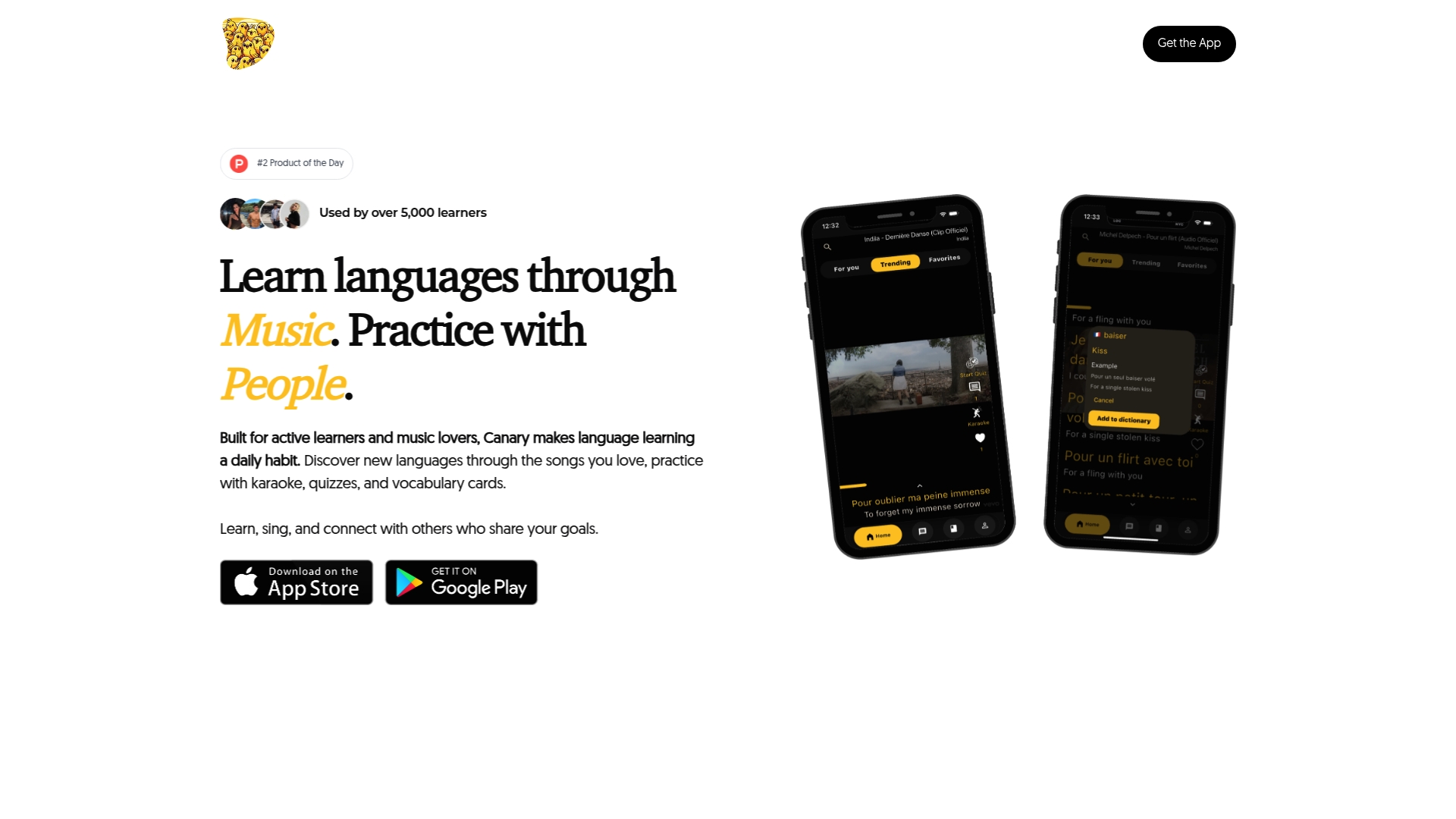
Take control of your Spanish learning journey now by joining a vibrant community where music meets conversation. Experience how Canary’s music-based language platform makes practicing pronunciation easier and vocabulary stickier through song-led lessons. Ready to commit to daily progress with a fun, culturally immersive approach? Start your journey at Canary’s website today and see why thousands of learners choose to learn Spanish the musical way. Don’t wait to transform your language skills with the power of music and meaningful peer practice!
Frequently Asked Questions
How can I create a music-based learning environment for Spanish?
To create a music-based learning environment, choose a quiet space where you can focus on listening to Spanish songs. Gather resources like curated playlists, access to song lyrics, and a good music player to enhance your learning experience.
What types of Spanish songs should I listen to as a beginner?
As a beginner, focus on children’s songs and ballads that have clear pronunciation and simple vocabulary. These genres often feature repetitive lyrics, making it easier to learn foundational skills and build confidence.
How can karaoke help improve my Spanish pronunciation?
Karaoke helps improve Spanish pronunciation by forcing you to match the sounds and rhythms of native speakers while singing along. Start by slowing down songs and practicing individual phrases until you feel confident in your pronunciation.
What are effective ways to expand my Spanish vocabulary through music?
To expand your Spanish vocabulary, use song-based vocabulary tools that offer interactive exercises inspired by lyrics. Pair this practice with active listening and note-taking for a well-rounded vocabulary-building approach.
How can I practice Spanish with native speakers for real-world fluency?
Practice speaking with native speakers through language exchange partners or conversation groups. Engaging in conversations allows you to experience accents and slang, which helps enhance your fluency and understanding of the language.
How often should I incorporate music into my Spanish learning routine?
Aim to incorporate music into your Spanish learning routine daily, dedicating about 20-30 minutes to focused listening and practice. Regular engagement will significantly enhance your language retention and pronunciation skills within a few weeks.