TL;DR:
- Community-driven language platforms are led by communities, allowing control over tools and data. They foster fluency and cultural pride through participation, real accountability, and shared ownership. Combining digital accessibility with real-world interaction ensures sustainable language preservation and revitalization.
Community-driven language platforms are digital or hybrid spaces where language communities lead, govern, and shape their own learning and preservation tools. The impact of community-driven language platforms reaches far beyond vocabulary drills or grammar apps. These platforms build fluency through real accountability, cultural pride through shared ownership, and engagement through emotional connection. Evidence from initiatives like Vavanagi in Papua New Guinea and Australia’s government-funded community language programs shows measurable results at scale. Singwithcanary applies this same community-first logic to music-based language learning, proving that when learners practice together, progress accelerates.
How do community-driven platforms enhance language fluency and learner engagement?
Community participation is the mechanism that turns passive learners into active speakers. When learners contribute to translation, review content, or validate each other’s usage, they take ownership of the language. That ownership creates accountability, and accountability drives fluency faster than any solo study method.
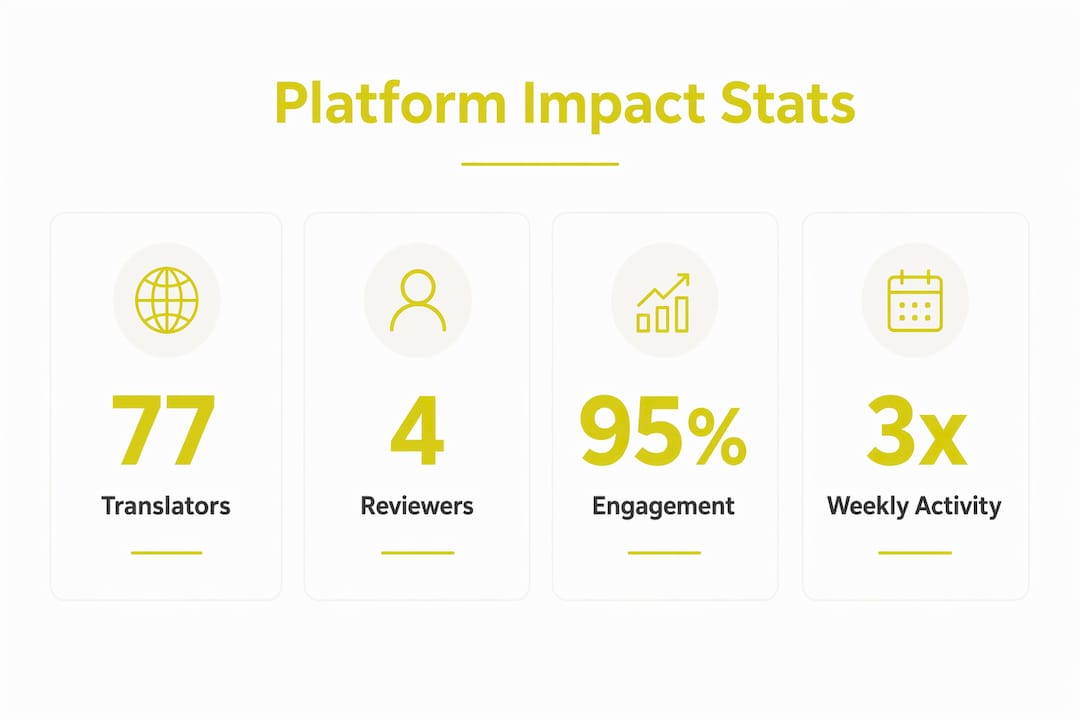
The Vavanagi platform in Papua New Guinea demonstrates this directly. It engaged 77 translators and 4 reviewers to produce over 12,000 sentence pairs, preserving more than 9,000 unique Hula words. That output came from community members, not professional linguists. The scale proves that distributed participation produces results that centralized approaches cannot match.
Engagement also rises when content carries cultural weight. Learners stay motivated when the language they study connects to their identity, their family, or their music. Generic content built for mass markets rarely achieves that. Community-built content does, because it reflects the lived experience of the people who created it.
The benefits of collaborative language tools show up in several concrete ways:
- Real-time peer feedback corrects pronunciation and usage in context, not in isolation.
- Community validation builds confidence by showing learners that native speakers understand them.
- Culturally relevant content keeps sessions emotionally engaging, reducing dropout rates.
- Shared accountability among group members sustains daily practice habits over time.
- Elder-led review processes add linguistic authority that no algorithm can replicate.
Pro Tip: Join a discussion thread or peer review group inside your learning platform at least three times per week. Active participation in community feedback loops builds speaking confidence faster than passive listening exercises.
The role of user-driven language platforms extends beyond content delivery. They create social structures that mirror how languages actually live: in conversation, in disagreement, and in shared meaning-making. That social layer is what separates a community platform from a language app.
What role does cultural connection play in community language platforms?
Cultural connection is not a bonus feature of community language platforms. It is the core mechanism that makes them work. When learners see their language as modern, living, and politically relevant, they invest in it differently.

Community-led advocates argue that digitizing a language asserts modernity, preventing it from being treated as a relic of the past. This is a political act as much as an educational one. A language that appears in apps, song lyrics, and digital archives signals to younger generations that it belongs in the present, not only in memory.
The Miriwoong Language Nest in Western Australia shows what cultural immersion produces at scale. The program teaches over 500 children weekly through full immersion, and researchers link this model to measurable gains in cultural pride and self-esteem among Indigenous children. The immersion model works because children absorb language and identity simultaneously. You can read more about how immersion models work and why they outperform traditional instruction.
Cultural connection in these platforms also involves emotional labor. Heritage language use requires creating spaces for serious cultural conversations, not just transactional exchanges. That emotional depth is what enables true intergenerational transmission. A grandmother teaching her grandchild a song is not just teaching vocabulary. She is transmitting a worldview.
The key cultural benefits these platforms deliver include:
- Identity reinforcement through content that reflects the community’s history and values.
- Intergenerational connection by creating shared linguistic spaces between elders and youth.
- Protection of cultural knowledge from external commodification or misrepresentation.
- Increased self-esteem among younger learners who see their heritage language treated as valuable.
What governance models ensure community ownership and data sovereignty?
Governance is the difference between a platform that serves a community and one that extracts from it. Without clear ownership structures, linguistic data becomes a corporate asset rather than a community resource.
Experts emphasize prioritizing data sovereignty to protect tribal ownership of linguistic data and prevent exploitation by large technology companies. That principle applies beyond Indigenous contexts. Any community that contributes language data to a platform deserves control over how that data is stored, used, and shared.
Vavanagi’s governance model offers the clearest example of what full community control looks like in practice. Its Level 5 governance framework places community members in charge of initiative design, data review, and platform decisions from start to finish. No external organization holds override authority. That structure prevents the cultural commodification that has undermined other digitization projects.
A strong governance model typically follows these steps:
- Community initiation. The language community identifies the need and sets the project goals.
- Dialect consensus. Members agree on a standardized form before any technology development begins. Resolving dialect disputes requires sensitive consensus-building that respects local variation.
- Data ownership agreements. Legal frameworks establish that all linguistic data belongs to the community.
- Community-led review. Elders and fluent speakers validate content before publication.
- Ongoing governance. The community retains authority to modify, restrict, or remove content at any time.
| Governance level | Community control |
|---|---|
| Level 1: External design | Platform built by outside organization with minimal community input |
| Level 3: Collaborative design | Community co-designs content but does not control data |
| Level 5: Full community design | Community owns initiative, data, review, and all platform decisions |
The contrast between Level 1 and Level 5 is not just philosophical. It determines whether a platform sustains a language or simply documents it for outside audiences.
How do community-driven platforms complement real-world language interactions?
Digital platforms do not replace the social environments where languages actually live. Research confirms that digital tools cannot substitute for the familial gatherings and community events that sustain heritage language use. Real-world interaction builds the social cohesion that makes a language feel necessary, not just interesting.
What digital platforms do exceptionally well is bridge distance. Urban speakers who grew up away from their heritage communities can access vocabulary, audio, and cultural content that would otherwise require travel. That accessibility matters enormously for diaspora communities and younger generations who want to reconnect with their roots.
Australia’s Community Language School Grants program illustrates how government support amplifies this effect. The program funds approximately 600 schools serving over 90,000 students across 84 languages. That reach demonstrates what happens when community language initiatives receive institutional backing. Digital tools extend that reach further by giving students access to practice resources outside classroom hours.
The table below summarizes where digital platforms excel and where real-world interaction remains irreplaceable:
| Dimension | Digital platforms | Real-world interaction |
|---|---|---|
| Geographic reach | High: connects urban and remote speakers | Limited to physical proximity |
| Cultural transmission | Moderate: content-based immersion | High: lived, embodied experience |
| Emotional depth | Moderate: depends on community design | High: direct relationship and context |
| Accessibility for youth | High: familiar digital formats | Variable: depends on family engagement |
| Social cohesion | Partial: builds online community | Full: reinforces community identity |
The most effective approach combines both. Digital tools motivate younger learners with accessible, culturally relevant content. Real-world gatherings then give that content meaning through lived use. Singwithcanary applies this principle by pairing music-driven language practice with social interaction between international learners, creating a digital space that mimics the energy of real conversation.
Key Takeaways
Community-driven language platforms succeed when they combine genuine community governance, cultural relevance, and digital accessibility with real-world social practice.
| Point | Details |
|---|---|
| Community governance drives quality | Platforms like Vavanagi show that community-led review produces over 12,000 sentence pairs with authentic linguistic accuracy. |
| Cultural connection sustains motivation | Immersion models like Miriwoong Language Nest link language learning directly to identity and self-esteem. |
| Data sovereignty protects communities | Full community ownership of linguistic data prevents corporate exploitation and ensures long-term platform sustainability. |
| Digital tools extend reach, not replace depth | Government-supported programs reaching 90,000+ students show scale, but familial interaction remains essential for deep fluency. |
| Peer engagement accelerates fluency | Active participation in community feedback loops builds speaking confidence faster than solo study methods. |
Why community ownership changes everything about language learning
I have watched language platforms come and go for years, and the pattern is consistent. Platforms built for communities rarely last. Platforms built by communities almost always do.
The difference is not technology. It is ownership. When speakers govern their own linguistic data and design their own learning tools, they have a reason to keep showing up. That sustained engagement is what produces fluency, not the sophistication of the software.
What surprises most people is how much the governance structure affects the learner experience. A platform where elders review content feels different from one where an algorithm does. Learners sense the human authority behind the material, and that trust changes how they engage with it. The examples of community-driven language learning that have produced the strongest outcomes all share this quality.
The challenge I see most often is underestimating emotional labor. Building a platform that hosts serious cultural conversations, not just vocabulary lists, requires sustained effort from community members who are often already stretched thin. That labor deserves recognition and support, not just technical infrastructure.
My honest recommendation: treat governance design as the first priority, not an afterthought. Get the ownership structure right before writing a single line of code or recording a single audio file. The technology will follow. The community will not wait.
— Ben
Singwithcanary: where community and music meet language learning
Language learning accelerates when it feels social, not solitary. Singwithcanary builds that social layer directly into the learning experience by combining music-based practice with real interaction between international learners.
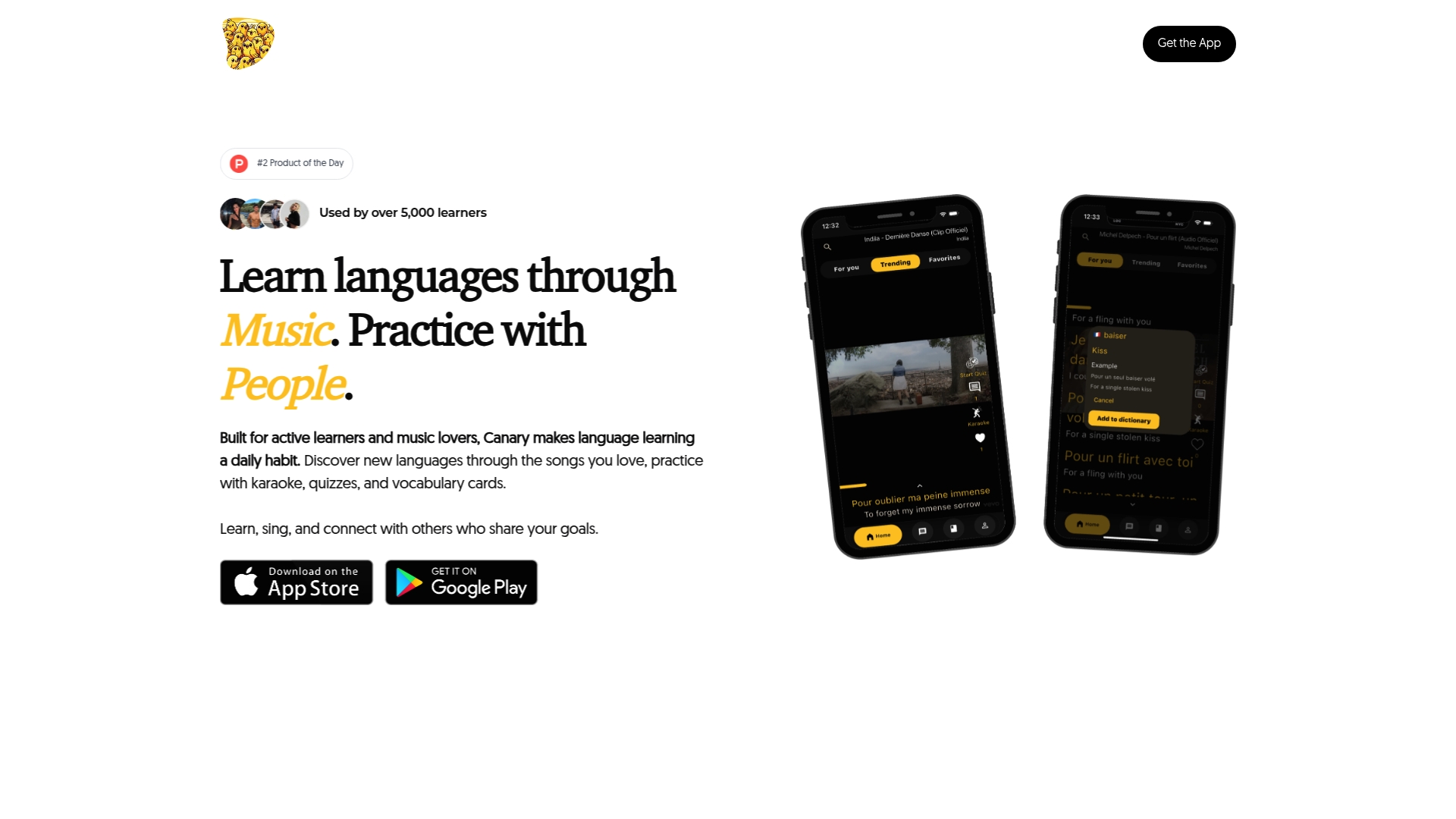
The platform uses song lyrics, karaoke, vocabulary cards, and quizzes to make practice feel like participation rather than study. Learners improve pronunciation, build vocabulary in context, and develop the kind of ear training that only comes from repeated, engaged listening. The community element means you practice with real people, not just recorded voices. If you want to see how interactive language learning through music and social practice works in action, Singwithcanary is worth exploring. You can start learning with music and connect with a global community of learners today.
FAQ
What are community-driven language platforms?
Community-driven language platforms are digital or hybrid spaces where language communities lead the design, governance, and content creation of their own learning and preservation tools. They differ from standard apps by placing control with speakers rather than developers.
How do peer-based language resources improve fluency?
Peer feedback and community validation give learners real-time correction and confidence that solo study cannot provide. Active participation in community review processes builds speaking accuracy and cultural understanding simultaneously.
What is data sovereignty in language platforms?
Data sovereignty means the language community retains full legal and practical control over all linguistic data collected or produced by the platform. Experts identify this as critical to preventing corporate exploitation of Indigenous and minority language resources.
Can digital language platforms replace real-world practice?
Research is clear that digital platforms supplement but do not replace familial and community gatherings essential for heritage language transmission. The strongest outcomes come from combining digital accessibility with regular real-world social interaction.
How does the Vavanagi model demonstrate community governance?
Vavanagi’s Level 5 governance framework placed 77 community translators and 4 reviewers in full control of platform design and data, producing over 12,000 sentence pairs. That model shows how community ownership produces both linguistic quality and long-term sustainability.