TL;DR:
- Community-driven language learning emphasizes peer interaction and social experiences over solo study. Smaller groups and psychological safety foster faster fluency, especially when learners build confidence without fear of mistakes. Connecting through structured or informal communities encourages motivation and sustained practice.
Community-driven language learning is defined as the practice of acquiring a new language through peer interaction, group exchange, and shared social experiences rather than solo study. Examples of community-driven language learning range from free weekly meetups like JUMP Boise to structured clubs like Lingping Club in Bangkok, each built around real conversation over grammatical perfection. The formal term for this approach is Community Language Learning (CLL), a method developed to prioritize learners’ emotional and social needs alongside linguistic goals. What makes these models work is simple: speaking with real people, regularly and without fear, builds fluency faster than any textbook.
1. What are the best examples of community-driven language learning?
Community-driven language learning groups fall into four main categories: informal conversation meetups, structured membership clubs, online exchange platforms, and workplace practice groups. Each type serves a different learner profile and schedule.
- Informal meetups: JUMP Boise runs free weekly language exchanges every Wednesday, capping groups at 6 participants to keep conversations personal and effective. No registration fee, no grammar tests. Just people practicing the courage to be misunderstood.
- Structured clubs: Lingping Club in Bangkok charges a monthly membership fee and organizes member-led discussions, city walks, and online classes. Its current membership sits around 100 people, with event pricing scaled by format.
- Online exchange platforms: Platforms like Tandem and Easy Language Exchange connect learners across 300+ languages, using filters for CEFR level, goals, and time zones to match compatible partners.
- Workplace groups: Professional lunch circles and office language groups are a growing format, especially in multinational companies where colleagues share a target language.
Pro Tip: If you are new to group learning, start with a capped meetup of 6 or fewer people. Smaller groups reduce social pressure and give every learner more speaking time per session.
2. How online and hybrid models improve collaborative language practice
Hybrid learning models combine digital coordination with face-to-face practice, and intermediate learners benefit most from this format. Advanced learners tend to prefer context-specific groups where conversations go deeper into professional or cultural topics.
The mechanics are straightforward. Organizers use apps like Telegram or WhatsApp to schedule meetups, share resources, and keep members engaged between sessions. The digital layer handles logistics; the in-person layer handles the actual speaking practice. This split makes it easier to maintain a consistent group without requiring everyone to live in the same neighborhood.
Online-only formats work well too, particularly for learners in smaller cities or rural areas. Platforms built around live, host-led discussions bring together global participants in real time. These sessions often use breakout rooms to simulate the small-group dynamic that makes in-person exchanges effective.
- Goal alignment: Match with partners who share your specific target, whether that is travel conversation, business vocabulary, or accent reduction.
- CEFR level gaps: Effective partner matching keeps level gaps under 2 CEFR bands. A B1 learner paired with a C2 speaker often feels outpaced and disengages.
- Time zone filters: Keeping time zone differences under 9 hours makes scheduling sustainable for both partners.
- Session frequency: Weekly sessions outperform monthly ones for retention. Consistency matters more than session length.
3. Structured community programs: Lingping Club and JUMP Boise
The most instructive examples of peer-to-peer language learning come from programs that have solved the sustainability problem. Both Lingping Club and JUMP Boise have run consistently because they built structures that serve learners without burning out organizers.

Lingping Club measures success by engagement and curiosity, not test scores. Member-led discussions mean the content reflects what participants actually want to talk about, which keeps attendance high. City walks add a cultural layer that classroom learning cannot replicate. The monthly fee model funds operations and signals commitment from members, which reduces no-shows.
JUMP Boise takes the opposite approach on cost: it is entirely free. Its philosophy centers on removing every barrier between a learner and a real conversation. The exchange removes cost and ego barriers, creating a weekly social laboratory where diverse learners practice without fear of judgment. The group size cap of 6 is not arbitrary. It reflects a deliberate choice to prioritize depth of interaction over breadth of attendance.
Pro Tip: When evaluating a language community, ask one question: does this group measure success by fluency scores or by how often members show up and talk? The second answer predicts a healthier learning environment.
What both programs share is a rejection of perfectionism. Learners who wait until they feel “ready” to speak rarely make progress. Communities that celebrate imperfect attempts build the psychological safety that accelerates real fluency. You can explore more group learning ideas that apply this same principle.
4. The psychology behind community language learning
Community Language Learning as a formal method treats teachers as counselors who address learners’ emotional needs first. Grammar correction takes a back seat to building confidence and reducing communication anxiety. This is not a soft approach. It is grounded in the observation that ego barriers kill speaking practice faster than vocabulary gaps do.
When learners feel safe making mistakes, they speak more. When they speak more, they improve faster. The CLL philosophy formalizes what every successful language community already knows intuitively: the affective environment shapes outcomes as much as the curriculum does.
Peer support within language communities also transforms solitary study into social identity formation. Learners stop thinking of themselves as “someone studying Spanish” and start thinking of themselves as “someone who speaks Spanish with their group on Thursdays.” That identity shift sustains motivation through the inevitable plateaus that derail solo learners.
5. How to find the right language community for your learning style
Personality fit is the single most important factor for long-term engagement in community-based learning. Shy learners often thrive in one-on-one exchange formats before graduating to group settings. Social learners gain energy from larger groups and benefit from the variety of accents and speaking styles they encounter.
Here is a practical framework for choosing the right community:
- Assess your level first. Know your CEFR band before joining a group. A mismatch of more than 2 levels creates frustration on both sides of the exchange.
- Match your personality to the format. One-on-one sessions suit introverts. Group meetups of 4–8 people suit learners who need social energy to stay motivated.
- Check the meeting frequency. Weekly groups outperform monthly ones for building speaking habits. Look for communities that meet at least twice a month.
- Evaluate the group’s culture. Does the group celebrate attempts or correct every error? The first culture produces speakers. The second produces anxious silent learners.
- Balance community with individual practice. Community sessions build confidence and fluency. Individual study builds accuracy. The best learners use both. Module-based structured learning pairs well with group exchange for this reason.
- Use platform filters strategically. When searching online, filter by goal, level, and time zone before filtering by language. Compatibility on those three factors predicts session quality better than shared language alone.
- Give it four sessions before judging. First sessions are awkward in every community. Learners who commit to four sessions before deciding whether to stay report significantly higher satisfaction than those who quit after one.
Pro Tip: Try practicing Spanish conversation in structured peer settings before joining open-level groups. Building a base of conversational confidence makes group exchanges far more productive.
Key takeaways
Community-driven language learning works because peer interaction, psychological safety, and consistent practice together produce fluency that solo study cannot replicate.
| Point | Details |
|---|---|
| Group size matters | Capping sessions at 6 participants maximizes speaking time and reduces social pressure. |
| Level matching is critical | Keep CEFR gaps under 2 bands to keep both partners challenged without intimidation. |
| Personality fit drives retention | Shy learners start with one-on-one formats; social learners thrive in group meetups. |
| Sustainability requires structure | Fee models, regular schedules, and clear group culture keep communities active long-term. |
| Identity shift sustains motivation | Learners who adopt a social language identity reduce burnout and stay consistent. |
Why community changed how I think about language learning
The conventional wisdom says language learning is a personal discipline. Study daily, use the app, track your streak. That framing is not wrong, but it is incomplete. The learners I have seen make the fastest progress are not the most disciplined solo studiers. They are the ones who found a group that made them want to show up.
What strikes me about programs like JUMP Boise and Lingping Club is not their curriculum. It is their culture. Both communities have figured out that the enemy of language learning is not laziness. It is shame. The moment a learner stops worrying about sounding foolish, their speaking ability accelerates visibly. That psychological shift is almost impossible to manufacture alone.
Language communities build identity in a way that apps and textbooks cannot. When you have a group of people who know you as “the one learning Mandarin” or “the one who always tries the hardest phrases,” you show up differently. You practice between sessions because you do not want to let the group down. That social accountability is not a trick. It is one of the most powerful learning mechanisms humans have.
My honest advice: find your community before you feel ready. The group will pull you forward faster than any solo preparation ever could.
— Ben
Singwithcanary brings music and community together
Learning a language with a community works best when the practice itself feels worth doing. Singwithcanary combines music, social interaction, and interactive language practice to create exactly that kind of environment. Learners practice pronunciation through song lyrics, build vocabulary with karaoke and quizzes, and connect with international speakers who share the same passion for music and language.
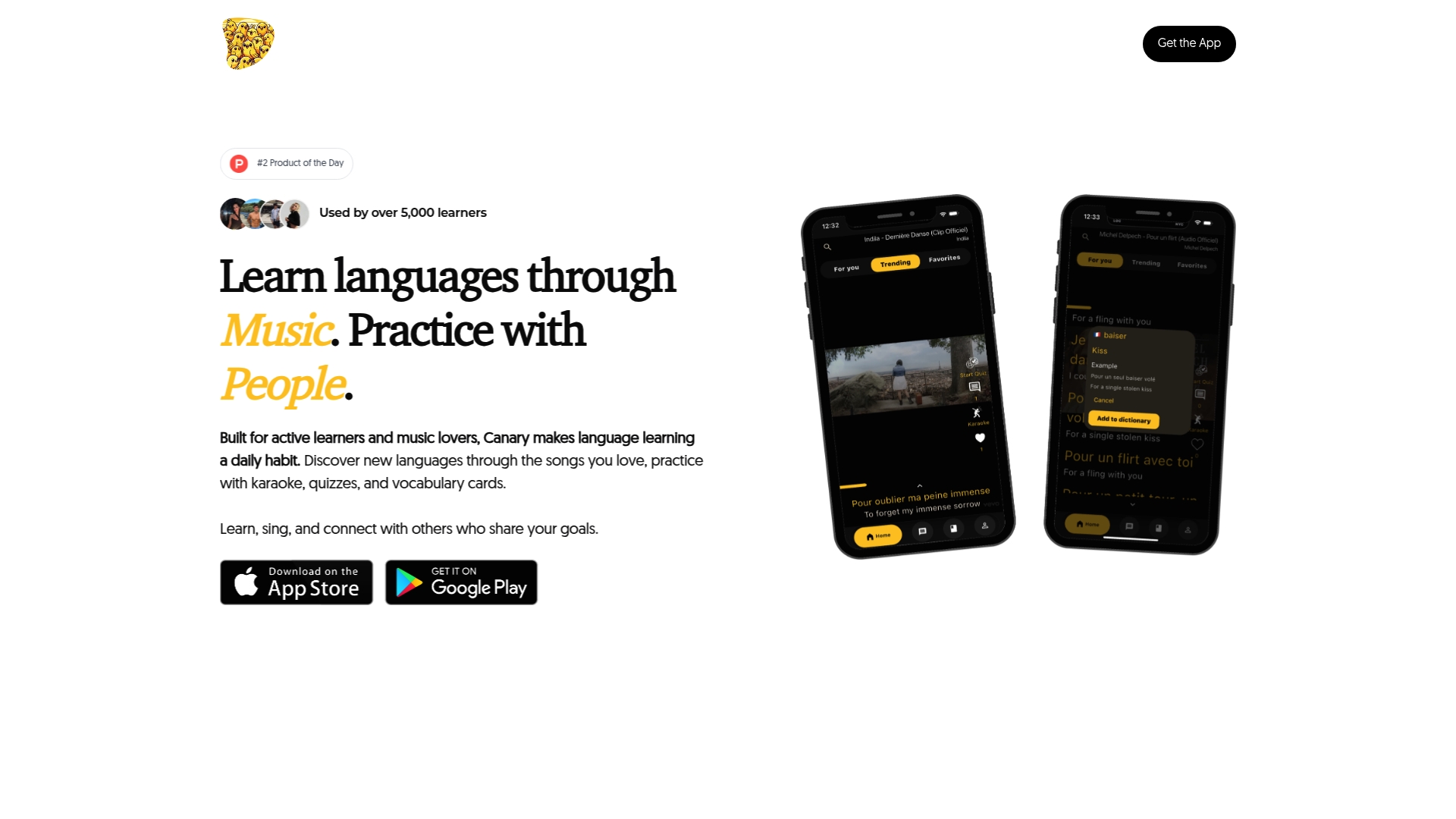
Singwithcanary is built for learners who want real conversation, not just correct sentences. The platform’s social features let you practice with people from around the world, turning every session into a community exchange. If you are ready to add music and connection to your language practice, learn languages with music at Singwithcanary and see how fast fluency follows.
FAQ
What is community-driven language learning?
Community-driven language learning is the practice of acquiring a language through peer interaction, group exchange, and shared social experiences. It prioritizes real conversation and psychological safety over formal grammar instruction.
How do I find language partners online?
Platforms like Tandem and Easy Language Exchange connect learners across 300+ languages using filters for CEFR level, goals, and time zones. Keeping level gaps under 2 CEFR bands and time zone differences under 9 hours produces the most sustainable partnerships.
What is the ideal group size for language exchange meetups?
Groups capped at 6 participants give every learner more speaking time and reduce the social pressure that silences beginners. JUMP Boise uses this cap specifically to maximize interaction quality.
How does Community Language Learning differ from regular group classes?
Community Language Learning (CLL) treats teachers as counselors who address learners’ emotional needs first, reducing ego barriers and communication anxiety. Regular group classes typically prioritize grammar accuracy over speaking confidence.
Can shy learners benefit from community language learning?
Yes. Shy learners thrive when they start with one-on-one exchange formats before moving to group settings. Matching by personality and level is the most important factor for long-term engagement in any community-based learning format.