Forgetting new words hours after studying them frustrates most language learners. Traditional memorization drills feel tedious, and pronunciation remains challenging without real-world practice. Music offers a scientifically proven shortcut to solve both problems by engaging your brain’s memory and emotional centers simultaneously. This guide shows you how to actively use songs to accelerate vocabulary retention and perfect your accent through practical, enjoyable techniques that work.
Table of Contents
- Why Music Works For Language Learning
- Prerequisites For Music-Based Language Learning
- How To Select Songs And Set Difficulty Levels
- Active Learning Techniques With Music
- Social And Community Practice For Language Learning With Music
- Common Mistakes And How To Avoid Them
- Expected Outcomes And Realistic Timelines
- Discover Music-Powered Language Learning With Canary
- Frequently Asked Questions
Key takeaways
| Point | Details |
|---|---|
| Music activates multiple brain regions | Songs engage both logical and emotional centers, creating stronger memory pathways for vocabulary and pronunciation patterns. |
| Song selection determines success | Choosing slow tempo tracks with clear lyrics and repeated choruses maximizes learning efficiency for beginners. |
| Active engagement beats passive listening | Singing along, studying lyrics, and tracking new words doubles vocabulary acquisition compared to background listening. |
| Social practice reduces anxiety | Group singing and community interaction build confidence and improve real-world speaking skills faster. |
| Consistent repetition shows results quickly | Spaced practice with songs improves vocabulary recall by 25-35% within 4 to 8 weeks. |
Why music works for language learning
Your brain processes music differently than spoken language, creating unique opportunities for accelerated learning. Songs engage both logical and creative brain hemispheres, promoting interactive and emotional learning which enhances vocabulary retention and pronunciation practice. This dual activation strengthens neural connections that help you remember new words longer and recognize pronunciation patterns faster.
Rhythm and melody act as memory anchors. When vocabulary attaches to a catchy tune, your brain stores it in multiple formats: auditory, rhythmic, and emotional. This redundancy makes recall easier when you need those words in conversation. The predictable patterns in music also train your ear to recognize similar sounds in natural speech, improving your ability to mimic native pronunciation.
Emotional engagement separates music from textbook drills. Songs trigger feelings that lower anxiety and increase motivation, making practice sessions something you actually look forward to. Understanding the educational benefits of music for language learners reveals why this emotional connection sustains long-term learning habits better than forced study routines.
Music creates a low-pressure environment where mistakes feel less threatening, encouraging learners to experiment with new sounds and words without fear of judgment.
The role of music in language learning extends beyond simple memorization. Regular exposure to songs builds cultural context and idiomatic understanding that textbooks struggle to teach effectively.
Prerequisites for music-based language learning
Starting with the right foundation prevents frustration and accelerates progress. Basic familiarity with the target language alphabet, access to slower tempo songs with clear lyrics, and tools for lyric reading are essential before diving into music-based practice. You do not need fluency, but recognizing letters and basic sounds helps you connect written lyrics to what you hear.
Gather these tools before your first session:
- Digital or printed lyrics in your target language
- A notebook or app for tracking new vocabulary
- Headphones for focused listening without distractions
- Access to songs with adjustable playback speed
Your environment matters as much as your materials. Find a quiet space where you can sing out loud without self-consciousness. Privacy eliminates the anxiety that stops many learners from practicing pronunciation actively. Following a language learning workflow for beginners helps structure your sessions for maximum efficiency.
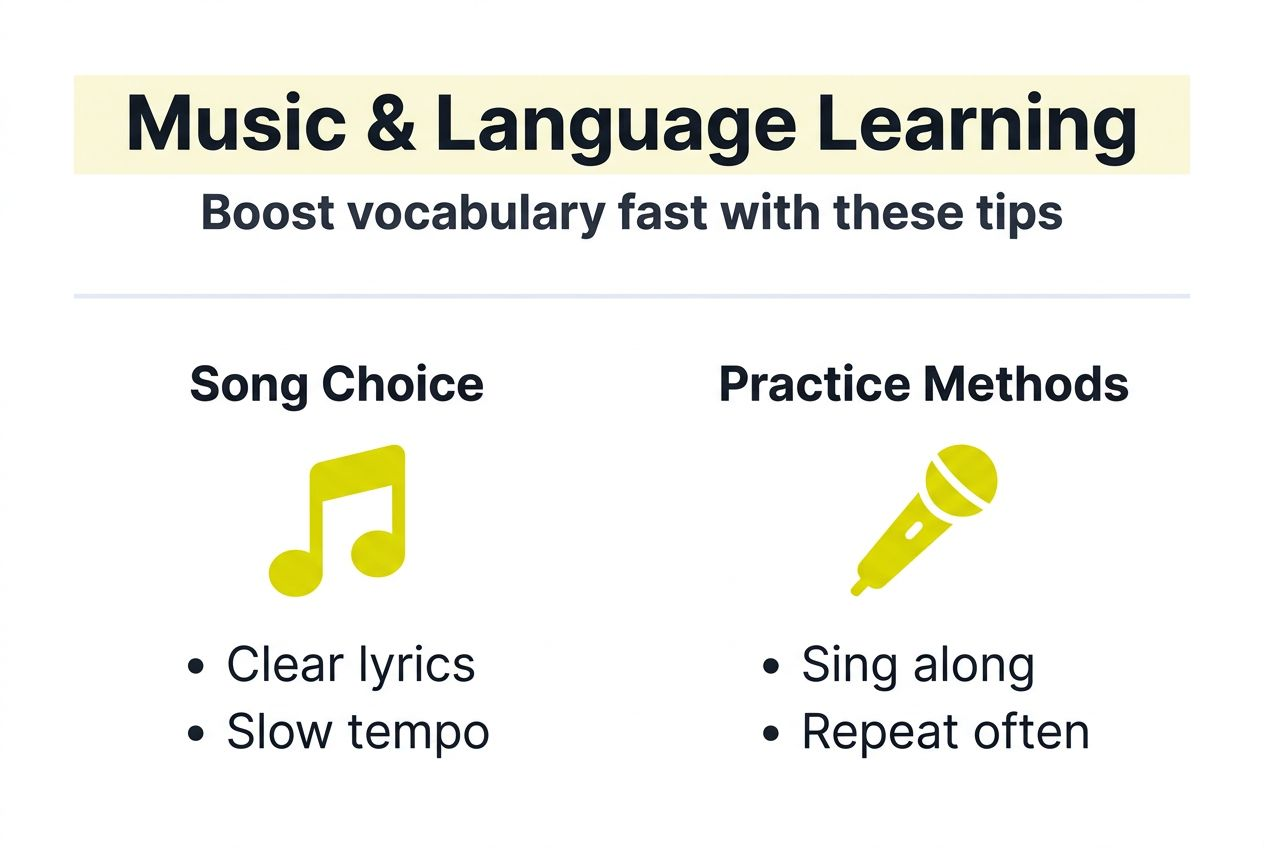
Choose songs with slower tempos initially. Fast-paced tracks overwhelm beginners trying to match pronunciation while reading lyrics. Look for music with repeated choruses, as repetition naturally reinforces vocabulary without extra effort. The song of the week approach provides a structured method to build this habit.
Pro Tip: Start with children’s songs in your target language. They use simpler vocabulary, clearer pronunciation, and repetitive structures perfect for building foundational skills.
How to select songs and set difficulty levels
Picking the wrong song wastes time and kills motivation. Beginners should prioritize slow tempo tracks featuring repeated choruses and everyday vocabulary. Pop ballads, folk music, and acoustic versions of popular songs typically offer the clearest pronunciation and simplest grammar structures. Avoid rap, metal, or heavily stylized genres until you reach intermediate proficiency.

Choosing culturally relevant songs with everyday vocabulary increases learner engagement by 20-30%, making persistence easier. Select music that genuinely interests you, even if it means slightly higher difficulty. Personal enjoyment compensates for linguistic challenges and maintains long-term motivation.
Match song complexity to your current level:
| Skill Level | Recommended Tempo | Vocabulary Density | Ideal Genres |
|---|---|---|---|
| Beginner | 60-90 BPM | 5-10 new words per song | Pop ballads, children’s music, folk |
| Intermediate | 90-120 BPM | 10-20 new words per song | Mainstream pop, acoustic versions |
| Advanced | 120+ BPM | 20+ new words per song | Any genre with clear enunciation |
Lyric clarity trumps popularity. A chart-topping hit with mumbled vocals teaches less than an obscure track with precise pronunciation. Listen to 30-second previews before committing to a full song. If you cannot distinguish individual words on first listen, choose something clearer.
Apply tips on selecting songs to find tracks that balance challenge with accessibility. Remember that one well-chosen song practiced thoroughly beats five random tracks studied superficially.
Active learning techniques with music
Passive background listening accomplishes little. Active engagement like singing along and lyric analysis doubles vocabulary acquisition compared to passive listening alone. Transform each song into a structured learning session using these proven methods.
Follow this step-by-step process:
- Read lyrics while listening without singing to familiarize yourself with pronunciation
- Identify 5-10 unfamiliar words and look up their meanings immediately
- Listen again while following along with lyrics and singing softly
- Sing at full volume focusing on matching the artist’s pronunciation
- Record yourself singing and compare to the original track
- Note problem words in a journal and practice them separately
Focus on pronunciation details during active sessions. Pay attention to how native speakers connect words, where they pause, and which syllables receive emphasis. These subtleties separate textbook learning from natural-sounding speech. Mimicking a singer’s intonation trains your mouth muscles to form unfamiliar sounds correctly.
Spaced repetition multiplies effectiveness. Revisit the same song multiple times across several days rather than marathoning it in one session. Documenting progress through journals improves motivation and awareness during music language learning. Write down new words, note pronunciation breakthroughs, and track which songs help most.
Recording yourself reveals pronunciation errors you cannot hear while singing. Compare your recordings to the original track weekly to measure improvement objectively.
Consider guided music language learning programs that structure these active techniques into daily routines. Understanding how music boosts vocabulary retention reinforces why active engagement matters more than passive exposure.
Pro Tip: Create flashcards with lyrics from your favorite songs. Seeing words in context helps recall better than isolated vocabulary lists.
Social and community practice for language learning with music
Learning alone limits your progress. Group singing and social music activities reduce language anxiety by creating supportive environments where mistakes feel normal. Singing with others forces you to keep pace, eliminating the option to pause and overthink pronunciation. This spontaneity mirrors real conversations better than solo practice.
Social interaction through music offers specific benefits:
- Immediate feedback on pronunciation from native speakers or advanced learners
- Motivation through friendly competition in quizzes and karaoke sessions
- Exposure to different accents and speaking styles within your target language
- Accountability that maintains consistent practice habits
Karaoke sessions with language partners combine fun with focused practice. The performance aspect pushes you to pronounce words clearly and confidently, skills that transfer directly to everyday conversation. Community activities like group challenges or singing competitions create positive pressure that accelerates improvement.
Interacting with native speakers through music provides authentic pronunciation models. You hear natural speech patterns, colloquial expressions, and regional variations that textbooks omit. This exposure refines your accent and builds cultural understanding simultaneously. Join language community learning workflows to connect with others using music-based methods.
Online communities offer accessibility when local language partners are unavailable. Video chat singing sessions, shared playlists with discussion forums, and collaborative lyric analysis groups replicate in-person benefits digitally. The key is regular interaction, not perfect attendance.
Common mistakes and how to avoid them
Most learners sabotage their progress without realizing it. Passive listening without active engagement causes 50% lower vocabulary acquisition compared to interactive methods. Simply playing foreign language music in the background while doing other tasks provides minimal learning value. Your brain needs focused attention to form strong memory connections.
Avoid these frequent pitfalls:
- Choosing songs far above your current proficiency level
- Skipping lyric study and jumping straight to singing
- Trying to learn too many new words per song
- Neglecting regular repetition of previously studied tracks
- Selecting music based on popularity rather than learning value
Starting with complex, fast-paced songs frustrates beginners and kills motivation. If you cannot understand at least 60% of lyrics on first listen, the song is too advanced. Choose simpler material and build up gradually. Success with easier songs builds confidence that sustains long-term practice.
Vocabulary overload overwhelms your memory. Limit yourself to 5-10 new words per song maximum. Master those completely before moving to new material. Quality beats quantity in language acquisition. Understanding the common mistakes in music language methods helps you avoid wasted effort.
Inconsistent practice undermines progress. Studying one song intensely then abandoning it wastes the initial effort. Return to previous songs weekly to reinforce vocabulary through spaced repetition. This review feels effortless because you enjoy the music, making consistency easier than traditional study methods.
Expected outcomes and realistic timelines
Setting realistic expectations prevents discouragement. Vocabulary retention can improve by 25-35% with spaced repetition over weeks, but results require consistent effort. Most learners notice measurable improvements in pronunciation accuracy within the first month of active practice.
Typical progress markers:
| Timeframe | Vocabulary Gains | Pronunciation Improvements | Motivation Changes |
|---|---|---|---|
| Weeks 1-2 | 20-40 new words | Basic sound recognition | High enthusiasm |
| Weeks 3-4 | 40-80 new words | Improved accent mimicry | Routine forming |
| Weeks 5-8 | 80-150 new words | Noticeable clarity | Habit established |
| Months 3-6 | 200-400 new words | Natural-sounding speech | Sustained engagement |
Pronunciation improvements appear faster than vocabulary expansion. Singing daily trains your mouth muscles to form unfamiliar sounds automatically. You will hear yourself sounding more native-like before you acquire extensive vocabulary. This early win motivates continued practice when vocabulary growth feels slower.
Motivation and anxiety reduction sustain long-term learning more than rapid skill gains. Music makes practice enjoyable, eliminating the willpower required for traditional study. You will find yourself choosing to practice rather than forcing yourself, a critical shift for lasting success.
Visible progress often arises after 4 to 8 weeks of consistent practice. Track your journey by recording yourself singing the same song monthly. The comparison reveals improvements you cannot notice day to day. Follow a structured song repetition and progression schedule to ensure steady advancement.
Expect plateaus between growth spurts. Language acquisition happens in jumps, not smooth curves. Persistence through plateau periods separates successful learners from those who quit prematurely.
Discover music-powered language learning with Canary
Applying these techniques becomes easier with the right tools and community support. Canary combines curated song selections, guided learning workflows, and social practice features into one platform designed specifically for music-based language acquisition.
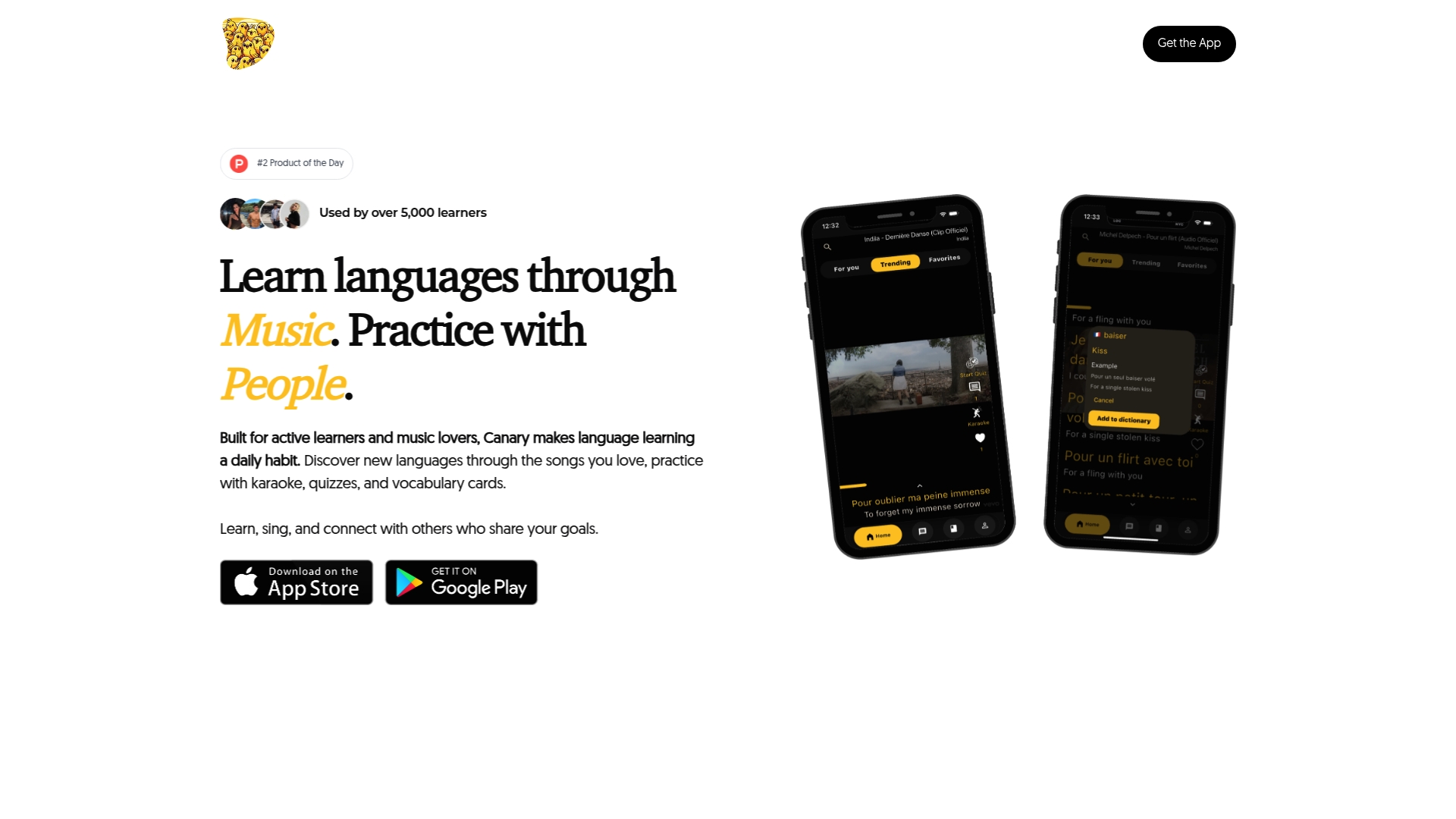
Follow step-by-step programs that match songs to your proficiency level automatically. Track vocabulary progress, participate in community karaoke sessions, and join weekly challenges that keep motivation high. The platform eliminates the guesswork from song selection and structures your practice for maximum efficiency.
Join thousands of learners who transformed their language skills through music. Learn languages with music at Canary using proven methods that make practice feel like entertainment. Try the Song of the Week program to experience structured learning with community support. Ready to start? Sign up for personalized music learning and discover how enjoyable language acquisition becomes when combined with your favorite songs.
Frequently asked questions
What types of songs work best for language beginners?
Simple, slow tempo songs with repeated choruses and clear lyrics are best for beginners. Genres like pop ballads and folk music often provide the clearest pronunciation and most accessible vocabulary for foundational learning.
How often should I repeat songs to improve vocabulary?
Use spaced repetition over days and weeks for best vocabulary retention. Revisit songs multiple times instead of passive one-time listening to strengthen memory pathways.
Can singing with a group help reduce language learning anxiety?
Group singing lowers anxiety by creating a supportive environment where mistakes feel normal. Social music activities help build confidence and speaking skills faster than solo practice alone.
How many new words should I learn per song?
Limit yourself to 5-10 new words per song maximum to avoid overwhelming your memory. Master these completely before moving to new material for better long-term retention.
When will I notice pronunciation improvements?
Most learners notice measurable pronunciation improvements within 4 to 8 weeks of consistent active practice. Recording yourself monthly helps track progress that feels gradual day to day.