A compact daily routine of 20–30 minutes plus two or three weekly social practice sessions produces measurable spoken fluency gains within 6–8 weeks, according to a systematic review of shadowing interventions. The checklist below is built around that evidence, and every item maps to a specific time slot and a concrete exercise.
Your core oral fluency improvement checklist at a glance:
- 5-minute warmup: Breath control and rhythm tapping to a song beat
- 10-minute music block: Song shadowing or karaoke with recording
- 5–10 minutes retrieval practice: Respond aloud to two or three prompts without notes
- 2–3 times per week: 30–60 minute social practice session (language exchange, tandem, or guided group)
Singwithcanary is the music-first platform built to run this exact routine, combining a curated song library, in-app karaoke, and community practice rooms in one place.
Table of Contents
- What does your daily and weekly checklist look like?
- How do you turn songs into real speaking practice?
- What should you prioritize for intelligibility first?
- How do you prepare for anxiety-inducing speaking situations?
- Where and how should you practice with other people?
- How do you record, compare, and get feedback on pronunciation?
- How long does progress take, and what does it cost?
- What do you do when progress stalls?
- Key Takeaways
- Why the “accent reduction” framing is holding adult learners back
- Singwithcanary puts this checklist into practice for you
- Useful sources for further reading
What does your daily and weekly checklist look like?
The table below is a screenshot-ready schedule. Follow the order listed: warmup before shadowing, shadowing before retrieval, retrieval before social practice. That sequence reduces cognitive load because you move from controlled repetition toward open production.
| Slot | Activity | Duration | Frequency |
|---|---|---|---|
| Morning warmup | Breath + rhythm tap to a song | 5 min | Daily |
| Music block | Song shadowing or karaoke + recording | 10 min | Daily |
| Retrieval practice | Respond aloud to 2–3 prompts | 5–10 min | Daily |
| Social session | Language exchange, tandem, or group | 30–60 min | 2–3× per week |
| Weekly review | Playback recordings, note targets | 15 min | Once per week |
Song-based activities paired with lyric analysis and gap-fill tasks show significant gains in engagement and test scores in controlled studies, so vary your music block across the week: shadowing on Monday, karaoke on Wednesday, lyric dictation on Friday.

Pro Tip: Combine the warmup and music block into a single commute activity. Play the song through once while tapping the beat, then shadow on the second listen. Fifteen minutes on the subway covers both slots.
How do you turn songs into real speaking practice?
Music works because it delivers structured rhythmic and intonational input that models stress-timed speech, and research published in Frontiers in Education shows it also lowers learner anxiety when paired with interactive song activities. Here is the session sequence that gets the most out of a single track.
- Listen for prosody (1 min). Play the song once. Focus only on where the singer pauses, which syllables get stress, and how phrases chunk together. Ignore the words.
- Line-by-line shadowing (5–8 min). Pause after each line and repeat it immediately, matching the singer’s rhythm and pitch contour. Aim for tempo, not perfection.
- Full-pass karaoke with recording (5 min). Sing or speak the whole song while recording yourself. Do not stop for mistakes.
- Playback and targeted redo (3–5 min). Listen back. Pick two or three lines where your stress or chunking drifted, and repeat only those.
For song selection, target tracks with a tempo of 90–120 bpm, a clear vocal delivery, and conversational phrasing. Singing in a melodic condition outperforms speaking and rhythmic speaking on verbatim recall of short phrases, which means the melody itself is doing memory work for you. Short chorus lines with repetition are especially high-return for prosody practice because you hear and reproduce the same pattern multiple times per session.
Pro Tip: Use melody to lock in pitch contours. When a phrase keeps landing flat in conversation, find a song line with the same stress pattern and shadow it for two minutes. The tune acts as a prosodic scaffold.
What should you prioritize for intelligibility first?
Pronunciation research is clear: focus on features with high functional load, meaning the ones that most affect whether listeners understand you. Accent erasure is not the goal. Comprehensibility is.
High-impact features to target in week 1:
- Thought-group chunking and pausing: Grouping words into meaningful phrases and pausing at clause boundaries. Listeners lose the thread when every word gets equal weight.
- Sentence stress: Placing emphasis on the content word that carries new information. Getting this wrong confuses meaning even when every sound is correct.
- Reduced forms and weak vowels: “Want to” becoming “wanna,” “and” reducing to a schwa. Native listeners process these automatically; unnatural full-form pronunciation slows comprehension.
Lower-priority for early weeks:
- Individual vowel distinctions that do not create meaning contrasts in your target language
- Consonant clusters that are difficult but rarely cause misunderstanding in context
- Accent features tied to regional identity rather than intelligibility
Spend your first two weeks entirely on chunking and stress. Add reduced forms in week three. Save segmental work for after you have a consistent prosodic baseline.
How do you prepare for anxiety-inducing speaking situations?
A preparation cheat sheet for specific social scenarios significantly reduces anxiety and improves conversational confidence. The key is rehearsing the exact phrases you will need, not general vocabulary.
Three scenario templates:
- Ordering food: “I’d like the ___, please. Could I also get ___ on the side?”
- Short introduction: “Hi, I’m ___. I’m originally from ___ but I’ve been in ___ for ___.”
- Asking for clarification: “Sorry, could you say that again? / I didn’t catch the last part.”
Prep routine (7 minutes total):
- Read your phrase bank aloud twice (2 min).
- Find a song line with the same rhythm as your key phrase and shadow it (2–3 min).
- Speak your script at normal speed while recording (2 min). Play it back once.
Pro Tip: Keep one “safe phrase starter” ready for any situation: “That’s a good question, let me think for a second.” It buys you two or three seconds to retrieve vocabulary without the silence feeling awkward.
Where and how should you practice with other people?
Social practice turns controlled drills into real fluency. The formats below range from low-stakes to higher-pressure, so match the format to where you are in the checklist.
- Language exchange: Free, flexible, and low-stakes. You get 15–20 minutes of speaking time per session, which is enough for one scenario rehearsal and some free conversation.
- Tandem practice: Structured reciprocal exchange. Better for focused feedback because both partners have a clear role.
- Guided group sessions: Higher accountability, more varied input. Useful from week three onward when you have a baseline routine.
- Karaoke club or song-based group: Lowers anxiety because the music carries part of the performance pressure. Good entry point for learners who freeze in direct conversation.
For feedback, use a specific request rather than “How was my English?” Try: “Can you tell me if my meaning was clear? Was there a phrase that sounded odd or hard to follow?” That question gets you intelligibility data, not just encouragement.
Build a two-week mini-goal with one partner: agree on a scenario (job interview small talk, phone calls, restaurant orders), practice it in each session, and do a five-minute video check-in at the end of week two to compare recordings.
How do you record, compare, and get feedback on pronunciation?
Concrete drills with consistent recording are what separate learners who plateau from those who keep improving. Use this sequence:
- Prosody runs (2 × 2 minutes): Shadow a song or audio clip at full speed, focusing only on rhythm and stress. No pausing.
- Phrase chunking (3 × 90 seconds): Read a short paragraph aloud, inserting a deliberate pause at every clause boundary. Record each run.
- Targeted minimal pairs in context (5 min): Pick two sounds you confuse. Find a sentence that uses both in natural context and repeat it ten times, recording the last three.
Recording checklist: Use the same microphone position every session. Keep a consistent tempo. Use the same prompt each week so comparisons are valid. Label files by date and target feature (e.g., “2026-03-10_stress”).
App workflow for consistent improvement: Daily practice → Weekly recording review → Monthly blind listener check (ask a partner to rate clarity without seeing the transcript) → Adjust targets based on what they missed.
Singwithcanary supports this loop directly: the platform’s song-driven drills, in-app recording, and community feedback rooms let you complete every step without switching tools. The song-based learning features are built around exactly this kind of structured, repeatable practice.
How long does progress take, and what does it cost?
Shadowing research shows consistent fluency and prosody gains after interventions lasting 6–8 weeks with structured input and feedback. Short-term effects are small without that consistency.
| Week | What to expect | Assessment task |
|---|---|---|
| 1–2 | Routine established; warmup feels automatic | Record a 60-second spontaneous response |
| 3–4 | Smoother runs, fewer mid-sentence pauses | Compare recordings; count pause frequency |
| 6–8 | Measurable prosody improvement; stress placement more consistent | Blind listener rating; timed read-aloud |
Cost breakdown:
- Free: Warmup, shadowing with YouTube or Spotify, language exchanges, self-recording with a phone
- Low-cost tools: Apps with speech recognition feedback, lyric-aligned karaoke platforms
- Subscription features: Guided feedback, curated song libraries organized by level and phonetic target, community practice rooms with structured sessions
What do you do when progress stalls?
Most plateaus trace back to one of three problems.
- Practicing too fast: If you cannot shadow at full speed accurately, drop to 80% tempo. Speed is a result, not a method.
- Inconsistent recording: Without recordings, you cannot hear what changed. If you skipped recording for two weeks, restart the baseline assessment before adding new targets.
- No social application: Drills without real conversation do not transfer. If you have not had a live speaking session in ten days, that is the fix, not a new drill.
Corrective actions: Rotate to a new song every seven days to prevent over-rehearsal of familiar patterns. Shorten sessions to 15 minutes if fatigue is causing you to rush. Focus on one prosodic feature only for a full week before adding another.
If a partner or tutor is giving feedback, give them this prompt: “I’m working on sentence stress and thought-group pausing. Can you flag any moment where my meaning was unclear because of rhythm or emphasis?”
If you have been consistent for eight weeks and still feel stuck, a single session with a pronunciation coach to identify your top two intelligibility blockers is worth more than another month of self-directed practice.
Key Takeaways
A 20–30 minute daily routine built around music shadowing, retrieval practice, and two to three weekly social sessions produces measurable fluency gains within 6–8 weeks when applied consistently.
| Point | Details |
|---|---|
| Daily routine structure | 5-min warmup, 10-min music block, 5–10 min retrieval practice, done in that order. |
| Prioritize intelligibility | Target thought-group chunking, sentence stress, and reduced forms before segmental sounds. |
| Music accelerates prosody | Shadowing songs at 90–120 bpm internalizes stress-timed patterns faster than speech drills alone. |
| Measure with recordings | Label files by date and target feature; run a monthly blind listener check to catch real gains. |
| Singwithcanary | The platform combines curated song drills, in-app recording, and community practice rooms to run this checklist in one place. |
Why the “accent reduction” framing is holding adult learners back
The conventional advice for adult learners is to fix your accent. Soften the vowels, neutralize the consonants, sound more like a native speaker. That framing is not just ineffective — it actively slows progress by pointing learners at the wrong targets.
Pronunciation research is unambiguous: prioritizing intelligibility over accent elimination produces faster, more durable communicative gains. The features that most affect whether a listener understands you are prosodic, not segmental. Rhythm, stress placement, and thought-group chunking do more communicative work than any individual vowel sound. Yet most learners spend their time on sounds and almost none on suprasegmentals.
Music changes that equation. A song forces you to feel the rhythm before you analyze the words. You internalize stress patterns through repetition without the self-consciousness of a pronunciation drill. That is why the checklist in this article leads with music and treats accent work as a downstream benefit, not a primary goal. The learners who make the fastest gains are not the ones who sound most native. They are the ones whose meaning lands clearly, every time.
Singwithcanary puts this checklist into practice for you
Every item in this checklist requires a song library, a recording tool, and a community to practice with. Most learners cobble those together from three or four separate apps and still end up skipping the social sessions because scheduling is too much friction.
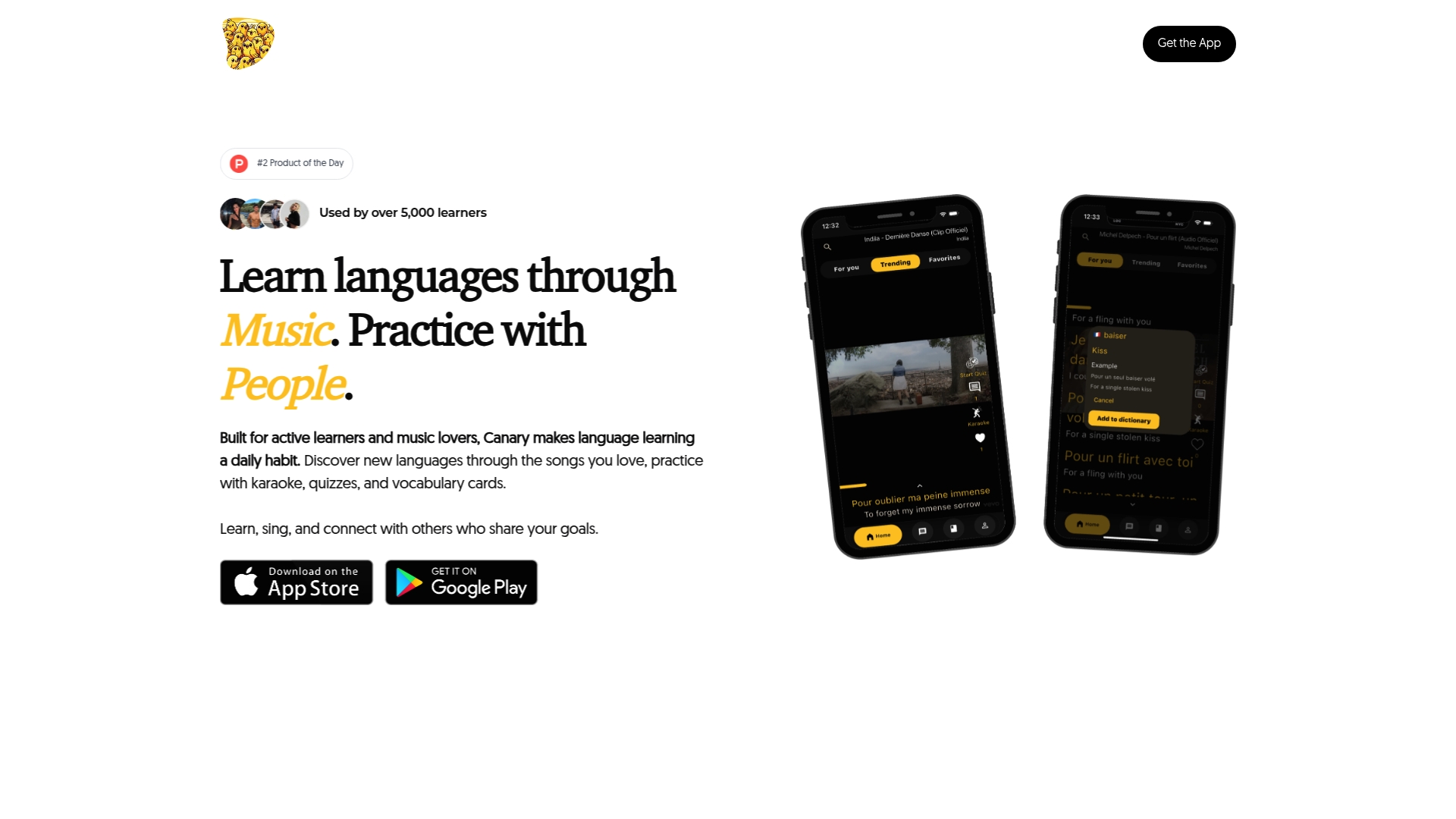
Singwithcanary is built around this exact routine: a curated song library organized for pronunciation practice, guided shadowing sessions, in-app recording with playback comparison, and live community practice rooms where you can run the social sessions from the checklist without leaving the app. The platform’s karaoke and vocabulary card features cover the music block and retrieval practice in a single session.
Suggested 7-day onboarding:
- Day 1: Set up your profile, pick your first song, complete a 5-minute warmup
- Days 2–4: Run the full music block (shadowing + karaoke) with a new song each day
- Day 5: Record a 60-second spontaneous response and compare it to Day 1
- Day 6: Join a 30-minute community practice session
- Day 7: Review your recordings and set one prosodic target for week two
Start your free trial and run the first week of the checklist today, or browse the song of the week for a ready-made shadowing session.
Useful sources for further reading
The studies below shaped the practice design in this checklist. Each one is worth reading if you want to understand why a specific item is structured the way it is.
- Effects of Shadowing on Adult EFL Learners’ Oral Communicative Competence — (systematic review, DOI: 10.37811/cl_rcm.v9i6.21905): The primary evidence base for the 6–8 week timeline and the importance of consistent, structured practice with feedback. Read this to understand why short-term shadowing without a feedback loop produces small effects.
- Music-mediated pedagogy and prosodic input — (Frontiers in Education, 2026): Explains how music-based interventions improve prosodic control and shift learners toward stress-timed speech. Directly supports the music block and rhythm-shadowing drills.
- Music-mediated pedagogy scoping review — (F1000Research): Covers the range of song-based tasks (gap-fill, dictation, lyric analysis) and their effect on engagement and learning outcomes. Use this to vary your music block across the week.
- Singing can facilitate foreign language learning — (Ludke et al., 2014): The controlled experiment showing that melodic presentation outperforms speaking and rhythmic speaking for verbatim phrase recall. The practical takeaway: use melody to memorize conversational chunks before moving to spontaneous use.
- Phonological acquisition and pronunciation training — (Language Teaching, 2025): The source for the intelligibility-first framing and the functional load principle. Read the section on high-impact features to refine your week-one prioritization targets.