TL;DR:
- Community engagement significantly enhances vocabulary retention, pronunciation accuracy, motivation, and confidence.
- Song-based groups activate multiple brain regions, reducing anxiety and boosting emotional enjoyment.
- Deep participation and consistent practice in music communities accelerate language mastery more than solo study.
Most language learners picture themselves alone with flashcards, headphones, and a grammar book. That image is almost entirely wrong. Community in language learning boosts motivation and achievement through social, teaching, and cognitive presence working together. When you add music to that mix, something remarkable happens: pronunciation sharpens, vocabulary sticks, and learning actually feels good. This guide breaks down the science, the emotional benefits, the real challenges, and the practical steps you need to harness the full power of community and song-based learning.
Table of Contents
- Why community fuels language mastery
- How song-based communities transform pronunciation and vocabulary
- The emotional side: Reducing anxiety and boosting enjoyment through community
- Nuances and challenges: Balancing equity, cooperation, and individual learning styles
- Putting it into practice: Your first steps with community song-based learning
- Our take: What most guides miss about music, community, and language growth
- Ready to unlock your language skills?
- Frequently asked questions
Key Takeaways
| Point | Details |
|---|---|
| Community supercharges learning | Groups offer powerful motivation, support, and better results than solo study. |
| Music makes practice fun | Song-based activities boost pronunciation and vocabulary while keeping engagement high. |
| Emotional support matters | Community reduces anxiety and helps you enjoy the learning process. |
| Real results are proven | Research shows song-based language communities lead to faster, more lasting progress. |
Why community fuels language mastery
Learning a language in isolation is a bit like trying to learn to dance by reading a manual. You get the theory, but none of the feel. Research consistently shows that social environments do something solo study simply cannot.
The Community of Inquiry (CoI) framework identifies three core elements that drive learning: social presence (feeling connected to others), teaching presence (guidance and structure), and cognitive presence (active thinking and problem-solving). Together, these elements predict vocabulary learning motivation, enhancing both motivation and measurable outcomes for language learners.

Lev Vygotsky’s Sociocultural Theory adds another layer. He argued that social interaction drives growth beyond what any learner can achieve alone, a concept he called the Zone of Proximal Development. In plain terms: you grow faster when someone slightly ahead of you pulls you forward.
Here’s a quick look at how community-driven learning compares to solo study across key outcomes:
| Outcome | Solo learning | Community learning |
|---|---|---|
| Vocabulary retention | Moderate | High |
| Pronunciation accuracy | Slow progress | Faster with peer feedback |
| Motivation over time | Often drops | Sustained by social bonds |
| Anxiety levels | Variable | Lower with peer support |
| Real-world confidence | Limited | Significantly higher |
“Students who participate in socially rich learning environments consistently outperform those who study alone, not just in test scores, but in real communication confidence.”
The benefits stack up fast when you join active language learning communities. Here’s what community consistently delivers:
- Immediate feedback on pronunciation and grammar errors
- Exposure to authentic, varied language use from real speakers
- Shared motivation that keeps you showing up even on hard days
- A sense of belonging that makes the learning process feel meaningful
Community is not a nice-to-have. It’s the engine.
How song-based communities transform pronunciation and vocabulary
Not all communities are created equal. A song-based group offers something uniquely powerful: a multimodal, embodied experience that engages your ears, voice, memory, and emotions all at once.
When you sing in another language, you’re not just reading words. You’re feeling rhythm, matching pitch, and syncing with others. Social interaction boosts L2 vocabulary and pronunciation, especially in music-rich activities, because music activates multiple brain regions simultaneously, creating stronger memory traces.
Here’s how song-based community learning stacks up against traditional group study:
| Activity type | Pronunciation benefit | Vocabulary retention | Anxiety level |
|---|---|---|---|
| Grammar drills (group) | Low | Moderate | High |
| Conversation circles | Moderate | Moderate | Moderate |
| Song-based group learning | High | High | Low |
| Choral singing and lyric analysis | Very high | Very high | Very low |
Choral singing and lyric analysis leverage social presence for motivation and reduced anxiety, making them among the most effective tools in any language learner’s toolkit.
Here’s how to put this into practice right now:
- Pick a song you love in your target language. Familiarity with the melody reduces cognitive load and lets you focus on pronunciation.
- Find a group or partner to sing with. Even an online group works. The social element is what activates the extra benefit.
- Analyze the lyrics together. Discuss unfamiliar words, idioms, and phrases as a group to deepen vocabulary retention.
- Record yourselves singing and listen back. Hearing your own pronunciation in context is one of the fastest ways to improve.
- Rotate song choices. Let different members pick songs to expose the group to varied accents, genres, and vocabulary sets.
Pro Tip: Focus on community music pronunciation exercises before moving to full songs. Short, repeated phrases from lyrics build muscle memory faster than long passages. Check out music lovers language tips for specific exercises you can use with any group.
The emotional side: Reducing anxiety and boosting enjoyment through community
Language anxiety is real and it’s one of the biggest barriers to progress. Many learners freeze up when asked to speak, terrified of making mistakes in front of others. Community, especially a music-centered one, directly addresses this.

Social support mediates English achievement by increasing enjoyment and reducing anxiety, which in turn leads to stronger language outcomes. This isn’t just feel-good theory. It translates directly into better test scores, more confident conversations, and faster vocabulary growth.
Here’s why music-based communities are especially effective at reducing anxiety:
- Shared vulnerability: Everyone sounds a little awkward singing in a foreign language at first. That shared experience normalizes imperfection.
- Focus on expression, not correction: Music shifts the group’s attention from “getting it right” to “feeling it,” which lowers the stakes.
- Rhythm as a safety net: The beat gives you a framework. You’re not just speaking into silence; you’re supported by melody and harmony.
- Celebration of effort: Song-based groups tend to celebrate participation over perfection, which builds confidence fast.
“Enjoyment in language learning is not a luxury. It is a measurable predictor of achievement, retention, and long-term motivation.”
When you join a music-fueled language exchange, you’re not just practicing vocabulary. You’re rewiring your emotional relationship with the language itself. Anxiety drops. Joy rises. And when learning feels good, you do more of it. That’s the feedback loop that separates people who plateau from people who actually reach fluency.
The emotional benefits also compound over time. Early wins in a supportive community build the confidence to tackle harder material, speak up more, and take creative risks with the language.
Nuances and challenges: Balancing equity, cooperation, and individual learning styles
Community learning is powerful, but it’s not automatically perfect. Real groups have real friction, and ignoring that leads to frustration and dropout.
One of the most important findings in recent research is that equity perceptions lower willingness to communicate while cooperation boosts it, especially in form-focused activities like lyric analysis or pronunciation drills. In other words, if learners feel the group isn’t fair or that some members dominate, participation drops sharply.
At the same time, most research favors social mediation for second language growth over purely cognitive, individual approaches. The social element is the advantage. But only when it’s managed well.
Here’s how to navigate the common pitfalls:
- Establish clear group norms early. Agree on how feedback is given, how songs are chosen, and how participation is shared.
- Rotate leadership roles. Let different members lead song selections, lyric discussions, and pronunciation checks to distribute power evenly.
- Adapt for different learning styles. Some learners need to listen before they sing. Others want to dive in. Build in both options.
- Use a moderator or facilitator. A teacher, tutor, or experienced community member who scaffolds activities makes a measurable difference in outcomes.
Pro Tip: Check out song-based learning trends to see how the most effective communities are structuring their sessions in 2026. The best groups combine structured activities with open creative time.
Additional strategies to keep your community healthy and productive:
- Celebrate all levels of proficiency equally
- Create small subgroups for learners at similar stages
- Use anonymous feedback tools to surface concerns without embarrassment
- Revisit group norms regularly as the community grows
Putting it into practice: Your first steps with community song-based learning
Knowing the theory is one thing. Actually getting started is another. Here’s a clear action plan to move from solo learner to active community participant.
The research is clear: the resolution phase of cognitive presence leads to the strongest learning outcomes. That means you need to move from exploring ideas to actually applying them. Here’s how:
- Find your community. Search for online language exchange groups, Discord servers, or local meetups centered on music and language learning.
- Start with one song per week. Consistency beats intensity. One song analyzed and sung together weekly builds real momentum.
- Engage actively in discussions. Don’t just listen. Ask questions about lyrics, share what confused you, and offer your own interpretations.
- Track your progress. Keep a vocabulary journal of words you learned through songs. Review it weekly to reinforce retention.
- Reflect after each session. Ask yourself: What did I learn? What still confuses me? What do I want to practice next?
Join the song of the week challenges to get a structured, community-driven practice routine built around exactly this approach.
Quick tips to maximize your early gains:
- Choose songs with clear pronunciation and not-too-fast tempo at first
- Use lyric videos so you can follow along visually and auditorily at the same time
- Practice the same song multiple times before moving on; repetition is where the learning happens
- Connect with at least one accountability partner in your community
Pro Tip: Don’t wait until your language level feels “good enough” to join a community. The community is what makes your level good enough, faster.
Our take: What most guides miss about music, community, and language growth
Most language learning guides tell you to “find a community” and leave it there. That advice misses the point entirely.
Joining a group is not the same as belonging to one. The real accelerator is depth of engagement, not the number of groups you’re in. We’ve seen learners in five communities make slower progress than someone deeply invested in one song-based group where they show up, contribute, and connect.
Music is the key ingredient because it creates a music-driven language mastery loop that most activities can’t replicate. You improve, you feel good, you come back. That feedback loop is self-sustaining in a way that grammar drills simply aren’t.
The uncomfortable truth is that most learners underestimate how much their emotional state shapes their linguistic progress. Joy is not a side effect of good learning. It’s a driver of it. Prioritize communities where music creates genuine connection, not just structured practice. That’s where the real breakthroughs happen.
Ready to unlock your language skills?
Community-driven, music-based learning is not a trend. It’s one of the most research-backed, emotionally rewarding paths to real language fluency. And it’s available to everyone, right now.
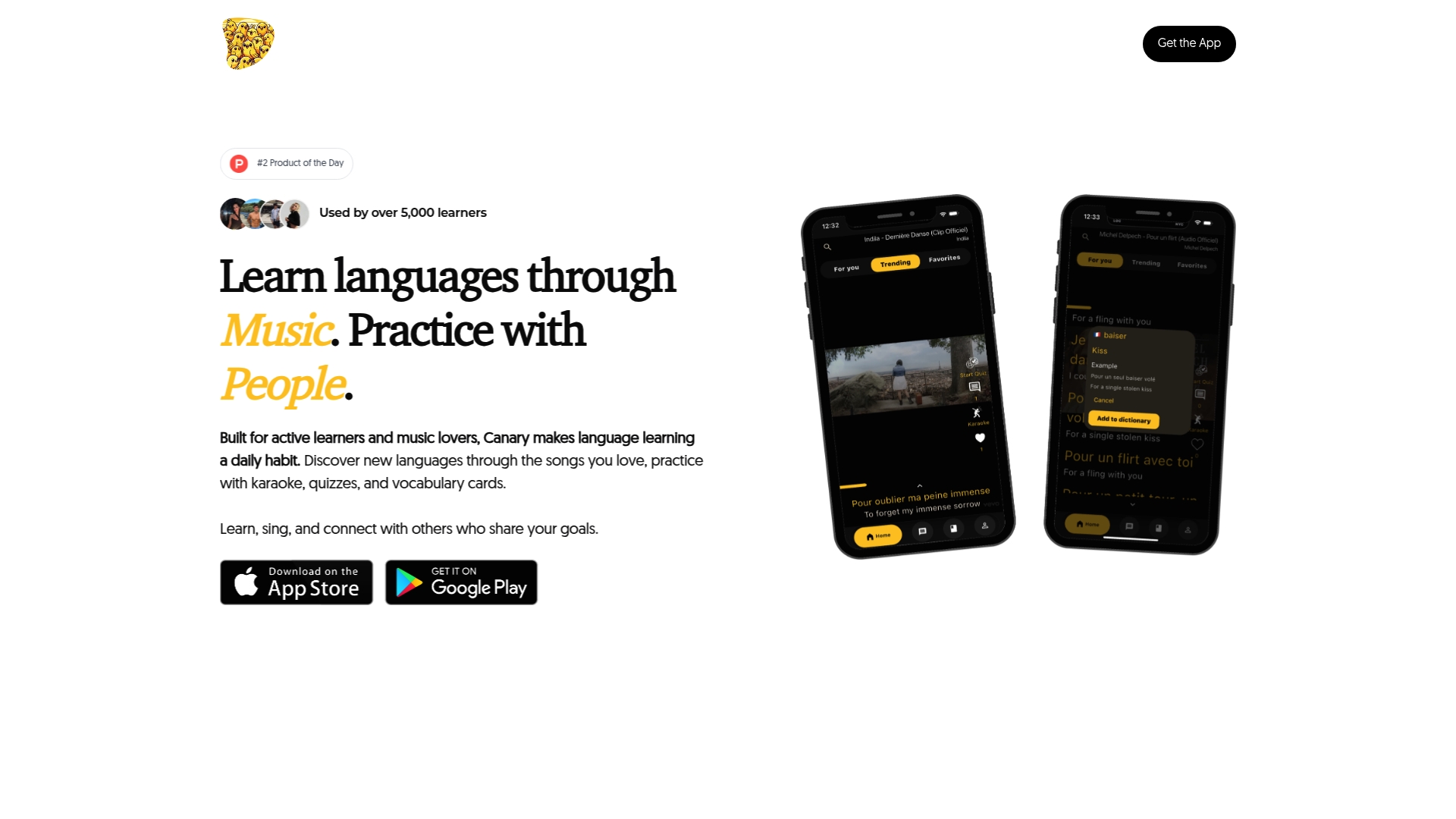
Canary brings together everything you’ve read here: song-based learning, karaoke, vocabulary cards, quizzes, and a global community of learners who practice together every day. If you’re ready to stop studying alone and start actually enjoying the process, this is your next step. Learn languages with music and experience what happens when community and song work together. Jump into the join song challenges and start building real skills with real people today.
Frequently asked questions
How does learning in a community help improve my pronunciation?
Group activities like choral singing and peer feedback help you hear and correct your own mistakes faster. Social interaction boosts L2 pronunciation mastery by giving you real-time, contextual correction that solo practice can’t replicate.
Can music-based language communities really reduce anxiety?
Yes. Shared musical activities create a low-pressure, enjoyable setting that lowers anxiety and builds confidence over time. Social support mediates achievement via enjoyment and anxiety reduction, making music communities especially effective.
What if I prefer to learn alone? Can I still benefit from community activities?
Absolutely. You can combine solo study with occasional group participation to gain new perspectives and motivation without giving up independent practice. Scaffolding from more knowledgeable others accelerates growth even when your community involvement is part-time.
Are results from music-based group learning supported by research?
Yes. Studies show significant improvements in pronunciation, vocabulary, and motivation for learners in social, song-based communities. CoI and song-based participation lead to measurably improved language outcomes across multiple studies.
What’s the best way to get started with song-based language communities?
Start by joining an online or local group focused on singing and lyric analysis to practice pronunciation in a fun, collaborative way. Collaborative singing and lyric analysis leverage social presence for motivation and faster skill development.