TL;DR:
- Active engagement with music enhances vocabulary gains and retention significantly.
- Community practice and feedback boost motivation, fluency, and long-term memory.
- Short, focused daily sessions with song analysis and discussion lead to measurable language improvements.
Imagine finishing a song and realizing you just absorbed 12 new words without a single flashcard. That’s not a fantasy. Song-based practice delivers vocabulary gains of +33 points versus +15 for traditional study, with retention jumping to 85% compared to 50%. If your current vocabulary routine feels like a chore you keep skipping, music offers a genuinely different path. This guide gives you a repeatable, evidence-backed workflow to build vocabulary through songs, covering everything from setup to community practice to tracking real progress.
Table of Contents
- What you need to get started
- Step-by-step vocabulary building workflow
- Collaborate and track progress with a community
- Verify results and refine your process
- Why music-driven vocabulary workflows beat traditional methods—if you go beyond passive listening
- Ready to expand your vocabulary? Try interactive music learning today
- Frequently asked questions
Key Takeaways
| Point | Details |
|---|---|
| Active music learning works | Song-based workflows double your vocabulary retention rate versus standard study. |
| Engagement matters most | Pronunciation and fluency soar when you practice, sing, and discuss songs, not just listen. |
| Consistency beats intensity | Short daily sessions boost results better than long, irregular practice times. |
| Community accelerates gains | Learning with others increases motivation, confidence, and makes knowledge stick. |
What you need to get started
Before you queue up your first learning session, a little preparation goes a long way. The right setup means you spend your time actually learning, not troubleshooting.
Here’s a quick checklist of what you’ll need:
- A device (smartphone, tablet, or laptop)
- A music streaming app or a dedicated language learning platform
- A reliable lyric source (built-in app lyrics, Genius, or LyricsTranslate)
- A note-taking system (digital app or a simple notebook)
- A quiet practice space where you can sing or speak out loud without self-consciousness
Once you have those basics, choose your music sources wisely. Here’s a quick comparison of common options:
| Source | Best for | Notes |
|---|---|---|
| Spotify / Apple Music | Discovering new songs | Pair with a lyric app |
| YouTube | Music videos with context | Subtitles available |
| Canary | Structured vocab + karaoke | Built-in quizzes and cards |
| AI song creation tools | Custom vocabulary songs | Great for beginners |
| Language learning communities | Collaborative playlists | Peer motivation boost |
Using music for vocabulary works best when you treat each session as active work, not background noise. The core mistake most learners make is putting on a playlist and expecting words to stick. Active song engagement consistently outperforms passive listening for vocabulary mapping, because your brain needs to connect sound, meaning, and emotion simultaneously.
Pro Tip: If real songs feel overwhelming at first, use AI to generate simple, short songs around specific vocabulary themes. Real music is rich but irregular. A custom AI song can target exactly the words you’re studying this week, making it a gentler entry point before you move to authentic tracks.
For a fuller picture of how to structure your sessions, the step-by-step music workflow guide walks you through each phase in detail.
Step-by-step vocabulary building workflow
With your tools ready, follow these actionable steps to build vocabulary and fluency using music.
-
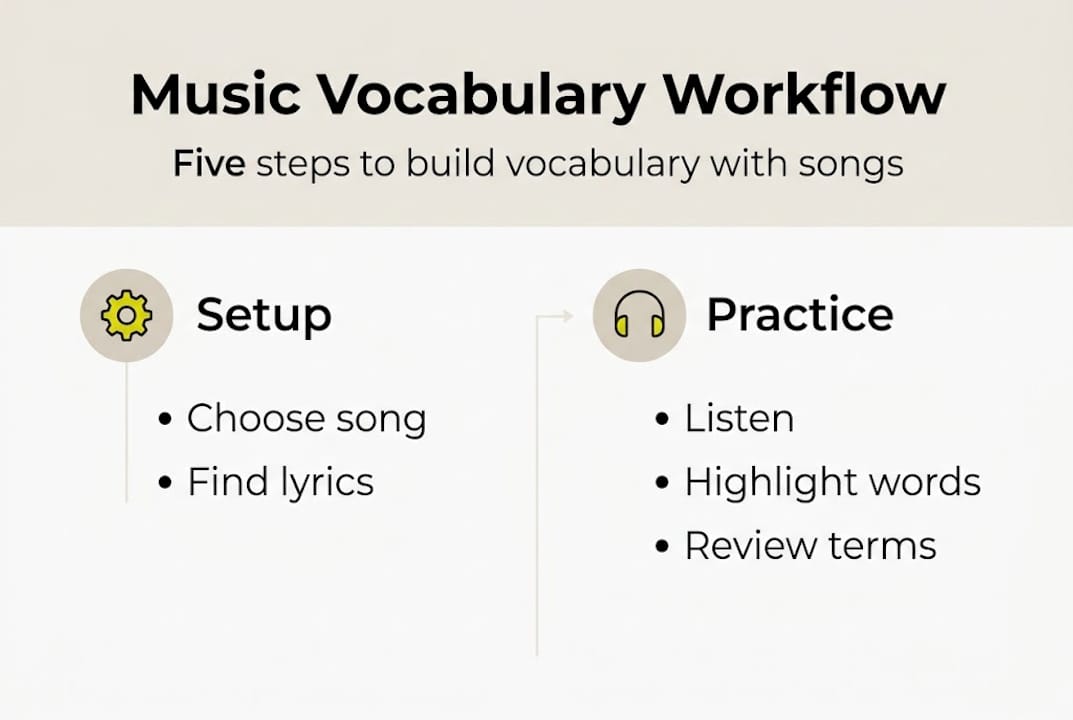
Select a song with intention. Don’t just pick a favorite. Match the genre to your goal. Pop and rap songs are packed with contemporary slang and natural contractions. Ballads slow things down, making them ideal for practicing vowel sounds and emotional vocabulary.
-
Listen actively with the lyrics in front of you. Play the song once through just to feel it. Then replay it while reading the lyrics. Underline or highlight every word or phrase you don’t fully understand.
-
Look up meanings with full context. Don’t just grab a dictionary definition. Write down the word, the full lyric line it appears in, and a personal example sentence. Context is what makes vocabulary stick.
-
Shadow and sing along. This is where pronunciation practice happens. Shadowing or singing with songs measurably boosts pronunciation and production skills. Match the artist’s rhythm, stress, and intonation as closely as you can. Record yourself if possible.
-
Discuss the lyrics or join a group challenge. Talk about the song’s meaning with a partner or community. What’s the story? What slang did you find? This social step cements retention far better than solo review.
The research behind this approach is striking:
“Vocabulary gain: +33 points with structured music practice versus +15 for the control group; retention rate: 85% versus 50%.”
Pro Tip: Keep sessions to 10 to 15 minutes daily. Short, focused practice consistently outperforms long, unfocused listening marathons. Your brain consolidates new words during rest, so frequency matters more than duration.
For more song selection strategies and lyric analysis techniques, the step-by-step song guide covers each phase thoroughly. You can also explore how music speeds up language learning at a neurological level if you want the science behind the method.
Collaborate and track progress with a community
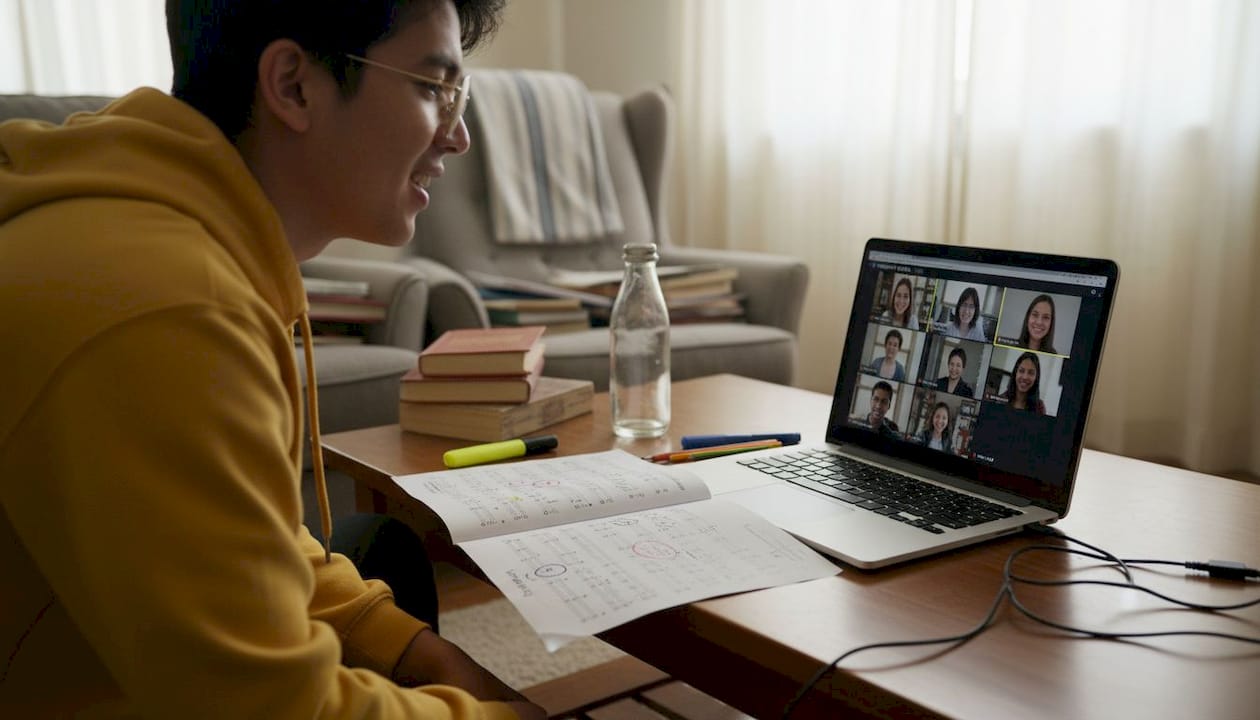
Once you’re practicing with songs, amplifying your results depends on group engagement. Solo practice builds a foundation, but community practice builds fluency.
Group activities that genuinely accelerate learning include:
- Lyric quizzes where members fill in missing words from a song
- Pronunciation battles comparing how accurately members replicate a lyric
- Collaborative playlists built around a weekly vocabulary theme
- Shared vocabulary journals where members post new words discovered through songs
- Song reaction discussions analyzing meaning, culture, and slang together
The difference between going solo and learning with a group is significant. Here’s how the two approaches compare:
| Factor | Solo workflow | Group workflow |
|---|---|---|
| Vocabulary gain | Moderate | +33 points average |
| Retention rate | ~50% | ~85% |
| Motivation | Inconsistent | High and sustained |
| Speaking anxiety | Often increases | Measurably reduced |
| Feedback quality | Self-assessed | Peer-verified |
The JPURM empirical study found that song group participation not only boosts vocabulary and retention but also lowers language anxiety, which is one of the biggest blockers for learners trying to speak confidently.
Finding or building a group doesn’t require a formal class. Online communities, language exchange apps, and platforms like Canary already host active learners who use music as their shared language. The community learning with music approach works because it creates accountability, variety, and real conversational context. Research on speaking performance confirms that group song activities improve lexical complexity and fluency in ways solo practice simply cannot replicate.
Verify results and refine your process
Successful workflows depend on tracking your gains and adjusting tactics. Without measurement, it’s easy to feel busy without actually improving.
Here’s a simple four-step verification routine:
-
Self-test weekly. Write down every new word you learned from songs that week without looking at your notes. How many can you define and use in a sentence?
-
Use spaced repetition. Add new vocabulary to a spaced repetition app like Anki. Review words at increasing intervals so your brain encodes them into long-term memory.
-
Record yourself singing or speaking. Play it back and compare your pronunciation to the original artist. Note where your stress, rhythm, or vowel sounds differ.
-
Request peer review. Share a recording or lyric analysis with your community. Peer feedback catches errors you can’t hear in your own voice.
Common obstacles and how to fix them:
- Losing motivation: Switch genres or try a song from a movie you love. Novelty resets engagement.
- Stuck on one genre: Deliberately pick a song outside your comfort zone every two weeks.
- Pronunciation plateau: Focus on one phoneme at a time rather than trying to fix everything at once.
Music-based learning produces measurable improvements in lexical density, accuracy, and fluency, but only when learners actively monitor and adjust their approach. Explore the educational benefits of music for a deeper look at why this method works across different learning styles.
Pro Tip: Join a pronunciation challenge or use AI-generated quizzes tied to your song’s lyrics for objective, immediate feedback. Subjective self-assessment has a ceiling. External feedback breaks through it.
Why music-driven vocabulary workflows beat traditional methods—if you go beyond passive listening
Here’s what most music-and-language guides quietly skip over: the music itself is not the magic. The engagement with the music is.
We’ve seen learners put together impressive playlists, listen for weeks, and walk away with almost nothing to show for it. Meanwhile, someone who spends 12 minutes a day shadowing one verse, discussing its meaning with a partner, and quizzing themselves on three new words walks away genuinely fluent in that vocabulary. Same song. Completely different result.
Passively listening to songs does not consistently outperform speech input for all learners. Active participation is what creates the neurological conditions for retention. Music is the vehicle, but discussion, repetition, and feedback are the engine.
The uncomfortable truth is that learners who want a shortcut often gravitate toward passive listening precisely because it feels productive without requiring effort. Real gains come from the types of music learning methods that combine singing, analysis, and social interaction. If you’re willing to engage actively, music becomes one of the most powerful vocabulary tools available to you.
Ready to expand your vocabulary? Try interactive music learning today
This workflow gives you a clear path from setup to measurable results, but the fastest way to make it stick is to practice inside a community built around exactly this approach.
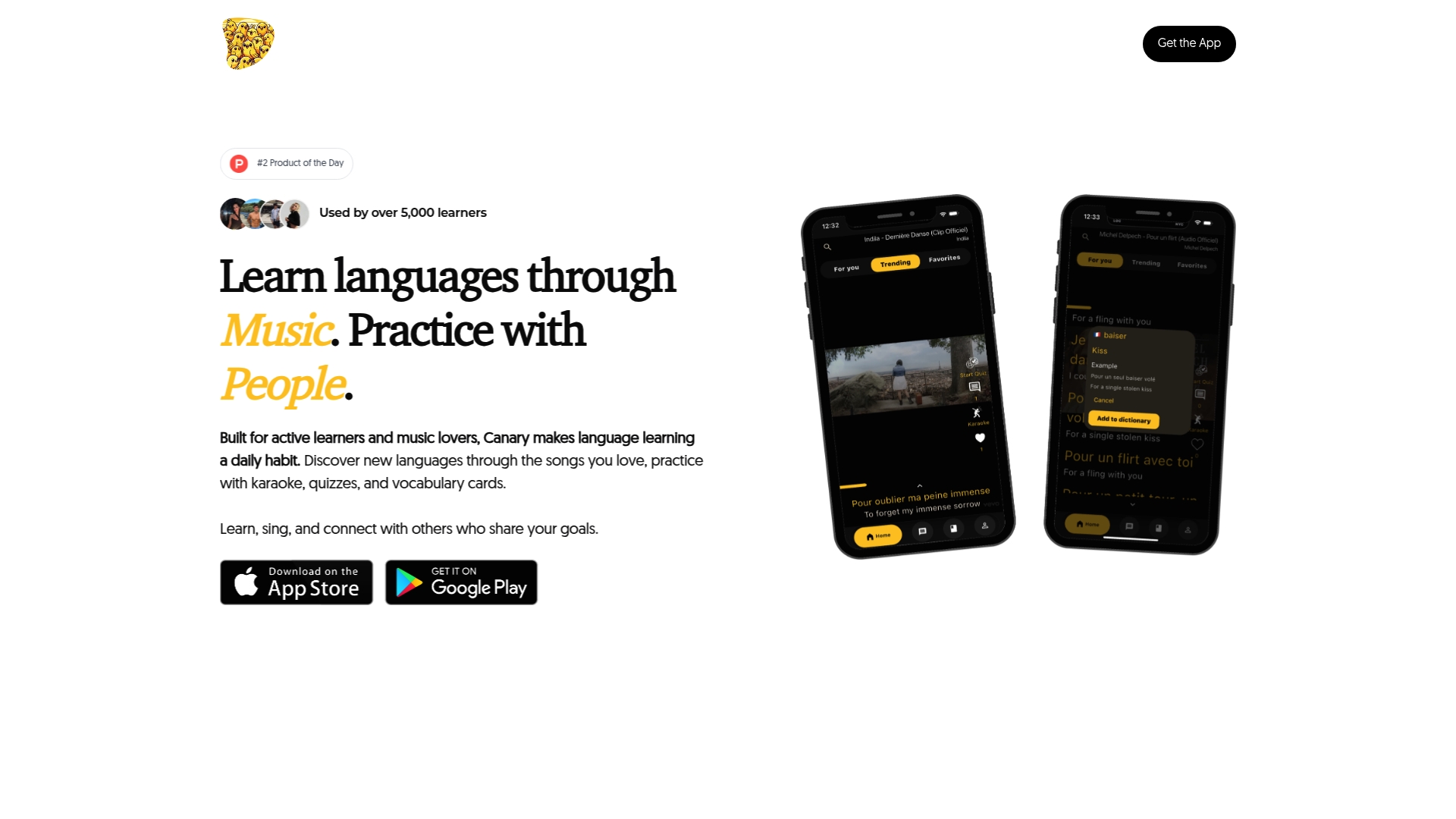
Canary is where learning languages with music becomes social, structured, and genuinely fun. You get karaoke-style lyric practice, built-in vocabulary cards, pronunciation quizzes, and a global community of learners who share your passion for music. Start with the Song of the Week challenge to immediately put this workflow into practice with other learners. Curious about what makes this approach so effective? Explore the benefits of song-based language learning and see why thousands of learners are trading flashcard apps for music.
Frequently asked questions
How long does it take to see vocabulary gains with a music-based workflow?
Measurable vocabulary improvement typically appears within two to four weeks of daily 10 to 15 minute sessions. Structured group practice has shown vocabulary gains of +33 points over that period.
What genres of music work best for vocabulary and pronunciation practice?
Pop and rap songs are excellent for learning slang and natural speech patterns, while ballads develop vowel clarity and emotional vocabulary. Different genres build different language skills, so rotating between them gives you the broadest foundation.
Is listening to music passively enough for learning new words?
Passive listening alone has limited and inconsistent impact on vocabulary retention. Active engagement through shadowing, lyric analysis, and discussion is what drives real vocabulary mapping.
How do I measure my vocabulary improvement?
Track new words weekly, test your recall without notes, and record yourself to monitor pronunciation progress. Self-testing and peer feedback together give you the clearest picture of genuine gains.