TL;DR:
- Song-based learning actively engages learners by combining listening, analysis, and singing practice.
- Rhythms, repetition, and melody in songs significantly improve vocabulary, pronunciation, and fluency.
- Regular, structured practice with music enhances retention, motivation, and language mastery beyond traditional methods.
Most people assume that language mastery comes from grinding through grammar drills and vocabulary flashcards. But EFL learners gained 33 points in vocabulary using pop and rap songs, with measurable gains in grammar and speaking fluency. That’s not a small edge. That’s a fundamentally different outcome. Song-based learning flips the traditional model on its head by making repetition feel natural, emotional, and even enjoyable. In this article, we’ll break down what song-based learning actually is, why it works so well for vocabulary, grammar, and pronunciation, and how you can build a music-powered routine that creates real, lasting progress.
Table of Contents
- What is song-based learning?
- How songs enhance vocabulary, grammar, and pronunciation
- Common challenges and how to overcome them
- Practical guide: Using song-based learning for real progress
- Why song-based learning succeeds where traditional methods stall
- Ready to start your song-based language journey?
- Frequently asked questions
Key Takeaways
| Point | Details |
|---|---|
| Definition clarified | Song-based learning involves using music, lyrics, and singing routines with social and structured practice to accelerate language skills. |
| Proven vocabulary gains | Studies show music learners can gain over 30 vocabulary points and significant grammar proficiency in weeks. |
| Structure is vital | Learning with songs is most effective with routine, appropriate song selection, and integrating social or guided activities. |
| Beginner friendly | Music-driven learning works at all levels when adapted for difficulty and supported by context. |
What is song-based learning?
Song-based learning is exactly what it sounds like: using music and song lyrics as your primary study material. But it goes much deeper than just listening to a playlist while you commute. It’s an active, structured approach that combines listening, analysis, and practice with music to target vocabulary, grammar, and speaking skills simultaneously.
The core activities that define song-based learning include:
- Active listening: Paying close attention to pronunciation, rhythm, and individual words rather than passively enjoying the music
- Lyric analysis: Reading and dissecting lyrics to understand grammar structures, idioms, and vocabulary in context
- Sing-alongs and karaoke: Practicing speaking and pronunciation by mimicking native speakers in real time
- Social sharing: Discussing songs, their meanings, and cultural context with other learners or native speakers
- Vocabulary card creation: Pulling key words and phrases from lyrics to review later
This is a completely different experience from opening a textbook. Traditional drills isolate grammar rules and vocabulary lists from any real context, which makes them harder to remember and even harder to use naturally in conversation. Passive audio exposure, like background music or podcasts you half-listen to, doesn’t cut it either. Your brain needs active engagement to form strong language memories.
Song-based learning sits in a powerful middle ground. You’re exposed to authentic language the way native speakers actually use it, complete with slang, contractions, and natural rhythm. At the same time, the structure of a song gives you repetition without boredom. A chorus you hear four times in three minutes is reinforcing vocabulary and grammar in a way no flashcard deck can replicate.
The skills that benefit most from this approach are vocabulary acquisition, pronunciation accuracy, listening comprehension, and speaking fluency. Grammar also improves, but often indirectly as you internalize patterns through repeated exposure rather than memorizing rules. If you want a deeper look at how this plays out in practice, the benefits of song-based language learning are well documented and worth exploring before you build your routine. For those just getting started, a step-by-step song-based language learning guide can help you structure your first sessions effectively.
How songs enhance vocabulary, grammar, and pronunciation
The numbers behind song-based learning are genuinely striking. Learners using songs gained 33 points in vocabulary scores and showed significant improvements in grammar proficiency, moving from a developing level to proficient. Speaking performance improved across lexical density, accuracy, and fluency, all with a statistical significance of p<0.001. These aren’t marginal gains.
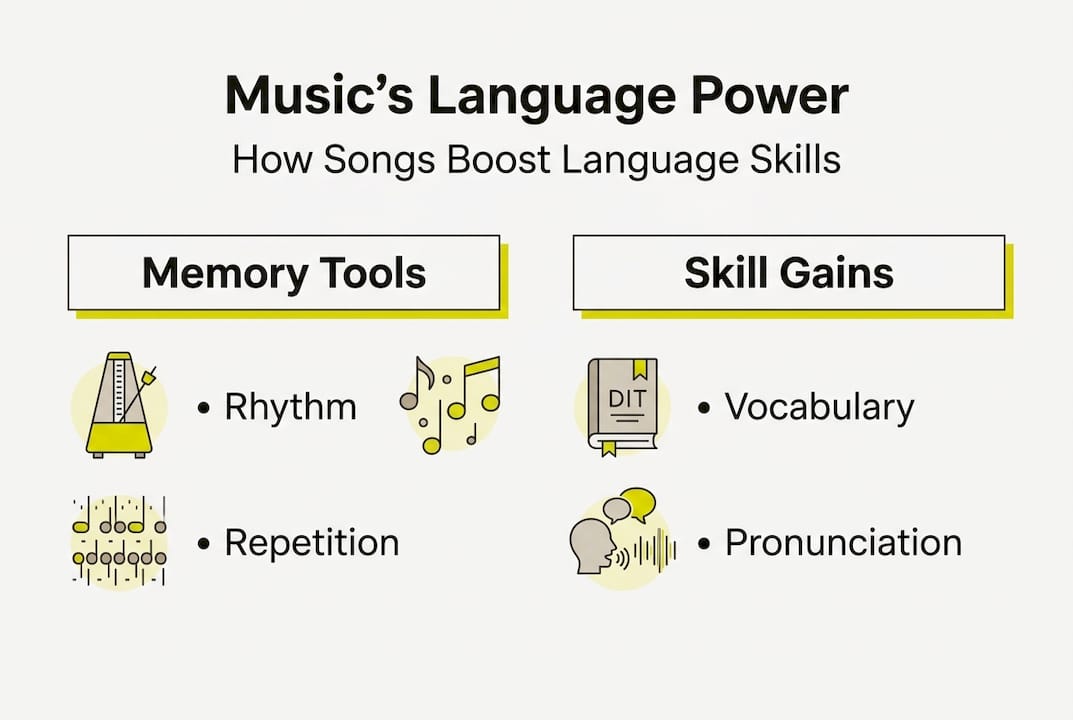
So what’s actually happening in your brain? Three forces drive the results: rhythm, repetition, and melody.
Rhythm acts like a scaffold for memory. When words are set to a beat, your brain processes them differently than plain speech. The musical pattern gives you a predictable structure to attach new words to, which makes retrieval faster and more reliable. Repetition within a single song is intense. You might hear the same phrase ten times in a four-minute track. That’s spaced repetition happening naturally. Melody adds an emotional layer. Words tied to a feeling or a musical moment are encoded more deeply in long-term memory.
Pronunciation benefits are especially strong. When you mimic a singer, you’re not just copying sounds. You’re absorbing natural accent, intonation, and rhythm all at once. This is why many learners report that their accent improves faster through singing than through speaking practice alone. Exploring expanding vocabulary with songs reveals just how many words learners pick up without even trying.
| Skill area | Traditional study | Song-based learning |
|---|---|---|
| Vocabulary retention | Moderate (flashcard decay) | High (emotional + rhythmic anchoring) |
| Grammar accuracy | Rule-based, slow to internalize | Pattern-based, faster naturalization |
| Pronunciation | Often neglected | Mimicry-driven, accent-aware |
| Motivation | Drops quickly | Sustained through enjoyment |
| Speaking fluency | Delayed without practice | Accelerated via sing-alongs |
The best genres for different learning goals vary. Pop songs offer clear pronunciation and contemporary vocabulary. Rap builds rhythm awareness and exposes you to fast, natural speech patterns. Folk and acoustic tracks often have simpler structures that work well for beginners. The 7 key benefits of song learning cover how each of these elements compounds over time.
Pro Tip: When picking a song, look for tracks where you can understand at least 60% of the lyrics on first listen. Songs that are too difficult create frustration rather than learning. Songs that are too easy don’t push your vocabulary forward. That sweet spot is where the real growth happens.
Common challenges and how to overcome them
Song-based learning is powerful, but it’s not without obstacles. Here’s what learners need to watch out for and how to get the best results.
The most common challenges are slang-heavy lyrics that don’t translate well, complex grammar that appears without explanation, and the temptation to just enjoy the music without actually studying it. These are real barriers, especially for younger learners or those in the early stages of a new language.
Research confirms that song-based learning works best with structured guidance and contextual support, particularly for school-age learners. Without structure, it’s easy to mistake passive enjoyment for active learning.
Here’s a structured approach that works:
- Choose your song intentionally. Pick tracks with clear lyrics and vocabulary at or just above your current level.
- Listen once without looking at lyrics. Note what you catch and what confuses you.
- Read the lyrics while listening. Identify unfamiliar words and phrases.
- Look up and record new vocabulary. Write definitions and example sentences.
- Analyze the grammar. Find verb tenses, sentence structures, and patterns you recognize or want to learn.
- Sing along. Focus on matching the pronunciation and rhythm of the artist.
- Review your vocabulary cards the next day and again three days later.
For younger learners, a teacher or language partner who can explain cultural references and slang makes a significant difference. Adults can often self-direct with the right tools, but even experienced learners benefit from community feedback on pronunciation.
“Song-based learning is most effective when it’s treated as a structured study method, not just a fun supplement. The research consistently shows that learners who engage actively with lyrics, rather than passively listening, achieve significantly better outcomes in vocabulary and fluency.”
Pro Tip: Use lyric videos on YouTube paired with a translation tool for challenging songs. Seeing the words appear in real time while hearing them sung helps your brain connect sound, spelling, and meaning simultaneously. The educational benefits of music in language learning and the broader role of music in learning show why this multi-sensory approach is so effective.
Practical guide: Using song-based learning for real progress
To put theory into practice, here’s how you can create your own music-powered language learning routine.
The key is consistency over intensity. Short, focused daily sessions beat long, infrequent ones every time. Speaking and fluency measures improve in learners who engage in active and social music practice, so building that habit matters more than any single session.
| Practice type | Solo | Social or group |
|---|---|---|
| Vocabulary focus | High control, self-paced | Peer feedback accelerates retention |
| Pronunciation | Good for mimicry | Native speaker correction is faster |
| Confidence building | Slower, internal | Much faster through real interaction |
| Motivation | Depends on self-discipline | Group energy sustains momentum |
| Cultural insight | Limited to research | Rich, immediate, and authentic |
A simple weekly template that works:
- Monday, Wednesday, Friday: 15 minutes of active listening and lyric analysis with a new song
- Tuesday, Thursday: 10 minutes of sing-along practice with a song you already know well
- Saturday: 20 minutes of social practice, singing with a language partner or joining an online community session
- Sunday: Review vocabulary cards from the week and pick your next song
Here are the tools and resources worth using:
- Lyric annotation sites that let you click on words for instant definitions
- Karaoke apps that score your pronunciation in real time
- Online language learning communities where you can share song recommendations and practice together
- Playlists curated specifically for language learners in your target language
One simple technique that builds real conversational confidence is learning a song’s chorus by heart. A chorus is short, repetitive, and emotionally loaded. Once you can sing it without thinking, those phrases become available to you in actual conversation. You’ll find yourself naturally using expressions you absorbed through music. The success stories of learning with music show this pattern again and again. For more targeted strategies, language learning tips for music lovers offer practical ways to accelerate vocabulary growth through your listening habits.
Track your progress by keeping a simple log of songs studied, new words learned, and any speaking practice completed. Reviewing this weekly shows you how far you’ve come and keeps you motivated to continue.
Why song-based learning succeeds where traditional methods stall
Here’s an opinion that might surprise you: song-based learning isn’t a fun extra. It’s often more effective than the methods we’ve been told to trust.
Traditional language learning relies heavily on willpower. You memorize because you have to. You repeat because the method demands it. But willpower is a limited resource, and most learners quit before they ever reach fluency. Music changes the equation entirely. It activates emotional and reward systems in the brain that rote repetition simply cannot reach. When a song moves you, your brain pays attention differently. The words stick not because you tried to remember them, but because they were attached to something that felt meaningful.
This is why lyrics create stickier memories than vocabulary lists. Emotion is one of the most powerful memory anchors we have. The unexpected benefits of songs go far beyond vocabulary. They include cultural fluency, emotional resonance with native speakers, and the kind of intuitive grammar sense that textbooks can’t teach.
The real mistake most learners make is treating music as a reward for studying, something to enjoy after the real work is done. Flip that. Make the music the work. Structure it, analyze it, sing it, share it. That’s where the breakthroughs happen.
Ready to start your song-based language journey?
If the research and strategies above have you ready to trade flashcards for song lyrics, Canary is built exactly for this moment.
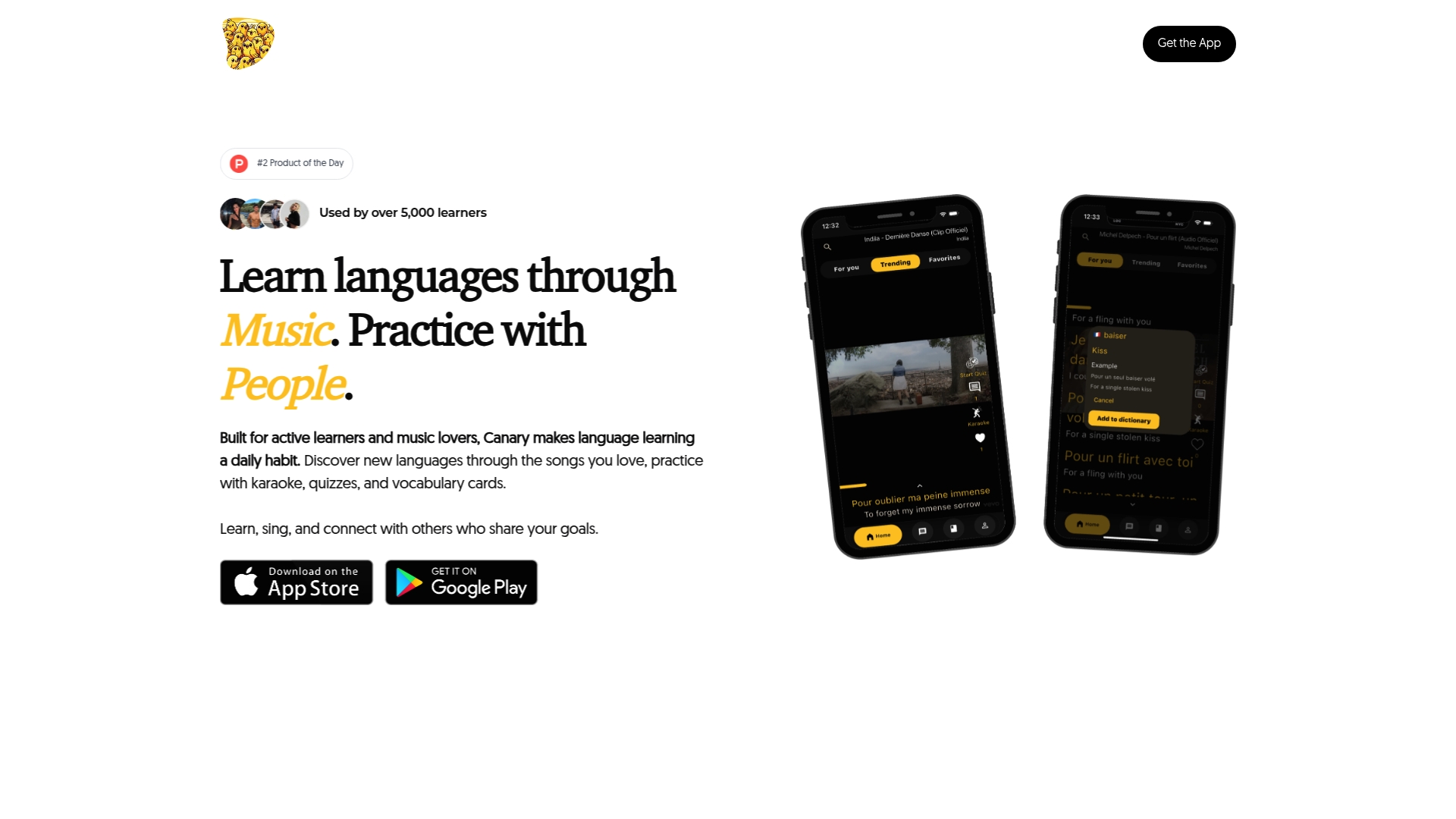
Canary combines song-based learning with karaoke, vocabulary cards, quizzes, and a global community of learners who practice together every day. You can learn languages with music through a platform designed to make every session feel less like study and more like play. Explore the see more song-based learning benefits to understand the full scope of what music-driven practice can do for your fluency. Or jump straight in with the song of the week, a curated track with built-in learning tools to get you started right now.
Frequently asked questions
Does song-based learning work for beginners or only advanced learners?
Song-based learning benefits both beginners and advanced learners, as long as songs are chosen at the right difficulty level and sessions are structured for maximum support. Beginners do especially well with simple, repetitive tracks that reinforce core vocabulary.
Which language skills improve most with song-based learning?
Vocabulary, pronunciation, and speaking fluency show the strongest gains. Research shows learners gained 33 points in vocabulary and moved from developing to proficient in grammar after structured song-based practice.
Are certain music genres better for language learning?
Pop and rap songs have the strongest research backing for vocabulary gains and authentic expression. Folk and acoustic tracks work well for beginners due to slower tempos and clearer pronunciation.
How often should I practice with songs for best results?
Daily sessions of even 10 to 15 minutes produce measurable improvements within weeks. Fluency and vocabulary improve most when practice is active, regular, and includes both solo and social singing components.