TL;DR:
- Authentic social interaction and cultural engagement significantly enhance language learning beyond traditional grammar and vocabulary practice.
- Music-based exchanges foster emotional connection, pronunciation, and intercultural competence, leading to more confident communication.
- Incorporating shared songs and global connections transforms passive knowledge into active fluency, especially for music lovers seeking genuine language mastery.
You can memorize thousands of vocabulary words and drill grammar exercises for months, yet still freeze when a native speaker asks you a simple question. That gap between knowing a language and actually using it is where most learners get stuck. Research on social interaction confirms that language learning is strengthened by interaction and culturally situated use, not isolated grammar practice. For music lovers especially, the path forward is clear: genuine global connections, built around shared songs and cultural experiences, transform passive knowledge into real communication confidence.
Table of Contents
- Why traditional language learning falls short
- How international connections supercharge language skills
- Cultural immersion: Unlocking meaning and confidence
- Music + international interaction: Actionable strategies for language mastery
- What most learners miss: Genuine connection beats perfection
- Start your global, music-powered language journey today
- Frequently asked questions
Key Takeaways
| Point | Details |
|---|---|
| Interaction drives mastery | Regular, meaningful connections with international peers deepen language skills beyond textbook learning. |
| Music powers engagement | Music creates memorable, fun opportunities for authentic communication and cultural immersion. |
| Cultural context matters | Understanding and using cultural cues brings greater confidence and true fluency. |
| Feedback beats perfectionism | Seeking real feedback through communication is more effective than chasing flawless grammar. |
Why traditional language learning falls short
Most language courses follow a familiar pattern. You study grammar rules, build vocabulary lists, complete fill-in-the-blank exercises, and take tests. It works well enough on paper, but it leaves out the most important ingredient: real human interaction.
Here is what traditional classroom learning typically misses:
- Real-time feedback from native speakers. A textbook cannot tell you that your tone sounds rude or that your phrasing is outdated.
- Pragmatic meaning. Knowing what words mean is very different from knowing when and how to use them in a social situation.
- Cultural norms. Gestures, humor, silence, and formality vary enormously between cultures, and most curricula barely scratch the surface.
- Emotional memory. You remember things you feel. Sitting in a classroom rarely triggers the emotional engagement that makes vocabulary stick for years.
“Interaction opportunities are not equally available across classroom vs. immersion contexts, and cultural and classroom norms can limit meaningful interaction.” Research on social interaction
The problem runs deeper than just methodology. Many teacher-training programs still overemphasize grammatical competence, leaving cultural and intercultural skills undertrained and often unassessed. So learners graduate with solid grammar but no idea how to navigate an actual conversation with someone from another country.
The fix is not to abandon structured study entirely. Grammar matters. Vocabulary matters. But they are tools, not the destination. The destination is communication, and that requires building better pronunciation with global connections through authentic social experience.
How international connections supercharge language skills
Once you start interacting with speakers from other countries, something shifts in how your brain processes a new language. Repetition inside a textbook is passive. Repetition inside a real conversation is active, emotionally charged, and far more likely to become long-term memory.
The science behind this is straightforward. When you communicate with a real person and something goes wrong, like a misunderstanding or a funny accent moment, your brain flags it as important. That flag triggers deeper encoding. You are unlikely to forget the word or phrase that caused the confusion, because it was tied to a real moment with real stakes.
| Learning method | Interaction level | Cultural exposure | Memory retention |
|---|---|---|---|
| Textbook study | None | Low | Moderate |
| Language app (solo) | Minimal | Low | Moderate |
| Classroom with teacher | Limited | Low to moderate | Moderate |
| Language exchange partner | High | High | Strong |
| Music-based global interaction | High | Very high | Very strong |
The data speaks for itself. The methods at the top of most learners’ habits are also the ones least likely to produce fluency. International interaction, especially through music-fueled language exchanges, sits at the far end of the scale because it combines all three factors at once.
Intercultural communicative competence (ICC) is the technical term for the ability to interact appropriately and effectively with people from other cultures. It involves knowledge, attitudes, and specific communication skills. International, intercultural interaction is directly linked to developing ICC, which is the kind of fluency employers, universities, and travel experiences actually reward.
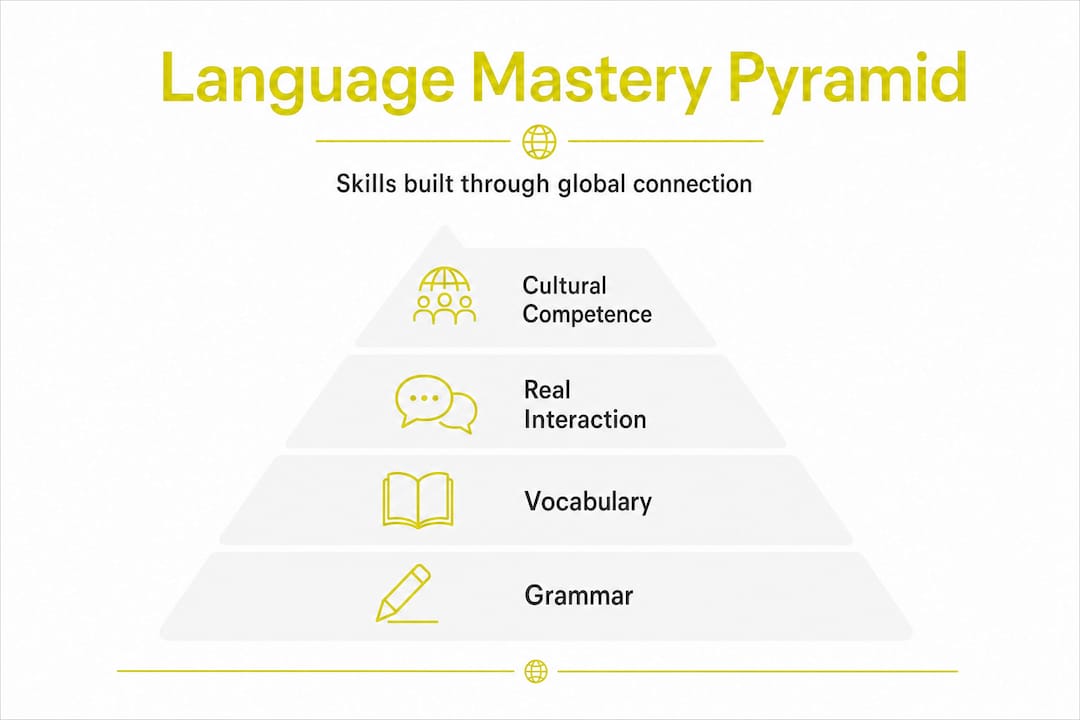
Music is a uniquely powerful bridge to that competence. When you and a speaker from another country bond over a shared song, you immediately have context, vocabulary, emotion, and a reason to keep talking. The educational benefits of music in language learning extend to pronunciation, rhythm, and even grammar, because song structures encode patterns in ways that dry grammar exercises simply cannot.
Pro Tip: Choose one song per week in your target language and find a language partner who loves the same genre. Discuss the lyrics, argue about the meaning, and translate lines together. That single practice will do more for your speaking confidence than five hours of textbook work.
Cultural immersion: Unlocking meaning and confidence
Knowing the words is only half the battle. Knowing when to speak, how loud, how formally, and with what level of directness: those are the skills that separate functional communicators from truly fluent ones. Cultural immersion teaches you all of that simultaneously, and it does not require a plane ticket.
Here are five concrete ways music lovers can access deep cultural immersion from wherever they are:
- Join online listening communities in your target language. Forums, Discord servers, and social platforms built around specific music genres are packed with native speakers who want to talk about their favorite artists. You get authentic, passionate conversation with built-in context.
- Analyze lyrics the way literary scholars do. Look up the historical or social background of a song, then discuss it with a language partner. Understanding language through culture and music is one of the fastest ways to grasp idiomatic expressions and cultural humor.
- Perform a song in your target language, even imperfectly. Singing forces you to hit pronunciation targets that speaking alone often lets you slide past. Rhythm and melody create a kind of muscle memory for sounds.
- Share a playlist and ask for feedback. Sending a native-speaker friend a playlist of your favorite foreign-language songs opens a conversation. Ask them what the songs mean to them culturally, not just linguistically.
- Participate in global song of the week challenges. Structured, recurring activities around a specific song give you shared vocabulary with a global community and a consistent practice habit.
“Embodied musical activities can improve imitation of unfamiliar speech sounds, aligning with the idea that interaction and environment shape learning processes.” Polyglossic on accent and music
What this means in practice is that singing along, moving to the beat, and really feeling a song in a foreign language trains your mouth and ear to produce sounds your brain might otherwise resist. It is one of the most underrated pronunciation tools available, and it is also the most fun.
The confidence factor is just as important as the technical side. Music lowers anxiety. When you walk into a conversation about a shared song, you already have something to say. That simple shift from “I have to perform my grammar” to “I want to share something I love” changes the entire emotional dynamic of language practice.
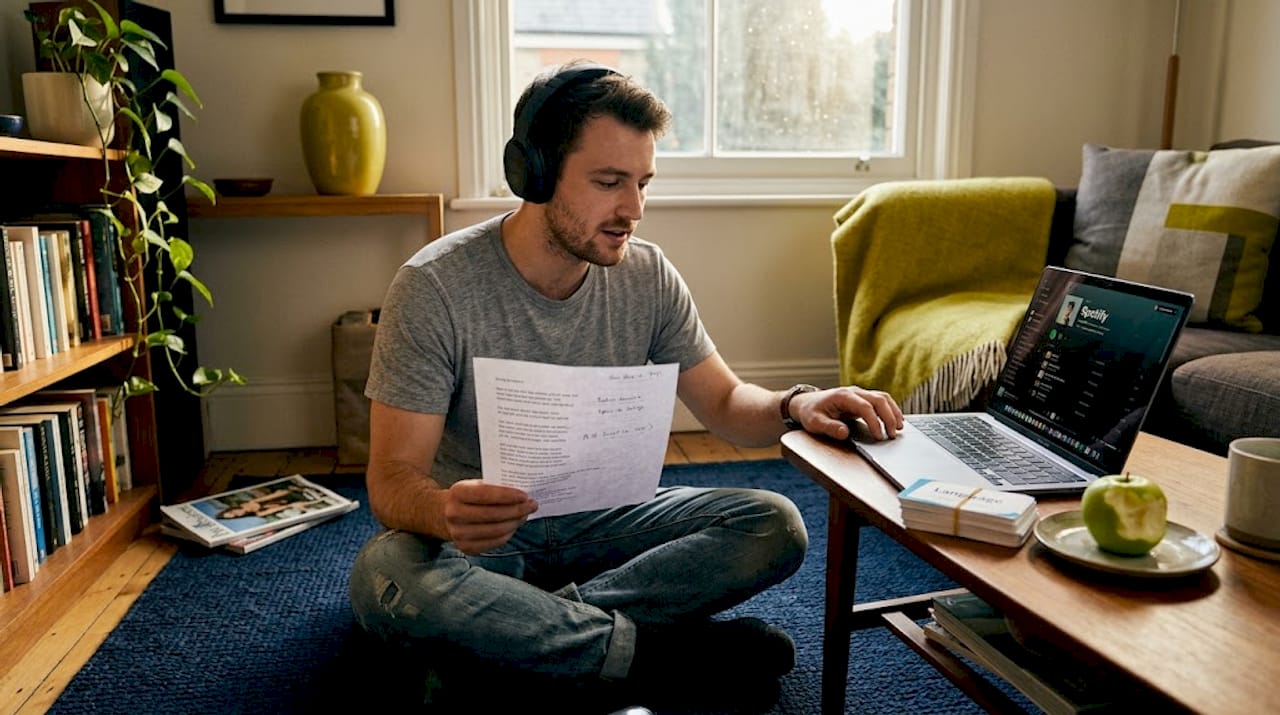
Pro Tip: Record yourself singing a verse of a target-language song and send it to a native-speaking friend or tutor. Ask for accent feedback specifically. This single exercise trains your ear and your willingness to be vulnerable, both of which are essential for real fluency.
Music + international interaction: Actionable strategies for language mastery
Knowing that music and global connection are powerful is one thing. Turning that knowledge into a daily habit is another. Here is a practical framework for making it work.
What works vs. what wastes your time
| Approach | Passive or active? | Cultural depth | Real-world payoff |
|---|---|---|---|
| Listening to foreign music alone | Passive | Low | Limited |
| Translating lyrics solo | Active | Moderate | Moderate |
| Translating lyrics with a partner | Very active | High | Strong |
| Joint karaoke with native speaker | Very active | Very high | Very strong |
| Cross-cultural playlist exchange | Active | High | Strong |
| Grammar drills between sessions | Active | None | Limited |
The patterns are obvious when you look at the table. Solo activities, even active ones like solo translation, fall short compared to anything that brings in a real human partner. The moment another person enters the equation, cultural depth and real-world payoff jump significantly.
Here are the strategies that move the needle most for music-loving language learners:
- Task-based lyric exchanges. Pick a song in your target language and ask your language partner to pick one in yours. Translate both together, then compare your interpretations. This creates engaging ways to practice languages socially while building genuine cultural insight.
- Cross-cultural playlists with annotations. Build a shared playlist and leave voice notes explaining why each song matters to you. Your partner does the same. This creates a language-rich, emotionally resonant exchange that passive listening never could.
- Seek feedback, not approval. Most learners want their language partner to say “your accent is great!” What you actually need is honest correction. Ask specifically: “Did that phrase sound natural?” Feedback loops are what ACTFL research confirms as central to real language progress, because they combine music-based interaction with pragmatic meaning and social context.
- Avoid the perfection trap. Many learners spend the first five minutes of every conversation apologizing for their language level. Stop. Your imperfection is part of what makes the exchange valuable for both people. Jump in, make mistakes, and keep going.
- Build a weekly rhythm. Consistency beats intensity. One 30-minute music exchange every week will outperform a single three-hour marathon session once a month. Follow actionable music lovers’ language tips that fit your schedule, not the schedule of an imaginary perfect learner.
The biggest mistake most learners make is treating music as background study. You put on a foreign playlist while commuting and assume something is happening. Something is, but it is very small. The real gains come when music is a starting point for conversation, analysis, and genuine human connection.
What most learners miss: Genuine connection beats perfection
Here is the uncomfortable truth that most language courses will never tell you: perfectionism is the number one enemy of fluency. Not lack of vocabulary. Not a strong accent. Perfectionism.
We have worked with thousands of music-loving language learners, and the pattern is consistent. The learners who make the fastest progress are not the ones with the best grammar. They are the ones who are willing to sound ridiculous, try again, laugh about it, and keep going. Music helps enormously here, because no one expects a karaoke performance to be flawless.
The traditional framing of language learning treats fluency as a destination you reach when you have enough knowledge. But fluency is actually a practice, more like playing an instrument than passing an exam. You do not wait until you can play perfectly to perform. You perform imperfectly, get feedback, and improve through doing.
Real-world music exchanges are powerful precisely because they remove the performance pressure of a formal learning environment and replace it with the pleasure of shared experience. When you and a new friend in Tokyo or São Paulo are laughing together about a lyric that does not translate cleanly, you are building something a textbook cannot give you: a genuine relationship with the language through another person.
The friendships you build through music-centered language practice tend to last. They are anchored in real shared moments, not transactional study sessions. And those relationships keep you returning to the language day after day, which is the real secret to fluency. Not method. Motivation.
Start your global, music-powered language journey today
Everything covered here points to one clear direction: combining music with genuine international interaction is the most effective and enjoyable path to real language skills.
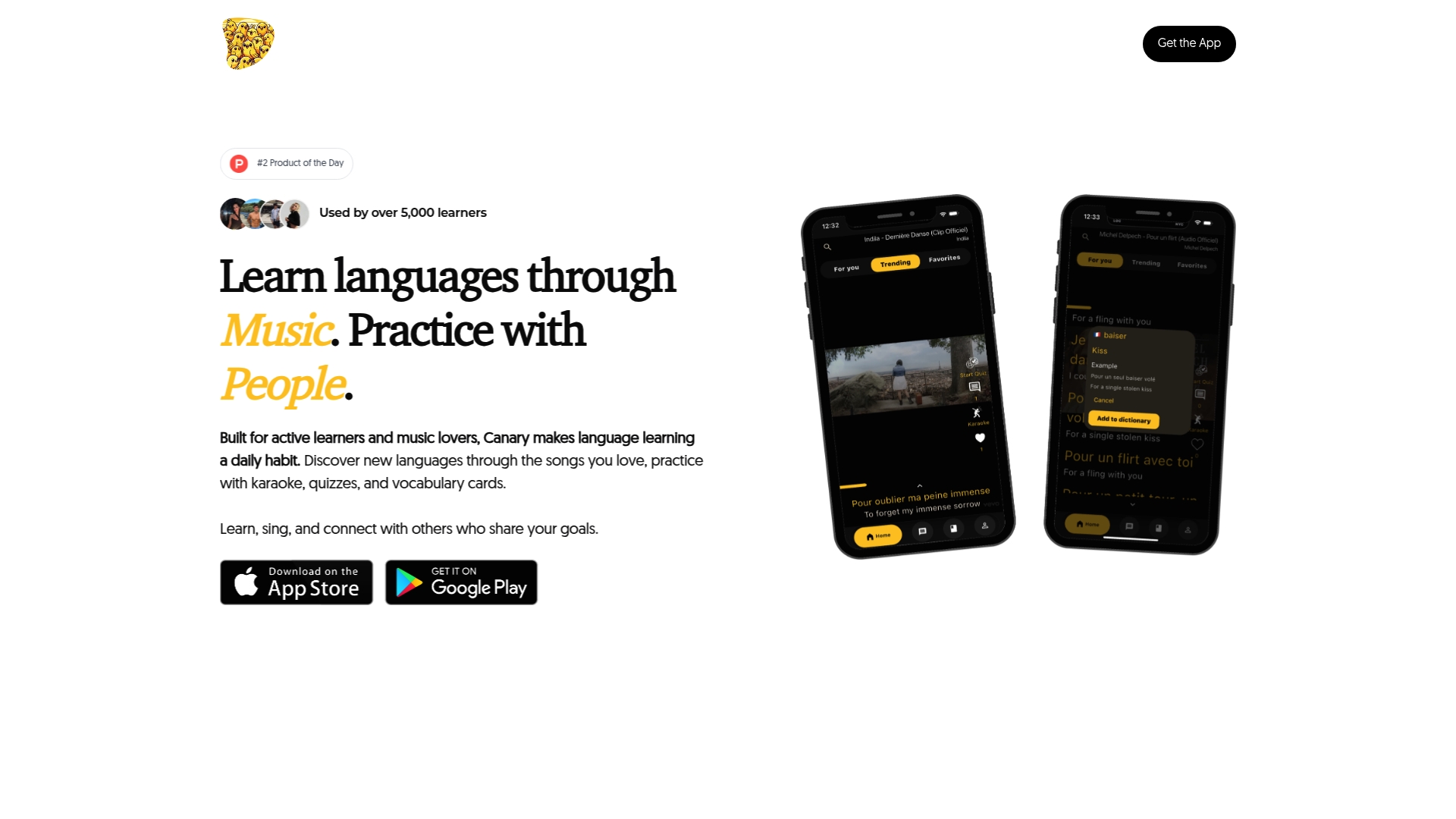
Canary is built exactly for this. It is a platform where you learn languages with music through karaoke, vocabulary cards, and song-based quizzes, and then practice what you have learned with real people around the world. You do not have to choose between structured learning and authentic connection. Canary gives you both. Explore music’s educational benefits for learners through features designed specifically for music lovers, and dive into weekly music immersion challenges that connect you with a global community every single week. Your next conversation, friendship, and language breakthrough might start with a single song.
Frequently asked questions
What are international connections in language learning?
These are relationships or interactions with speakers from other countries or cultures, often online or in real life, which expose you to new language contexts and authentic use. Interaction and cultural context are essential for moving beyond grammar drills into real communicative fluency.
How does music enhance international language connections?
Music provides shared, relatable content that makes interaction easier, encourages discussion, and supports better pronunciation through rhythm and melody. Embodied musical activities can even improve your ability to imitate unfamiliar sounds in a new language.
Can cultural immersion happen without traveling?
Yes. Virtual exchanges, online language partners, and music communities allow for deep cultural immersion from home. Interaction opportunities vary by context and are definitely not limited to physical travel.
Why is intercultural competence important in language learning?
It helps you understand social norms and communicate respectfully, achieving true fluency rather than just memorizing words. Developing intercultural communicative competence requires real international interaction, not classroom drills alone.