Singing can improve language pronunciation accuracy by up to 25% in just a few weeks, turning a simple pleasure into a powerful learning tool. Music-infused language practice offers an engaging alternative to traditional drills, combining rhythm, melody, and social interaction to help you master new sounds and words faster. This article explains what it is, how it works neurologically, the research-backed benefits, and practical steps to get started today.
Table of Contents
- Introduction To Music-Infused Language Practice
- How Music Enhances Language Acquisition
- Evidence-Based Benefits Of Music-Infused Practice
- Common Misconceptions About Music In Language Learning
- Comparison With Traditional Language Learning Methods
- How To Implement Music-Infused Language Practice Effectively
- Conclusion: Embracing A Fun, Effective Language Learning Habit
- Discover Canary: Your Partner In Music-Infused Language Learning
- Frequently Asked Questions
Key Takeaways
| Point | Details |
|---|---|
| Music activates overlapping brain regions | Music engages Broca’s area and auditory cortex, accelerating language acquisition through neural plasticity. |
| Pronunciation improves 15% faster | Music-infused methods outpace traditional drills, delivering measurable gains in accent accuracy within weeks. |
| Active singing boosts retention and motivation | Singing and social practice increase vocabulary recall and sustain daily study habits better than rote repetition. |
| Common myths are debunked | Music doesn’t distract or require singing talent; it complements structured study for comprehensive skill building. |
| Practical tools make it accessible | Step-by-step guidance and interactive platforms help learners start and sustain effective music-infused practice. |
Introduction to Music-Infused Language Practice
Music-infused language practice combines active music engagement with language learning tasks, harnessing rhythm and melody to strengthen neural pathways. Instead of passive listening or isolated grammar drills, you sing along, tackle quizzes, and practice vocabulary in context, turning songs into immersive learning sessions. This method appeals especially to music lovers and active learners seeking a fun, motivating alternative to textbook repetition.
The mechanism is straightforward: music’s rhythmic patterns and melodic contours activate the same brain regions responsible for speech production and comprehension. When you learn languages with music, you’re not just memorizing words. You’re training your brain to recognize sounds, mimic pronunciation, and internalize grammar naturally through lyrical context.
Music-infused practice differs from traditional methods in several key ways:
- It prioritizes active participation over passive review, keeping you engaged and motivated.
- It integrates cultural immersion through authentic songs, exposing you to real-world expressions and idioms.
- It leverages social features, letting you practice with others and build confidence in conversational settings.
- It offers variety through platforms like the Song of the Week, which introduces fresh content regularly.
This approach sets the stage for understanding how music’s cognitive benefits translate into measurable language gains. Ready to explore the science? Sign up for interactive music learning and start today.
How Music Enhances Language Acquisition
Music engages brain regions involved in language processing, enhancing neural plasticity and facilitating language acquisition. Broca’s area, crucial for speech production, and the auditory cortex, responsible for sound processing, both activate during musical engagement. This overlap means practicing with music strengthens the same neural pathways you use for speaking and understanding a new language.
Neural plasticity, your brain’s ability to form new connections, increases when you engage with music. Melody and rhythm provide a scaffold for memory encoding, making it easier to recall vocabulary and pronunciation patterns. Singing along to a song forces your mouth and tongue to mimic foreign sounds repeatedly, accelerating accent formation and phonetic accuracy.
“Music’s rhythmic and melodic structures provide a natural framework for language learners to internalize pronunciation patterns and grammatical structures, bypassing the cognitive load of isolated drills.”
Cognitive engagement through music goes deeper than rote repetition. When you sing, you process meaning, emotion, and context simultaneously, which strengthens memory consolidation. This multi-sensory approach explains why educational benefits of music-language learning extend beyond simple vocabulary gains.
Key mechanisms include:
- Music increases dopamine release, boosting motivation and making practice feel rewarding.
- Rhythmic entrainment helps you internalize the natural flow and stress patterns of a language.
- Melodic contours aid in distinguishing tonal nuances, critical for languages like Mandarin or Vietnamese.
- Repetition within songs reinforces vocabulary without the tedium of flashcards.
These neurological advantages set music-infused practice apart from traditional drills. You’re not just memorizing; you’re rewiring your brain to think and speak in the target language naturally.
Evidence-Based Benefits of Music-Infused Practice
Pronunciation accuracy improved 15% faster with music-infused practice over eight weeks compared to traditional methods. This research demonstrates that active singing and melody-based exercises accelerate phonetic mastery, helping learners achieve native-like pronunciation in less time. The rhythm and repetition inherent in songs provide a consistent framework for practicing difficult sounds.

Vocabulary retention also benefits significantly. Melodic and contextual cues embedded in lyrics create stronger memory associations than isolated word lists. When you learn a phrase through a song, you remember not just the words but the emotional and situational context, making recall faster and more intuitive.
Motivation is another major advantage. Music creates a positive emotional environment that encourages longer study sessions and greater confidence. Learners using music-based methods report feeling less anxious about pronunciation mistakes and more willing to practice speaking aloud. This psychological boost translates into consistent daily practice, a key factor in language acquisition success.
Statistic Highlight: Studies show that learners using music-infused methods practice 30% longer per session than those relying solely on textbook drills, leading to faster overall progress.
The benefits of learning languages with songs extend beyond speed and retention:
- Enhanced listening comprehension through exposure to natural speech rhythms and colloquial expressions.
- Improved cultural literacy by exploring songs that reflect the target language’s traditions and values.
- Greater speaking confidence due to repeated vocal practice in a low-pressure, enjoyable setting.
- Sustained engagement that reduces dropout rates common with monotonous study routines.
These research-backed benefits make music-infused practice a superior complement to traditional methods, especially for learners seeking measurable pronunciation and vocabulary gains.
Common Misconceptions About Music in Language Learning
Many learners avoid music-based methods due to persistent myths that misrepresent how music supports language acquisition. Clarifying these misconceptions helps you embrace the method confidently and maximize its benefits.
-
Myth: Music distracts from serious language study. In reality, music improves verbal memory and focus by engaging multiple brain regions simultaneously. The rhythmic structure provides a cognitive anchor that enhances concentration rather than dividing it.
-
Myth: Only trained singers benefit from music-infused practice. Research shows learners at all skill levels, including non-singers, achieve significant pronunciation and vocabulary improvements. You don’t need perfect pitch or vocal training to benefit from singing along.
-
Myth: Music is just entertainment, not real learning. Music activates the same language processing pathways as speech, making it a legitimate educational tool. When you sing, you’re practicing pronunciation, intonation, and grammar in a contextualized, memorable way.
-
Myth: Passive listening equals active practice. Simply playing music in the background won’t produce significant gains. Active engagement, such as singing along, analyzing lyrics, or completing quizzes, is essential for triggering the neural changes that drive language acquisition.
-
Myth: Music-based methods replace other study techniques. Music complements structured study but doesn’t replace grammar lessons or conversation practice. The most effective learners integrate multiple methods, using music to reinforce and accelerate gains from traditional study.
Pro Tip: Start with simple songs featuring clear pronunciation and repetitive lyrics. As your skills improve, gradually introduce more complex material to continue challenging your brain.
Understanding these truths empowers you to adopt music-infused practice without hesitation. Explore music learning myths and truths for deeper insights into how this method fits within a comprehensive language learning strategy.
Comparison With Traditional Language Learning Methods
Traditional language drills often yield slower pronunciation progress compared to music-infused methods. Repetitive exercises, while useful for grammar mastery, lack the emotional engagement and contextual richness that music provides. This difference in approach leads to measurable gaps in both speed and retention.
| Feature | Music-Infused Practice | Traditional Methods |
|---|---|---|
| Pronunciation Speed | 15% faster improvement in 8 weeks | Slower, incremental gains |
| Vocabulary Retention | High due to melodic and contextual cues | Moderate, often requires frequent review |
| Learner Engagement | High motivation, longer practice sessions | Lower motivation, higher dropout rates |
| Cultural Context | Strong through authentic song lyrics | Limited unless supplemented |
| Social Interaction | Built-in through karaoke and group practice | Often solitary or classroom-based |
Music-infused practice accelerates pronunciation and vocabulary acquisition by providing a multi-sensory, emotionally engaging experience. Melody and rhythm create a natural framework for internalizing sounds, while lyrics offer context that makes words easier to remember. Traditional methods rely heavily on repetition and memorization, which can feel tedious and fail to sustain long-term motivation.

Higher engagement is a critical advantage. Platforms with interactive features like quizzes, vocabulary cards, and social singing foster a sense of community and accountability. You’re not just studying alone; you’re practicing with others, building confidence, and making language learning a social activity.
Key differences include:
- Music-infused methods prioritize active vocal practice, improving muscle memory for pronunciation.
- Traditional drills focus on visual and auditory input but often neglect speaking practice.
- Music naturally introduces colloquial expressions and cultural nuances absent from textbook exercises.
- Interactive music platforms provide immediate feedback through quizzes and social interaction, accelerating error correction.
Pro Tip: Combine both approaches for comprehensive skill building. Use traditional methods to master grammar rules, then reinforce pronunciation and vocabulary through music-based learning examples.
This hybrid strategy leverages the strengths of each method, ensuring you develop well-rounded language skills faster and with greater enjoyment.
How to Implement Music-Infused Language Practice Effectively
Starting music-infused language practice requires a strategic approach to maximize benefits and avoid common pitfalls. Follow these actionable steps to build a sustainable, effective routine.
-
Select culturally relevant, linguistically suitable songs. Choose tracks that match your current proficiency level and expose you to vocabulary and grammar you’re actively studying. Beginners benefit from simple, repetitive lyrics, while advanced learners can tackle complex narratives and slang.
-
Practice singing along, focusing on rhythm and pronunciation. Don’t just listen passively. Mimic the singer’s pronunciation, stress patterns, and intonation. Record yourself to identify areas for improvement and track progress over time.
-
Use interactive features like quizzes and vocabulary cards. Platforms that offer structured exercises help reinforce what you learn from songs. Quizzes test comprehension, while vocabulary cards provide spaced repetition for long-term retention.
-
Join social singing or language practice groups. Engaging with other learners through karaoke sessions or conversation circles builds confidence and provides real-world practice. Social accountability also keeps you motivated and consistent.
Avoid these common pitfalls:
- Passive listening without active engagement produces minimal gains.
- Overly complex songs with rapid lyrics or obscure slang can frustrate beginners.
- Ignoring social practice limits your ability to apply skills in real conversations.
- Skipping regular practice disrupts memory consolidation and slows progress.
Pro Tip: Dedicate 15 to 20 minutes daily to music-infused practice. Consistency matters more than session length, and short, focused sessions yield better results than sporadic marathon study.
For a comprehensive approach, explore the language learning workflow for beginners to structure your practice effectively. Discover language learning methods for music lovers to find additional strategies that complement singing.
If you’re targeting a specific language, resources like natural music-based Spanish learning provide tailored guidance. Review examples of successful music-infused practice to see how others have achieved fluency through this method.
Conclusion: Embracing a Fun, Effective Language Learning Habit
Music-infused practice delivers long-term pronunciation and vocabulary gains by engaging your brain in ways traditional drills cannot. Active singing, social interaction, and emotional engagement create a learning experience that feels less like work and more like play, making it easier to sustain daily practice over months and years.
Platforms like Canary support you on this journey, offering interactive tools and a global community of learners who share your passion for music and language. Whether you’re a beginner or advanced learner, music-based methods accelerate progress while keeping motivation high.
Start today by choosing a song in your target language and singing along. Notice how rhythm helps you internalize pronunciation and how lyrics provide context for new vocabulary. The more you practice, the more natural speaking becomes.
Join the music-language learning community and discover how enjoyable and effective this approach can be. Learn languages with music and transform your daily study routine into a habit you’ll look forward to every day.
Discover Canary: Your Partner in Music-Infused Language Learning
Canary offers everything you need to succeed with music-infused language practice. With features like interactive karaoke, vocabulary quizzes, and social practice tools, the platform turns learning into an engaging, community-driven experience. Track your progress, connect with learners worldwide, and practice pronunciation through songs you love.
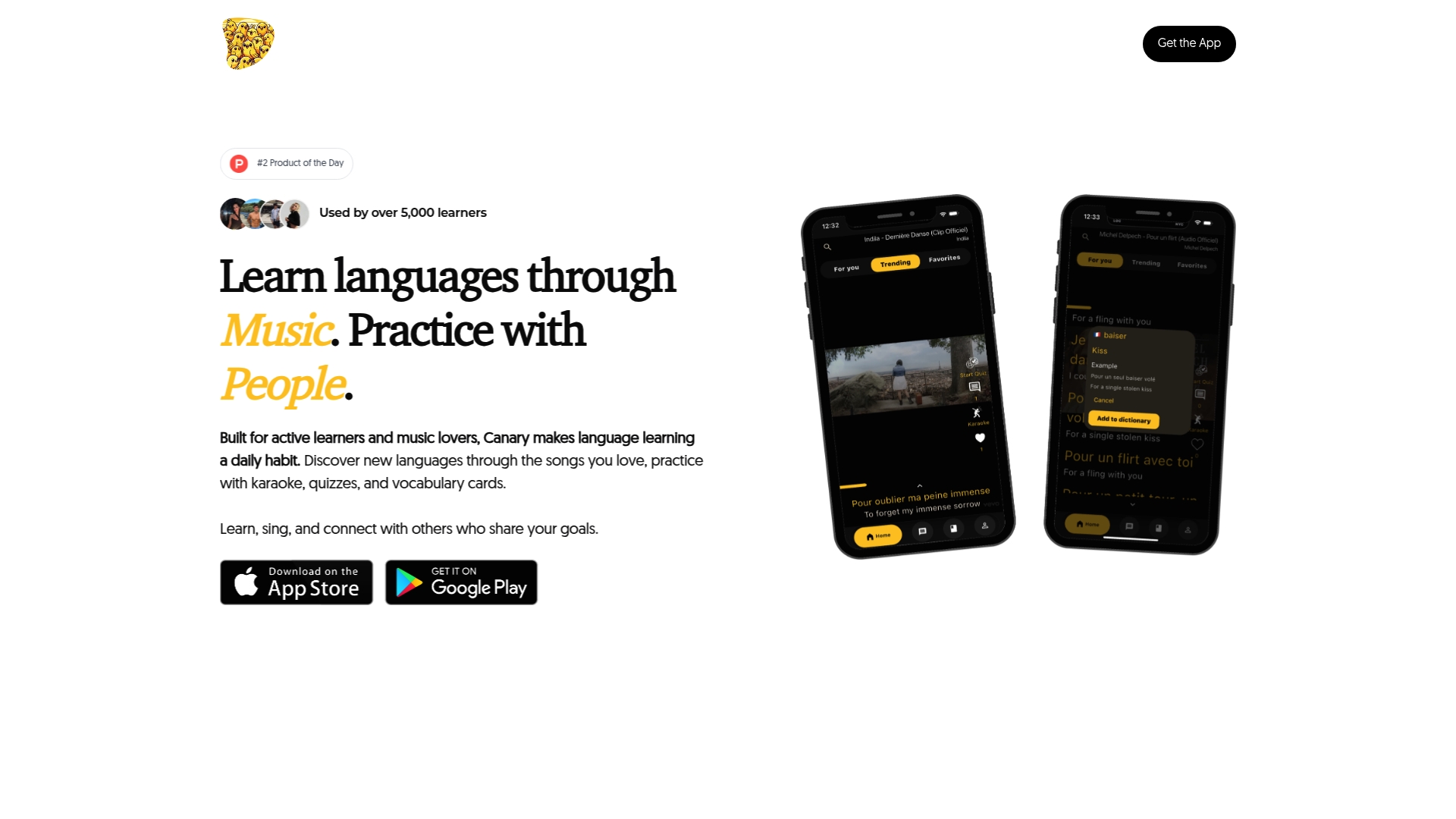
Designed for active learners and music enthusiasts, Canary boosts motivation and delivers measurable results. Whether you’re working through Canary’s beginner workflow or exploring the Song of the Week feature, you’ll find fresh content and interactive challenges that keep practice exciting.
Join thousands of learners who’ve transformed their language skills through music. Learn languages with music on Canary and experience the difference active, social, music-infused practice makes.
Frequently Asked Questions
What level of language proficiency is needed to start music-infused practice?
You can start at any level, from absolute beginner to advanced. Choose songs with simple, repetitive lyrics if you’re new, and gradually increase complexity as your skills improve. The key is active engagement, not prior fluency.
Is singing ability necessary to benefit from music-infused language learning?
No singing talent is required. Research shows all learners, regardless of vocal skill, achieve significant pronunciation and vocabulary gains through active participation. Focus on mimicking sounds and rhythm, not perfect pitch.
Can I rely on music alone or do I need other learning methods?
Music-infused practice is highly effective but works best alongside structured grammar study and conversation practice. Combining methods ensures comprehensive skill development, with music reinforcing pronunciation and vocabulary while traditional study covers grammar rules.
How often should I practice with music for best results?
Aim for 15 to 20 minutes daily. Consistency drives memory consolidation and pronunciation accuracy more than longer, infrequent sessions. Daily practice keeps your brain engaged and accelerates progress over weeks and months.
Are there particular genres or song types best for language learning?
Pop, folk, and ballads with clear pronunciation and repetitive lyrics work well for beginners. Avoid rap or fast-paced songs initially. As you advance, explore diverse genres to encounter varied vocabulary, slang, and cultural expressions.