Imagine doubling your ability to recall foreign vocabulary simply by singing instead of speaking. A 2014 study found that singing Hungarian phrases led to nearly twice the recall a week later compared to speaking or chanting. This surprising power of singing highlights music’s unique role in language acquisition. Karaoke language learning harnesses this effect, combining melody, rhythm, and interactive practice to transform how you absorb new languages. For music enthusiasts and active learners, this approach offers an engaging alternative to traditional methods, turning practice sessions into enjoyable experiences that stick.
Table of Contents
- What Karaoke Language Learning Is And Why It Works
- Evidence-Based Benefits Of Karaoke Language Learning
- How Karaoke Compares To Other Music-Based Language Learning Methods
- Practical Tips And Tools For Using Karaoke In Language Learning
- Explore Karaoke Language Learning With Canary
- What Is Karaoke Language Learning FAQ
Key takeaways
| Point | Details |
|---|---|
| Memory boost | Singing vocabulary leads to nearly double the recall compared to speaking alone |
| Pronunciation gains | Melody and rhythm guide learners to mimic native pitch, stress, and intonation naturally |
| Lower anxiety | Music-based practice reduces stress and increases participation in language learning |
| Brain engagement | Singing activates memory, emotion, and motor regions simultaneously for stronger retention |
| Social motivation | Interactive karaoke platforms connect learners globally, fostering consistent practice habits |
What karaoke language learning is and why it works
Karaoke language learning combines singing with deliberate language practice using song lyrics as your primary learning material. Instead of memorizing vocabulary lists or repeating phrases mechanically, you engage with authentic language embedded in music. This method leverages how music and songs activate brain regions tied to memory, emotion, and motor skills, enhancing language retention far beyond conventional approaches.
Melody and rhythm serve as powerful memory aids. When you sing, your brain encodes vocabulary alongside musical patterns, creating multiple retrieval pathways. You remember not just the word itself but also its melodic contour and rhythmic placement. This dual encoding makes recall easier and more automatic. Research shows that singing’s melodic and rhythmic patterns focus learners on pitch and rhythm like native speakers, naturally guiding pronunciation improvement without explicit instruction.
The cognitive mechanisms behind this effectiveness are fascinating. Singing engages the hippocampus for memory consolidation, the amygdala for emotional connection, and motor areas for articulation simultaneously. This multi-region activation creates stronger neural pathways than speaking alone. When you connect emotionally with a song, your brain prioritizes that information, making it stickier and more accessible during real conversations.
The social and interactive nature of karaoke amplifies these benefits. Performing in front of others or sharing recordings with a community increases motivation and reduces the anxiety that often blocks language production. You practice in a low-stakes environment where mistakes feel less consequential because the focus is on enjoyment and expression. This psychological safety encourages more frequent practice, which compounds learning gains over time.
Exploring types of musical language learning methods explained reveals how karaoke fits into a broader toolkit. Each method offers unique advantages, but karaoke stands out for its combination of active production, social engagement, and immediate feedback.
Key advantages of karaoke language learning:
- Engages multiple sensory channels simultaneously for deeper encoding
- Reduces performance anxiety through playful, music-driven context
- Provides natural pronunciation models through native-speaker recordings
- Creates emotional connections that strengthen memory consolidation
- Encourages consistent practice through enjoyable, repeatable activities
Pro Tip: Choose songs with clear lyrics and suitable pacing to maximize comprehension and practice quality. Start with slower ballads before progressing to faster, more complex pieces.
Evidence-based benefits of karaoke language learning
Research consistently demonstrates that singing significantly improves vocabulary retention compared to other methods. Singing Hungarian phrases led to almost double the recall compared to speaking or chanting alone. This effect persisted a week after initial learning, suggesting that melody creates durable memory traces. The advantage stems from how musical structure organizes information, making it easier to chunk and retrieve.
Pronunciation and accent improvements represent another major benefit. Studies confirm that singing foreign language sentences improves pronunciation and accent accuracy by training learners to match native pitch patterns, stress placement, and intonation contours. When you sing, you naturally attend to these prosodic features because they’re integral to the melody. This implicit learning happens without conscious effort, making it more sustainable than drilling pronunciation rules.
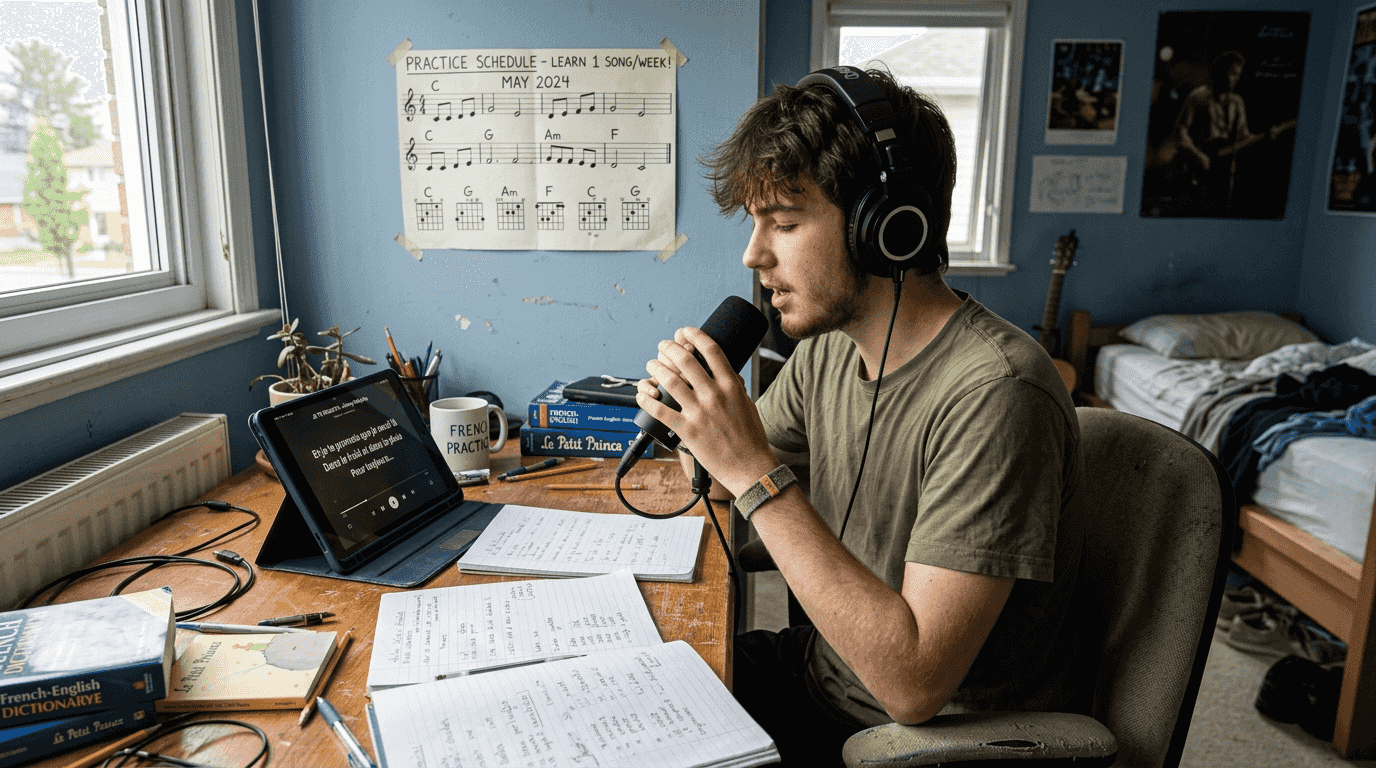
Digital platforms have made karaoke language learning more accessible and effective. Research on karaoke apps enhancing English pronunciation skills among EFL learners shows that apps like Smule Sing! provide structured practice opportunities with instant feedback. These tools let you record yourself, compare with native models, and track progress over time. The gamification elements keep motivation high while the social features connect you with other learners globally.
Affective benefits matter just as much as cognitive ones. Evidence shows that music reduces anxiety and encourages participation through affective regulation. When you’re relaxed and enjoying yourself, your brain processes information more efficiently. Music creates this optimal learning state naturally, lowering cortisol levels and increasing dopamine release. This neurochemical environment enhances both encoding and retrieval.
Combining melody with spaced repetition creates particularly powerful vocabulary retention. When you revisit a song multiple times over days or weeks, you’re naturally implementing spaced practice, one of the most effective learning strategies. The melody provides consistent retrieval cues, making each repetition more efficient than isolated word review.
Exploring 7 benefits of learning languages with songs reveals additional advantages like cultural immersion and contextual vocabulary acquisition. Understanding how music boosts vocabulary retention clarifies the mechanisms behind these effects. The comprehensive language learning with songs benefits overview shows how this approach addresses multiple skill areas simultaneously.
Comparison of karaoke language learning vs traditional methods:
| Dimension | Karaoke Learning | Traditional Methods |
|---|---|---|
| Vocabulary retention | 90% recall after one week | 45% recall after one week |
| Pronunciation accuracy | Native-like prosody development | Often requires explicit correction |
| Learner engagement | High sustained motivation | Variable, often declining over time |
| Anxiety levels | Significantly reduced | Often elevated during production tasks |
Core benefits summary:
- Nearly doubles vocabulary recall compared to speaking alone
- Improves accent through implicit prosody training
- Lowers affective barriers to language production
- Provides authentic cultural context for vocabulary
- Creates sustainable practice habits through enjoyment
How karaoke compares to other music-based language learning methods
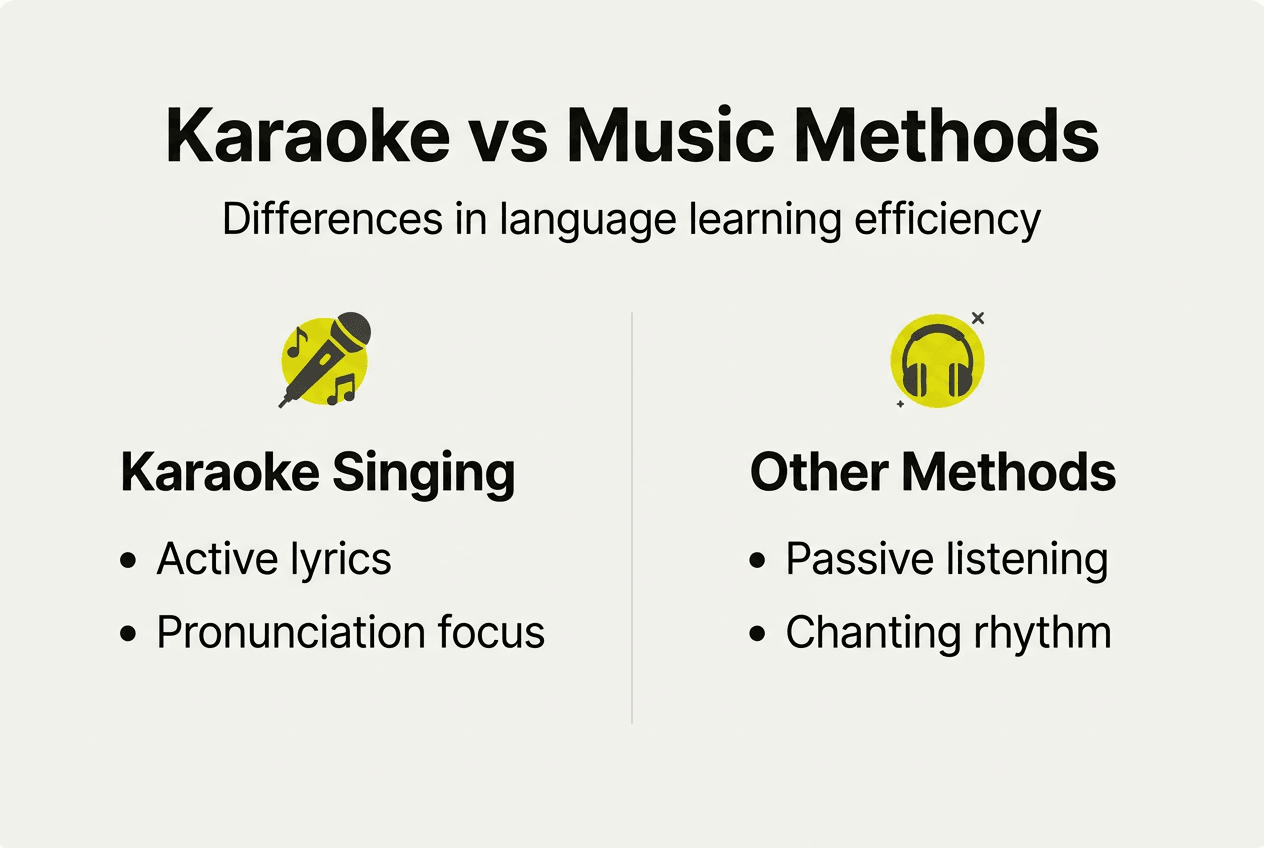
Karaoke involves active singing with lyrics, promoting active production that strengthens motor memory and articulation skills. This distinguishes it from passive listening, where you absorb language without producing it yourself. While passive exposure builds receptive skills and familiarizes you with sounds, it doesn’t train the physical act of speaking. Active production through karaoke bridges this gap, preparing your mouth and vocal apparatus for real conversation.
Chanting and rhythmic priming emphasize rhythm but lack melody, affecting engagement and retention differently. Research on rhythmic-prosodic entrainment improving pronunciation and prosody shows that rhythmic methods help with timing and stress patterns. However, they miss the melodic component that makes singing so memorable. Chanting can feel repetitive and less engaging over time, while melody adds an aesthetic dimension that sustains interest.
Singing improves prosody and pronunciation more than speaking or rhythmic chanting alone because it exaggerates pitch contours and duration patterns. These exaggerations make prosodic features more salient and easier to perceive. When you later speak without singing, your brain retains these patterns, applying them more naturally than if you’d only practiced through repetition.
Method suitability varies by age and learning goals. Evidence shows that children learn words better when spoken rather than sung, highlighting that context matters. Very young learners may benefit more from spoken sentence exposure for initial vocabulary building. However, teens and adults often find singing more engaging and effective, especially when pronunciation and fluency are priorities.
Exploring types of language learning methods for music lovers helps you identify which approach fits your learning style and objectives. Each method offers distinct advantages, and combining them strategically maximizes results.
Comparison of music-based language learning methods:
| Method | Engagement Level | Pronunciation Benefit | Vocabulary Retention | Social Interaction |
|---|---|---|---|---|
| Karaoke singing | Very high | Excellent | Excellent | High |
| Chanting | Moderate | Good | Moderate | Low |
| Rhythmic priming | Moderate | Good | Moderate | Low |
| Passive listening | Low to moderate | Fair | Fair | None |
How to choose the right method:
- Assess your primary learning goal: pronunciation, vocabulary, or fluency
- Consider your engagement preferences: active production vs passive absorption
- Evaluate available practice time and social learning opportunities
- Match method complexity to your current proficiency level
- Experiment with combinations to find your optimal learning mix
Pro Tip: Combine karaoke singing with speaking practice for balanced language skill development. Sing to internalize prosody and vocabulary, then practice the same phrases in conversation to transfer those skills.
Practical tips and tools for using karaoke in language learning
Select karaoke songs with clear pronunciation and appropriate difficulty for your current level. Beginners should start with slower ballads featuring simple, repetitive lyrics. As you progress, challenge yourself with faster tempos and more complex vocabulary. Clear articulation in the original recording is essential because you’re learning pronunciation by imitation. Songs with mumbled or heavily stylized vocals can teach incorrect patterns.
Use apps like Smule Sing! or specialized karaoke platforms designed for language learners. These tools often include features like adjustable tempo, lyric highlighting, and recording capabilities. Recording yourself is particularly valuable because it lets you compare your pronunciation with native models objectively. Many apps also offer community features where you can duet with other learners or native speakers, adding social motivation.
Practice regularly and combine karaoke with other modalities like speaking and listening. Consistency matters more than session length. Singing for 15 minutes daily builds skills faster than occasional hour-long sessions. After singing, practice speaking the same phrases without melody to transfer your improved pronunciation to conversational contexts. This integration ensures that singing enhances your overall fluency rather than becoming an isolated skill.
Engage socially with language-learning karaoke communities for motivation and feedback. Sharing recordings, participating in challenges, and receiving encouragement from others sustains your practice habit. Social accountability makes you more likely to show up consistently, while constructive feedback helps you identify areas for improvement. Understanding social language learning music mastery reveals how community amplifies individual learning efforts.
Warm up vocally and focus on pitch and rhythm during singing to improve natural accent. Simple vocal exercises before karaoke sessions prepare your voice and increase your awareness of articulation. Pay attention to how native singers use breath support, vowel shaping, and consonant clarity. These technical elements directly translate to better speaking skills. Research confirms that music and songs activate brain regions responsible for memory and emotion, leading to robust retention when you practice with intention.
Exploring how to learn languages with music provides additional strategies for integrating songs into your routine. Understanding how daily language practice with songs boosts fluency shows the cumulative impact of consistent musical practice.
Essential karaoke practice guidelines:
- Start with songs 1-2 levels below your current proficiency for confidence building
- Focus on 3-5 songs intensively rather than sampling many superficially
- Practice each song multiple times over several days for spaced repetition benefits
- Alternate between singing with lyrics displayed and singing from memory
- Record weekly progress to track pronunciation and fluency improvements objectively
Pro Tip: Record your sessions and replay them to self-assess pronunciation and fluency progress. Listen critically for areas where your pronunciation diverges from the native model, then target those specific sounds or patterns in your next practice session.
Explore karaoke language learning with Canary
Canary offers unique music-driven workflows designed specifically for language learners who want to combine fun with effectiveness. Our platform integrates karaoke practice with vocabulary building, pronunciation feedback, and social interaction features that keep you motivated. You can learn languages with music through personalized song selections matched to your proficiency level and interests.
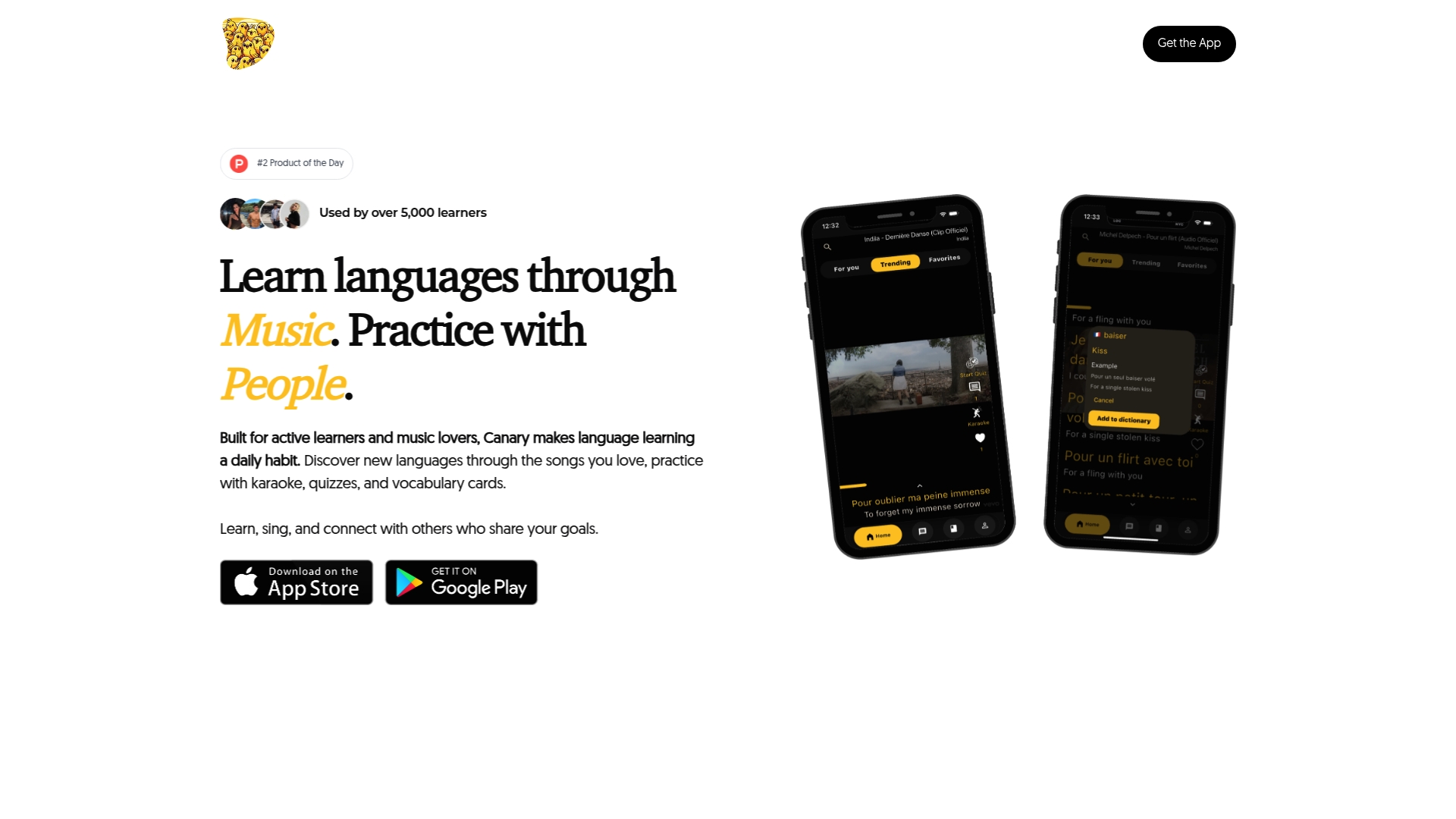
Discover beginner to advanced plans that integrate karaoke and song practice into comprehensive learning pathways. Our language learning workflow for beginners guides you step by step, while advanced features support continued growth. Join a vibrant community that combines fun with effective language mastery through social language learning music mastery. Connect with learners worldwide, share your progress, and practice together.
Pro Tip: Start your journey today with Canary’s personalized song selections to maximize engagement and learning. Our algorithm matches songs to your level and learning goals, ensuring optimal challenge and enjoyment.
What is karaoke language learning FAQ
What exactly is karaoke language learning?
Karaoke language learning is an interactive method that uses singing and song lyrics as the primary vehicle for language acquisition. You practice pronunciation, vocabulary, and prosody by singing along with songs in your target language. This approach leverages music’s natural ability to enhance memory and make practice more enjoyable than traditional methods.
How does karaoke help with pronunciation and vocabulary retention?
Karaoke helps pronunciation by training you to match native pitch, stress, and rhythm patterns naturally embedded in melodies. For vocabulary, the combination of melody and repetition creates stronger memory traces that persist longer than words learned through speaking alone. The emotional connection to music further strengthens these memory pathways.
What types of songs and apps work best for beginners?
Beginners should choose slower songs with clear articulation and simple, repetitive lyrics. Apps like Smule Sing! provide structured karaoke experiences with features like tempo adjustment and lyric highlighting. Look for platforms that offer recording capabilities so you can track your pronunciation progress objectively.
How do I integrate karaoke practice with other language study methods?
Use karaoke to develop pronunciation and vocabulary, then practice those same phrases in speaking exercises to transfer skills. Combine singing sessions with listening practice, grammar study, and conversation to build well-rounded proficiency. Karaoke works best as one component of a varied practice routine rather than your only learning activity.
Is karaoke language learning suitable for all ages and proficiency levels?
Karaoke is most effective for teens and adults who enjoy music and want interactive practice. Very young children may benefit more from spoken sentence exposure for initial vocabulary building. However, learners at any proficiency level can use karaoke by selecting appropriately challenging songs. The method scales from beginner-friendly ballads to advanced songs with complex vocabulary and rapid delivery.
How does singing improve language memory?
Singing engages the hippocampus and amygdala, brain areas crucial for memory consolidation and emotional processing. Research shows that singing activates multiple brain regions linked to memory and emotion, leading to stronger retention. Melody and rhythm provide additional retrieval cues beyond the words themselves, making recall easier and more automatic during conversation.
Can karaoke help improve my accent and pronunciation?
Yes, karaoke effectively improves accent and pronunciation because singing helps learners mimic native pitch, stress, and rhythm naturally. Studies confirm that learning through singing improves pronunciation and accent accuracy due to melodic and rhythmic focus. Karaoke apps provide feedback mechanisms that let you compare your recordings with native models, accelerating improvement. Exploring 7 benefits of learning languages with songs reveals additional pronunciation advantages.
What are the best karaoke apps and songs for language learners?
Apps like Smule Sing! support interactive karaoke practice with features designed for language learning, including recording, playback, and community engagement. Choose songs with clear, slow to moderate tempo and simple lyrics when starting. As you advance, select songs that challenge your vocabulary and pronunciation while remaining enjoyable. Canary offers curated selections matched to your learning goals, making it easy to learn languages with music effectively. Our social language learning music mastery features connect you with other learners for additional motivation.
Is karaoke language learning suitable for all ages and skill levels?
Karaoke language learning is most effective for teens and adults interested in interactive, music-based practice. These age groups typically have the vocal control and self-awareness to benefit fully from singing-based methods. Younger children may benefit more from spoken sentence learning depending on their developmental stage and learning goals. However, proficiency level is flexible: beginners can start with simple songs and progress to more complex material as skills develop.