TL;DR:
- Pronunciation training involves structured practice of speech sounds, stress, and intonation to improve clarity. It emphasizes active motor skill development through techniques like shadowing, minimal pair drills, and self-recording to boost intelligibility. Consistent short daily sessions focused on specific features lead to faster progress and better understanding by listeners.
Pronunciation training is the active, systematic practice of producing speech sounds and rhythmic patterns to improve spoken clarity and comprehensibility. Unlike casual conversation practice, it targets specific phonemes, stress patterns, and intonation through structured exercises with feedback. The International Phonetic Alphabet (IPA) gives learners a precise map of every sound in a language. Modern research confirms that intelligibility over native accent is the real goal: you need to be understood, not to sound like you were born somewhere else. This distinction changes everything about how you train.
What does pronunciation training actually involve?

Pronunciation training is a motor skill development process. Your mouth, tongue, and lips must learn new physical movements, just like a musician trains finger positions. Passive listening does not build those muscles. Active, feedback-driven repetition does.
The most structured approach in current linguistic research is the NECTAR cycle. The NECTAR method integrates six steps: Notice the target sound, train your Ear to hear it, Copy a model speaker, Target the specific feature, Articulate with conscious control, and Repeat until automatic. Each step builds on the last. Skipping ear training, for example, means you cannot hear your own errors, so you keep repeating them.
Pronunciation work divides into two categories: segmental and suprasegmental features. Segmental features are individual sounds, or phonemes, like the difference between the English “v” and “b.” Suprasegmental features cover stress, rhythm, and intonation across whole words and sentences. Prioritizing suprasegmental features over perfect individual sounds produces better intelligibility for non-native speakers. A sentence with perfect vowels but wrong word stress still confuses listeners.
The most effective active methods are:
- Shadowing. Listen to a native speaker and repeat simultaneously, matching rhythm and intonation. Shadowing builds neural pathways for prosody and flow, accelerating rhythm and stress learning faster than any other single technique. It bypasses overanalysis because you focus on matching sound, not analyzing rules.
- Minimal pair drilling. Practice word pairs that differ by one sound only, such as “ship” and “sheep.” This sharpens your ear and your articulation at the same time.
- Self-recording and comparison. Record yourself, then compare your output to a model. Consistent feedback loops improve clarity about 30% faster than practice without review. That gap is significant.
- Mirror work. Watch your mouth in a mirror while practicing. Mirror practice accelerates muscle memory for correct articulation of difficult sounds by making invisible movements visible.
- IPA chart reference. Use the IPA to identify exactly where a sound is produced in the mouth. This removes guesswork from articulation.
- Minimal pair reading aloud. Read sentences that contrast your target sounds in natural context, not just isolated words.
Pro Tip: Record a 30-second sample of yourself reading the same paragraph every two weeks. Comparing recordings over time shows real progress that daily practice makes hard to notice.
Pronunciation practice techniques work best when combined rather than used in isolation. A session that includes shadowing, one targeted drill, and a recorded review covers perception, production, and feedback in under 20 minutes.

How to build a step-by-step daily practice routine
Structure matters more than duration. Daily sessions of 15–30 minutes significantly outperform irregular weekly sessions of an hour or more. Short, consistent practice builds the motor memory that pronunciation requires.
A practical daily routine looks like this:
- Warm-up (3 minutes). Articulation exercises: lip rolls, tongue twisters, or vowel stretches. These activate the speech muscles before focused work.
- Ear training (5 minutes). Listen to a short audio clip and identify your target sound or stress pattern. Write down what you hear before checking.
- Shadowing (7 minutes). Choose a 30–60 second clip of natural speech. Shadow it three to five times, focusing on rhythm and connected speech, not individual words.
- Targeted sound drill (5 minutes). Work on one specific sound or feature. Focusing on one sound per session builds clearer neural connections than spreading attention across multiple targets.
- Reading aloud and recording (5 minutes). Read a short passage aloud and record it. Play it back and note one specific thing to fix next session.
- Review (2 minutes). Compare today’s recording to your previous one. Mark progress in a simple log.
A few additional tools that fit naturally into this structure:
- Tongue twisters for rapid articulation practice on specific consonant clusters
- Narration practice where you describe an image or video clip aloud without a script
- Minimal pair lists grouped by your native language’s most common interference patterns
- Phoneme charts from the IPA to check mouth position before drilling
Pro Tip: Focus each week on sounds that are difficult specifically for speakers of your native language. Targeting phonemes challenging to your background produces faster results than working through every sound in the language equally.
Tracking progress is not optional. Without a record, learners lose motivation and repeat the same errors. A simple notebook entry after each session, noting the target sound and one observation, takes 60 seconds and compounds over months.
Common misconceptions that slow down your progress
The biggest misconception in pronunciation training is that listening to a language passively will fix your accent over time. It will not. Pronunciation is a physical motor skill. Listening without active production and feedback does not train the muscles involved in speech. Learners who spend months watching TV in their target language and still struggle with the same sounds are experiencing this exact problem.
The second most common trap is trying to fix everything at once. Learners who target five or six sounds simultaneously make slower progress on all of them. Short, intense practice on targeted sounds yields better results than unfocused, long sessions. One sound per session is not a limitation. It is the method.
Other pitfalls that stall progress:
- Ignoring suprasegmental features. Learners who obsess over individual sounds but never work on word stress and sentence rhythm remain hard to understand even after years of study.
- Fossilized errors. Errors become fossilized when learners practice without accurate, immediate feedback. Recording and targeted drills break this cycle.
- Chasing a native accent. Setting a native accent as the goal creates frustration and ignores the real target: being clearly understood by a wide range of listeners.
- Skipping self-recording. Learners consistently overestimate how close their production is to the model. Recording closes the gap between what you think you sound like and what you actually sound like.
Pro Tip: Set your goal as “Can a stranger understand me without asking me to repeat?” rather than “Do I sound like a native speaker?” That shift makes progress measurable and keeps motivation high.
For educators, these pitfalls point to a clear teaching priority: build feedback into every session. Learners who receive regular, specific correction on one feature at a time improve faster than those who receive general encouragement.
What are the real benefits of pronunciation training?
The benefits of pronunciation training extend well beyond sounding better. Improved intelligibility reduces misunderstandings in real conversations, job interviews, and professional settings. Listeners spend less mental effort decoding your speech, which makes the entire interaction easier for both sides.
Confidence is a direct outcome of clear speech. Learners who know their pronunciation is reliable speak more freely, take more risks in conversation, and recover faster from mistakes. That confidence compounds: more speaking leads to more practice, which leads to further improvement.
The benefits for educators are equally concrete:
- Better learner outcomes. Teaching pronunciation explicitly, rather than hoping learners absorb it, produces measurable gains in intelligibility.
- Stronger listening comprehension. Training learners to hear sounds accurately improves both their speaking and their ability to understand others.
- Accent-neutral goals. Framing pronunciation work around clarity rather than accent reduction respects linguistic diversity and keeps learners engaged.
- Transferable skills. Learners who master stress and intonation patterns transfer those skills across vocabulary and grammar, not just pronunciation.
Music-based pronunciation learning offers a specific advantage for suprasegmental training. Songs naturally encode rhythm, stress, and intonation patterns. Singing along to lyrics trains these features in a way that feels natural rather than clinical, which supports daily habit formation. For learners who find traditional drills tedious, music provides the same phonetic exposure with higher engagement.
For Korean learners specifically, pronunciation improvement strategies that focus on the language’s unique consonant and vowel system follow the same core principles: ear training, targeted drilling, and consistent feedback.
Key Takeaways
Pronunciation training works because it combines active motor practice, structured feedback, and targeted focus on the features that most affect intelligibility.
| Point | Details |
|---|---|
| Intelligibility is the goal | Train for clear, understandable speech rather than a native-sounding accent. |
| NECTAR cycle structures practice | Six steps (Notice, Ear train, Copy, Target, Articulate, Repeat) build sound acquisition systematically. |
| Daily short sessions beat long ones | 15–30 minutes of focused daily practice outperforms irregular hour-long sessions. |
| Feedback loops accelerate progress | Self-recording and comparison improve clarity about 30% faster than practice without review. |
| Suprasegmentals matter most | Stress, rhythm, and intonation affect intelligibility more than perfecting individual sounds. |
Why I think most learners practice pronunciation wrong
Most learners treat pronunciation like a vocabulary problem: study the rule, memorize the sound, move on. That approach fails because pronunciation is not stored in memory the way words are. It lives in muscle memory, in the physical coordination of your tongue, lips, jaw, and breath. You cannot think your way to clear speech. You have to train your way there.
The learners I have seen make the fastest progress share one habit: they record themselves every single session and listen back critically. Not to feel bad about their accent, but to close the gap between what they intend to produce and what actually comes out. That gap is almost always larger than learners expect. Recording makes it visible. Visible problems get fixed. Invisible ones do not.
The other thing I would push back on is the idea that pronunciation training is only for beginners. Advanced learners often have the most fossilized errors precisely because they have been practicing the wrong thing for years without feedback. A focused return to basics, specifically suprasegmental work on stress and rhythm, can unlock fluency that grammar study never will.
Clear speech habits built early save enormous time later. Start with 15 minutes a day, one target sound, and a recording. That is the whole system.
— Ben
How Singwithcanary supports your pronunciation practice
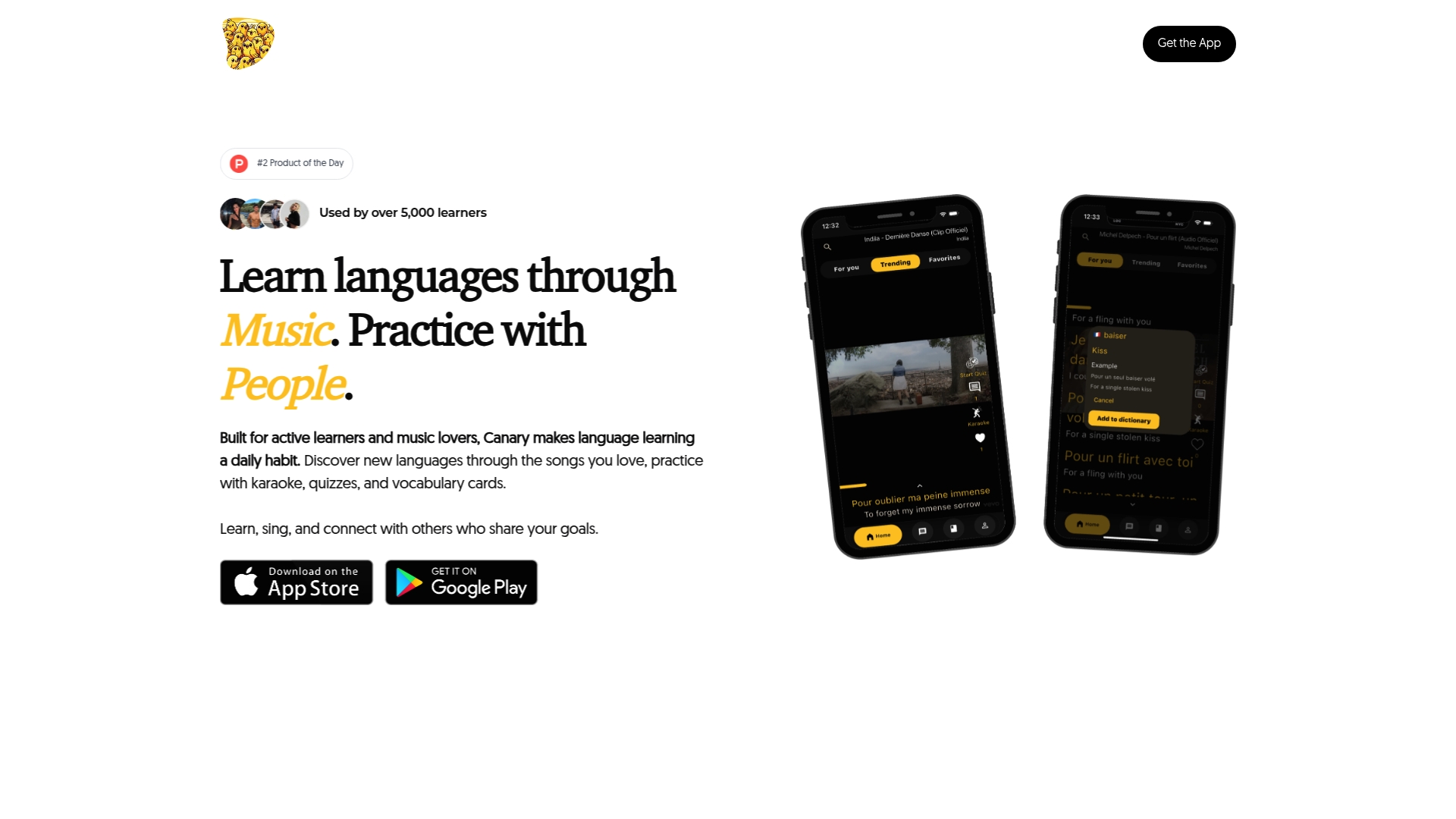
Singwithcanary is a language learning platform that uses music and social interaction to make pronunciation practice a daily habit rather than a chore. Its song-based learning environment naturally trains suprasegmental features like rhythm, stress, and intonation through karaoke-style exercises and lyric-focused activities. Learners practice connected speech in context, not just isolated drills. The platform’s interactive features, including vocabulary cards and quizzes, reinforce what you hear in songs with structured repetition. If you want a method that builds pronunciation skills while keeping you genuinely engaged, learn languages with music at Singwithcanary and see how daily music practice changes the way you speak.
FAQ
What is pronunciation training in simple terms?
Pronunciation training is structured practice that teaches you to produce speech sounds, stress, and intonation correctly so that listeners understand you clearly. It combines ear training, articulation drills, and feedback loops.
How long does it take to improve pronunciation?
Consistent daily practice of 15–30 minutes produces noticeable improvement within weeks. The timeline depends on how different your target language sounds are from your native language’s sound system.
Is shadowing the best pronunciation exercise?
Shadowing is one of the most effective single techniques because it trains rhythm, intonation, and connected speech simultaneously. It works best when combined with targeted sound drills and self-recording for complete coverage.
Do I need to eliminate my accent to speak clearly?
No. Modern pronunciation training prioritizes intelligibility, not accent elimination. A clear, consistent accent that listeners can follow easily is the practical goal for most learners.
How do I know which sounds to practice first?
Focus on sounds that do not exist in your native language, since those cause the most interference. Minimal pair drills and IPA charts help you identify and target those gaps efficiently.