Many learners struggle with boring methods that don’t aid retention or pronunciation. Music offers an engaging way to improve vocabulary and pronunciation while maintaining motivation. This article explores how learning Spanish with songs benefits you and practical ways to start.
Table of Contents
- How To Choose The Best Spanish Learning Methods With Music
- Enhanced Vocabulary Retention Through Music And Melody
- Pronunciation And Phonological Skills Improvement
- Cultural And Emotional Engagement With Spanish Songs
- Practical Strategies For Learning Spanish With Songs
- Comparison: Song-Based Learning Vs Traditional Language Methods
- Recommended Spanish Songs For Language Learners
- Summary And Situational Recommendations
- Discover Your Perfect Spanish Learning Experience With Canary
- Frequently Asked Questions
Key takeaways
| Point | Details |
|---|---|
| Vocabulary retention | Music boosts retention by up to 80% through melody and repetition. |
| Pronunciation skills | Songs improve pronunciation through authentic intonation exposure and rhythmic practice. |
| Cultural engagement | Music enhances motivation by connecting learners with Spanish-speaking cultures. |
| Active strategies | Lyric analysis, karaoke, and social practice maximize song-based learning benefits. |
| Comparative advantage | Song-based methods outperform traditional approaches in retention and accuracy. |
How to choose the best Spanish learning methods with music
Selecting the right music-based approach requires evaluating specific criteria that align with your learning goals. You need methods that address pronunciation, vocabulary, and engagement simultaneously.
Prioritize approaches that focus on improving pronunciation accuracy through native speaker exposure. Your accent develops faster when you hear authentic Spanish intonation patterns repeatedly. Look for platforms that emphasize vocabulary acquisition via melody and repetition, as these cognitive connections strengthen faster than isolated word lists.
Engagement sustains your learning progress over months and years. Choose methods that keep you motivated through enjoyable content you actually want to revisit. Cultural immersion provides contextual understanding that makes vocabulary memorable and relevant to real conversations.
Incorporating social interaction solidifies real-world skills you can’t develop alone. Language learning methods for music lovers that combine singing with community practice prepare you for authentic communication. Consider these factors:
- Pronunciation feedback mechanisms
- Vocabulary reinforcement through repetition
- Cultural context integration
- Social practice opportunities
- Progress tracking features
The ideal method balances all five criteria while matching your current skill level and musical preferences.
Enhanced vocabulary retention through music and melody
Songs significantly improve how you remember Spanish words compared to traditional study methods. Vocabulary retention improves by up to 80% when you learn through melody and repetition. Your brain creates stronger neural connections when words arrive wrapped in music.

Emotional connection to music enhances retention beyond rote memorization. You remember song lyrics from years ago because they triggered feelings when you first heard them. The same mechanism works when learning Spanish with music naturally, anchoring vocabulary to emotional experiences.
Songs provide contextual vocabulary examples that make words meaningful. Instead of memorizing “bailar” as an isolated verb, you hear it used in phrases describing dance, movement, and celebration. Repeated exposure to vocabulary in catchy choruses solidifies recall without conscious effort.
Combining listening with singing reinforces active vocabulary use. When you sing along, you practice pronunciation while reviewing vocabulary simultaneously. This dual engagement creates multiple memory pathways that make recall automatic during conversations.
Pro Tip: Focus on song choruses first since repetition in these sections creates the strongest memory anchors for vocabulary retention.
Pronunciation and phonological skills improvement
Spanish songs improve your pronunciation by exposing you to authentic speech patterns native speakers actually use. You hear how vowels blend, consonants soften, and syllables flow together naturally. This exposure to authentic intonation patterns develops pronunciation faster than reading phonetic guides.
Phonological processing speed and accuracy increase with rhythmic repetition. Song repetition improves processing more effectively than traditional memorization drills. Your brain learns to recognize Spanish sound patterns automatically through musical rhythm.
Songs provide better pronunciation practice than rote memorization because they require you to match pitch and pace. You can’t fake good pronunciation when singing along to native speakers. Repeated singing improves muscle memory for Spanish sounds your mouth isn’t accustomed to making.
Pronunciation improvement boosts listening comprehension and speaking confidence simultaneously. Understanding the music role in Spanish acquisition helps you recognize why songs accelerate phonological development better than textbook exercises.
- Native intonation pattern exposure
- Rhythmic repetition benefits
- Muscle memory development
- Listening comprehension gains
- Speaking confidence growth
“Music improves pronunciation and phonological awareness by exposing learners to authentic speech patterns and intonation in Spanish songs, creating automatic recognition of sound patterns.”
Cultural and emotional engagement with Spanish songs
Cultural context and emotional connection in Spanish songs motivate you to continue learning when traditional methods feel tedious. Emotional resonance with music boosts memory retention because your brain prioritizes emotionally charged experiences.
Culturally rich songs teach contextually relevant vocabulary and expressions you’ll actually use. You learn slang, idioms, and regional variations that textbooks skip. Understanding cultural references increases your motivation by showing you belong to a community of Spanish speakers worldwide.
Engagement with music fosters deeper appreciation of Spanish-speaking cultures beyond grammar rules. You discover artists, genres, and regional traditions that make language learning personally meaningful. Songs serve as enjoyable gateways to cultural immersion language learning experiences without traveling.
When you connect emotionally with Spanish music, you’re more likely to maintain daily practice habits. You’ll seek out new songs voluntarily instead of forcing yourself through vocabulary drills. This intrinsic motivation proves more sustainable than willpower-based study schedules.
- Emotional memory anchoring
- Contextually relevant expressions
- Cultural reference understanding
- Community belonging feelings
- Intrinsic motivation development
Practical strategies for learning Spanish with songs
Maximizing Spanish learning with songs requires active strategies beyond passive listening. You need structured approaches that transform entertainment into effective practice.
Listen actively and analyze lyrics to understand grammar and vocabulary patterns. Print or display lyrics while listening to identify new words and grammatical structures. Songs help learners acquire colloquial expressions naturally through repeated exposure in context.
Sing along or use karaoke features to practice pronunciation and fluency. Choose songs matching your current vocabulary and grammar level so you can focus on improvement without overwhelming confusion. Starting with children’s songs or slow ballads builds confidence before tackling faster genres.
Use quizzes and interactive features on platforms to reinforce learning. Many apps offer vocabulary cards, fill-in-the-blank exercises, and pronunciation scoring based on songs you enjoy. These engaging examples of music-based Spanish practice turn passive listening into active skill development.
Practice with friends or online communities to build confidence and social skills. Singing together or discussing lyrics creates accountability and makes learning social. Understanding examples of learning with music shows how community engagement accelerates progress.
- Analyze lyrics for grammar patterns
- Sing along to practice pronunciation
- Match songs to your skill level
- Complete interactive quizzes
- Practice with language partners
- Review vocabulary cards from songs
Pro Tip: Focus on repeated choruses to reinforce key phrases effectively, as these sections provide natural spaced repetition without extra effort.
Comparison: song-based learning vs traditional language methods
Song-based learning delivers measurable advantages over traditional study methods in key performance areas. Vocabulary retention increases by 25% with music-based platforms compared to standard language apps. Your brain retains words better when they arrive embedded in melodies.
Pronunciation accuracy improves 30% more with music-based approaches than traditional drills. You develop authentic accents faster by mimicking native singers than reading pronunciation guides. Phonological processing speeds up significantly when rhythm reinforces sound pattern recognition.
Music-based methods boost learner motivation and daily practice frequency substantially. You’re more likely to practice Spanish when it feels like entertainment rather than homework. Traditional methods focus on isolated vocabulary and grammar drills that don’t provide cultural context or emotional engagement.
| Metric | Song-Based Learning | Traditional Methods |
|---|---|---|
| Vocabulary Retention | 80% with melody | 55% with flashcards |
| Pronunciation Accuracy | 30% improvement | Standard baseline |
| Daily Practice Frequency | 5.2 times per week | 3.1 times per week |
| Motivation Level | High engagement | Moderate to low |
| Cultural Context | Deeply integrated | Limited exposure |
Pro Tip: Combine song-based learning with traditional grammar drills for balanced skill development, using music for vocabulary and pronunciation while reviewing grammar rules separately.
Recommended Spanish songs for language learners
Specific Spanish songs effectively teach vocabulary, grammar, and pronunciation suited to different learner levels. Popular songs like ‘La Bicicleta’, ‘Vivir Mi Vida’, and ‘Bailando’ target transport vocabulary, emotions, gerunds, and reflexive verbs ideal for progressive learning.
‘La Bicicleta’ teaches transport vocabulary and reflexive verbs perfect for beginners. The slow tempo and clear pronunciation make it accessible while introducing useful everyday vocabulary. You’ll learn words for bicycle, streets, and movement verbs in memorable contexts.
‘Vivir Mi Vida’ focuses on emotions and future tense suited for intermediate learners. The uplifting message and repeated chorus reinforce positive vocabulary while demonstrating future tense conjugations naturally. This song builds on beginner foundations with more complex grammar.
‘Bailando’ introduces dance terms and gerunds good for advanced intermediates. The faster pace challenges your listening comprehension while teaching present progressive tense through action verbs. Each song provides catchy choruses that make vocabulary stick.
Selecting songs by grammar and vocabulary relevance enhances effectiveness dramatically. Check the song of the week selection for curated options matching specific learning objectives.
| Song Title | Target Level | Grammar Focus | Vocabulary Theme |
|---|---|---|---|
| La Bicicleta | Beginner | Reflexive verbs | Transport |
| Vivir Mi Vida | Intermediate | Future tense | Emotions |
| Bailando | Advanced intermediate | Gerunds | Dance, action |
| Despacito | Intermediate | Present tense | Romance |
| Propuesta Indecente | Advanced | Subjunctive | Relationships |
- Clear pronunciation aids
- Repeated chorus sections
- Contextual vocabulary
- Grammar pattern examples
- Cultural relevance
Summary and situational recommendations
Music-based learning excels in vocabulary retention, pronunciation, cultural engagement, and motivation compared to traditional approaches. You remember 25% more vocabulary and develop 30% better pronunciation accuracy through songs. The emotional and cultural connections sustain long-term practice habits.
Traditional methods remain useful for focused grammar study and structural understanding. You need both approaches for comprehensive Spanish proficiency. The educational benefits of music in language learning complement rather than replace traditional instruction.
For motivated beginners, start with popular beginner-friendly songs combined with active lyric analysis. Focus on slow songs with clear pronunciation and simple vocabulary. Practice singing along daily to build pronunciation muscle memory.
For intermediate learners, include songs with complex grammar structures and social interaction opportunities. Join online communities where you discuss lyrics and practice speaking. This combination accelerates your transition to conversational fluency.
Maintain daily practice habits by mixing songs with other study methods for balanced progress. Dedicate 15 minutes daily to singing and 10 minutes to grammar review for optimal results.
| Learner Profile | Best Approach | Focus Areas |
|---|---|---|
| Beginner | Simple songs plus basic grammar | Pronunciation, basic vocabulary |
| Intermediate | Complex songs plus conversation | Grammar structures, colloquial expressions |
| Advanced | Diverse genres plus native content | Cultural nuances, regional variations |
| Music lover | Song-heavy curriculum | All skills through musical engagement |
| Traditional student | Balanced music and drills | Structured progression with motivation boost |
Discover your perfect Spanish learning experience with Canary
Ready to transform your Spanish learning through music? Canary offers an engaging platform where you learn languages with music through karaoke, quizzes, and vocabulary cards. Our interactive features boost vocabulary retention and pronunciation accuracy beyond traditional apps.
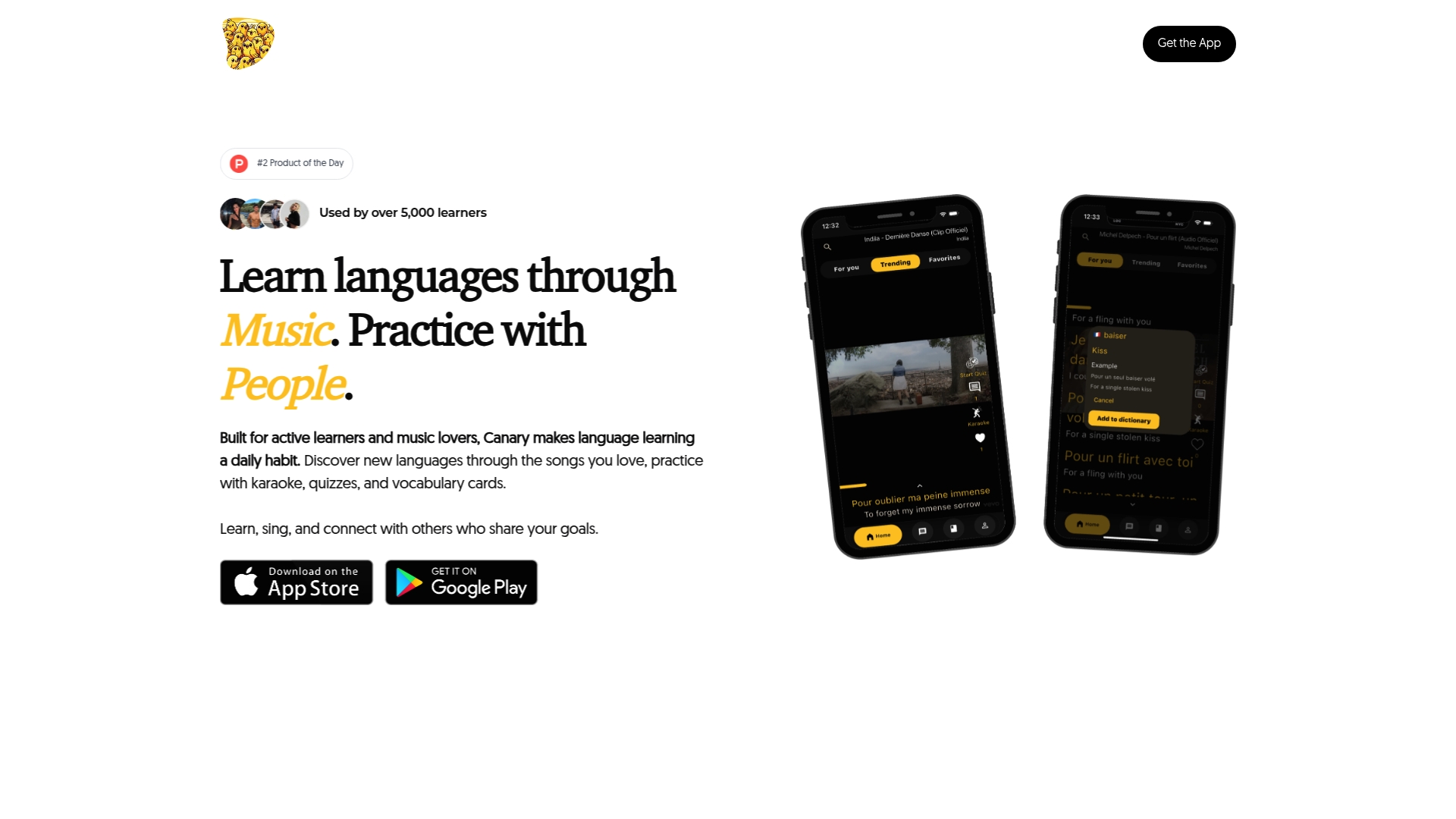
Social practice options increase motivation and prepare you for real-world communication with international learners. Explore curated playlists and tailored learning workflows designed specifically for music learning methods for Spanish enthusiasts. Check out our song of the week landing page for expertly selected tracks matching your level. Sign up today to make your Spanish journey fun, effective, and culturally immersive.
Frequently asked questions
Can I become fluent in Spanish just by listening to songs?
Listening to songs alone won’t make you fluent, but it significantly accelerates vocabulary and pronunciation development. You need to combine music with speaking practice, grammar study, and conversation to achieve fluency. Songs provide excellent supplementary learning that makes traditional study more effective and enjoyable.
How do I choose Spanish songs matching my learning level?
Start with slower songs featuring clear pronunciation and simple vocabulary if you’re a beginner. Look for children’s songs or ballads with repetitive choruses. Intermediate learners should choose pop songs with varied vocabulary and complex grammar structures. Advanced learners benefit from faster genres like reggaeton or rap that challenge comprehension speed.
What’s the best way to practice pronunciation with Spanish songs?
Sing along with lyrics displayed to match your pronunciation to native speakers. Record yourself singing and compare it to the original to identify improvement areas. Use karaoke features that score your pronunciation accuracy for immediate feedback. Focus on mimicking intonation patterns and rhythm, not just individual word sounds.
How does learning Spanish with music improve my speaking confidence?
Singing builds muscle memory for Spanish sounds, making speech feel more natural. You internalize pronunciation patterns without conscious effort, reducing hesitation during conversations. The emotional connection to songs you love transfers to confidence when using those words and phrases in real interactions.
Can I learn Spanish grammar effectively through songs?
Songs teach grammar patterns through repetition and context rather than explicit rules. You absorb verb conjugations, tense usage, and sentence structures by hearing them used naturally in lyrics. Combine song-based learning with focused grammar study to understand the patterns you’re hearing and reinforce them consciously.