TL;DR:
- Music-based activities like karaoke duets and song discussions enhance language fluency and cultural understanding.
- Engaging with native speakers through music fosters real-time feedback, pronunciation improvement, and social bonds.
- Combining various music-focused methods creates a fun, sustainable routine that accelerates language acquisition.
Practicing a new language alone can start to feel like a treadmill: you’re moving, but nothing around you changes. Flashcard apps and grammar drills build a foundation, but they rarely give you the rush of actually connecting with someone across the world. Music changes that equation entirely. When you learn through songs, you stop studying a language and start living it. The methods in this article are built for people who want real conversations, real feedback, and a genuinely good time while doing it. Each one blends music, community, and speaking practice into something that sticks.
Table of Contents
- Select criteria for effective social language practice
- Karaoke duet apps: Social singing, real feedback, and fun
- Song discussion circles: Deepen cultural and linguistic exchange
- Other engaging social music-based language practice methods
- Why song-based social practice outpaces traditional methods
- Turn language practice into your favorite social habit
- Frequently asked questions
Key Takeaways
| Point | Details |
|---|---|
| Prioritize social environments | Learning is more effective and fun when you connect with others, especially using shared music experiences. |
| Use music for real feedback | Apps that allow you to sing with native speakers provide authentic pronunciation and conversation practice. |
| Diverse activities boost retention | Rotating between karaoke, discussion circles, and music games prevents burnout and improves results. |
| Every proficiency level benefits | Even beginners gain confidence and essential skills from social, song-based practice. |
Select criteria for effective social language practice
Not every group activity qualifies as effective social language practice. Watching a foreign film alone or passively listening to a playlist might help your ear, but it doesn’t push you toward fluency the way a real exchange does. Before jumping into specific methods, it helps to know what separates genuinely social language activities from ones that just feel social.
Here’s what to look for in any method you choose:
- Native or advanced speaker interaction. Practicing only with other learners at your level creates a ceiling. You need exposure to real rhythm, slang, and natural pacing.
- Real-time or near-real-time feedback. Delayed correction loses context. When someone tells you right away that your vowel was off, you can adjust immediately.
- Consistent participation. One-off sessions rarely lead to breakthroughs. Look for methods that encourage weekly or daily engagement.
- Cultural exchange. Language doesn’t exist in a vacuum. Activities that bring in music, humor, and storytelling from the target culture accelerate understanding.
- Low pressure, high fun. Anxiety kills language acquisition. The more relaxed and enjoyable the format, the more your brain absorbs.
Music hits nearly every one of these points naturally. Real-time feedback from native speakers in musical contexts boosts both engagement and accuracy in language learning, which is why music-centric language methods keep showing up in conversations about what actually works.
Pro Tip: Keep a simple weekly log noting which format made you feel most confident speaking. After a month, you’ll see a clear pattern showing which methods are worth doubling down on.
The best social language activities feel effortless to return to. If you’re dreading a session, it’s a signal to switch formats, not to push through.
Karaoke duet apps: Social singing, real feedback, and fun
Karaoke apps built around duets are genuinely one of the most underrated tools for language learners. They combine everything the criteria above ask for: native speaker access, real interaction, consistent repetition of target sounds, and an atmosphere that makes you want to come back tomorrow.
Here’s how to make the most of a karaoke duet app for language practice:
- Pick a song in your target language that sits just above your comfort zone. If you can understand 70% of the lyrics without help, it’s a great fit.
- Search for a native speaker partner using the app’s matching or discovery features. Look for users from countries where your target language is spoken natively.
- Record or sing live together. Focus on matching the native speaker’s pronunciation, not just hitting the melody.
- Listen back critically. Replay the duet and notice where your vowels, consonants, or stress patterns diverged.
- Use in-app messaging to ask your partner about tricky lines or unusual idioms in the lyrics.
Karaoke apps like Smule allow duets with global users including natives, providing song-based practice for pronunciation and fluency via collaborative singing. That global reach is the key advantage here. You’re not practicing with a recorded voice. You’re singing with a real person who speaks the language every day.
“Singing a song with someone is one of the fastest ways to feel the rhythm of a language. You’re not translating, you’re feeling it.”
For language learners, karaoke for language learning works because songs force you to reproduce exact sounds at a specific speed, which is something grammar exercises never do. Joining online singing groups around karaoke adds another layer of community that keeps you accountable.
Pro Tip: After each duet session, screenshot the lyrics and underline three phrases you stumbled over. Review those phrases before your next session. You’ll be amazed how quickly they become natural.
Song discussion circles: Deepen cultural and linguistic exchange
A song discussion circle is exactly what it sounds like: a small group listens to the same song, breaks down its meaning, and then talks about it together. The twist is that everything happens in the target language. This method works beautifully because music gives you an immediate shared reference point, removing the awkward silence that kills so many conversation practice sessions.
Here’s how a well-run discussion circle typically flows:
- Listen together to a chosen song, ideally from an artist native to the target culture.
- Analyze the lyrics line by line. Look for metaphors, slang, cultural references, and grammar structures you wouldn’t find in a textbook.
- Discuss openly. What does the song mean to a native listener? Does it reference a historical event, a regional tradition, or a generational experience?
- Rotate hosts weekly so everyone gets to champion a song from their region or cultural background.
“The moment someone explains why a song lyric hits differently in their culture, you understand the language at a level no textbook can reach.”
Combining duets with exchanges that discuss lyrics and songs boosts engagement, cultural exchange, and pronunciation through real-time feedback. The conversation that follows a song is where the real language magic happens.
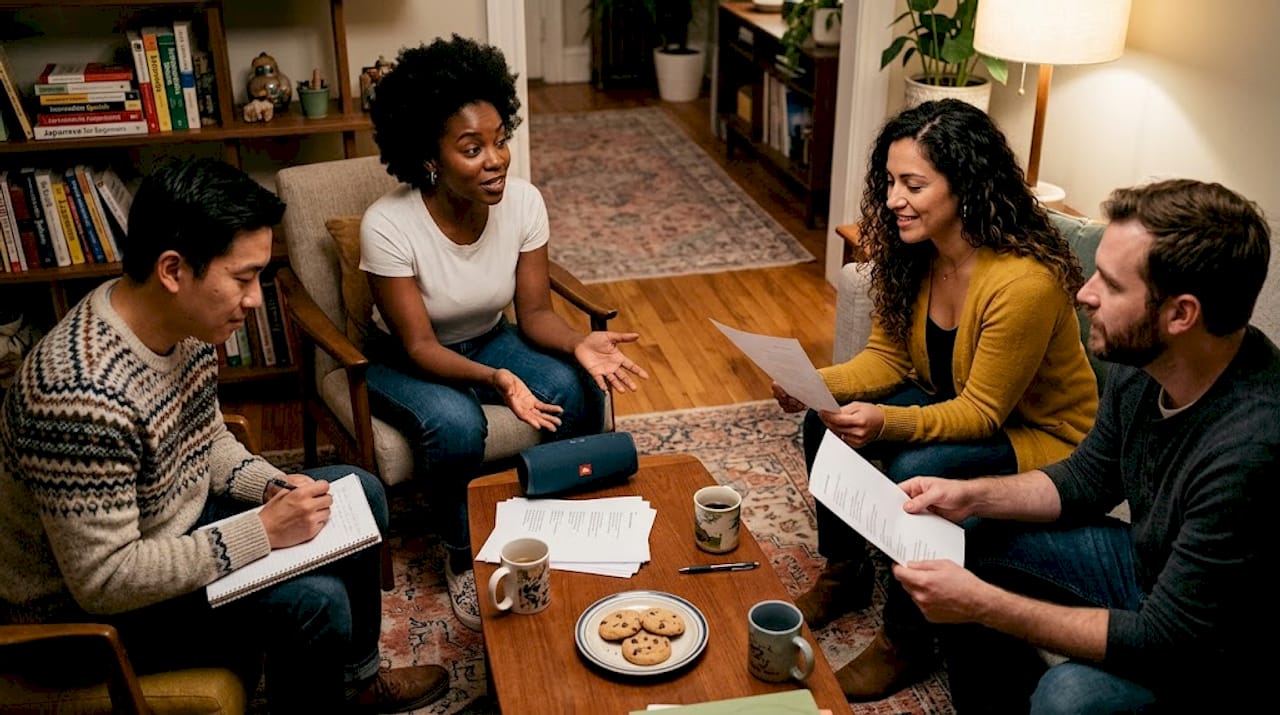
Learning with lyrics accelerates vocabulary acquisition because words land in emotional and musical context, making them far easier to recall later. Joining or starting weekly song clubs gives you a built-in schedule so the habit forms naturally.
Research on language learning with music consistently points to improved retention and motivation when learners engage with authentic songs rather than scripted dialogue. The cultural immersion effect alone makes discussion circles worth adding to your weekly routine.
Other engaging social music-based language practice methods
Duet apps and discussion circles are strong anchors, but a full social practice routine has more variety. Here are some creative formats worth exploring.
Lyric trivia games turn vocabulary review into competition. One player reads a line with a key word blanked out, and others race to fill it in. It’s fast, funny, and surprisingly effective at locking in new vocabulary.
Playlist exchanges involve swapping curated playlists with a language partner. Each person adds five songs and explains why they chose them, all in the target language. You end up with new music and new conversation topics.
Music-based icebreaker events work well for groups. Each participant shares one song that represents their home culture, then the group listens and reacts together. Social music-based activities increase learner retention and build strong community support networks, and icebreaker formats are one of the easiest ways to lower the social barrier for shy learners.
| Method | Engagement level | Pronunciation focus | Accessibility | Best group size |
|---|---|---|---|---|
| Karaoke duet apps | Very high | High | Easy | 2 |
| Song discussion circles | High | Medium | Moderate | 3 to 8 |
| Lyric trivia games | High | Low | Easy | 4 to 12 |
| Playlist exchanges | Medium | Low | Very easy | 2 to 4 |
| Music icebreaker events | Very high | Medium | Moderate | 6 to 20 |
Blending these formats keeps your practice fresh. Use duet apps for pronunciation, discussion circles for depth, and trivia or playlist exchanges when you want lower-stakes fun. Check out examples of music-based learning to see how others are mixing these methods effectively. A song challenge community can tie everything together with a shared weekly theme.
Pro Tip: Build a crowd-sourced playlist with your language group where everyone contributes one song from a different dialect region. You’ll naturally train your ear for accent variation without any extra effort.
Why song-based social practice outpaces traditional methods
Traditional language drills operate on a flawed assumption: that repetition alone drives fluency. It doesn’t. What drives fluency is the desire to communicate with someone you actually care about talking to. Classroom exercises rarely create that desire. Music does.
When you sing with someone, your brain processes language differently. You’re tracking rhythm, emotion, melody, and meaning simultaneously. That multi-layered processing is why songs get stuck in your head while grammar rules don’t. The pronunciation practice and fluency development that comes from music is significantly more enjoyable and sustainable than drill-based approaches, and sustainability is everything in language learning.
Here’s the insight most language programs overlook: even simple, repeated songs build social bonds. When a group sings the same chorus every week, they create shared memory and a sense of belonging. That belonging becomes a reason to show up next week, and the week after. Traditional methods offer no equivalent incentive. Building singing-based confidence isn’t just a nice bonus. It’s the mechanism that makes everything else work.
The most successful language learners we’ve seen don’t chase perfect grammar. They chase real connection. Music is the fastest path to both.
Turn language practice into your favorite social habit
Everything covered in this article points to one thing: language learning thrives when it’s social, musical, and genuinely enjoyable. If you’ve been looking for a place where all three come together, Canary was built exactly for that.
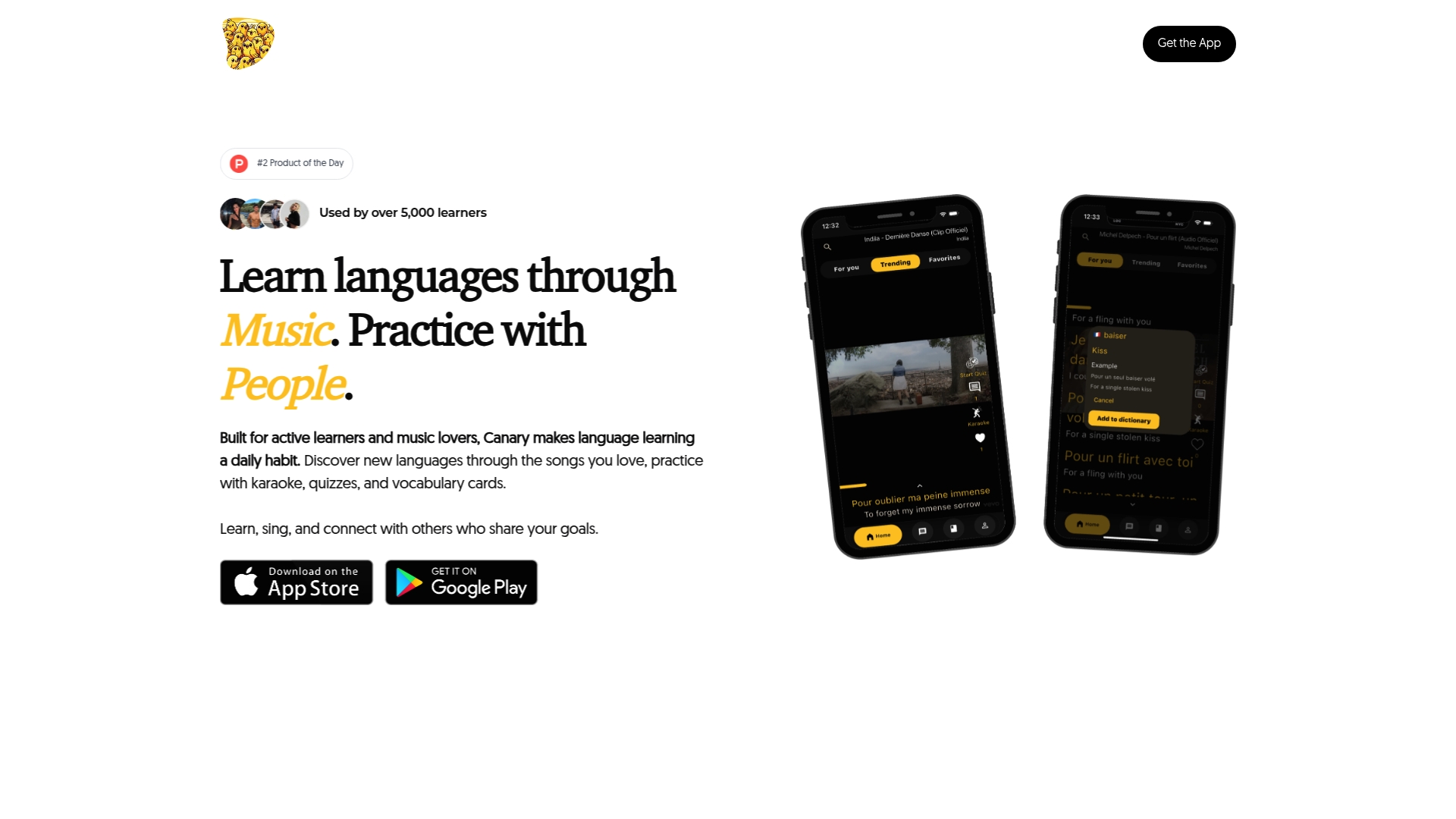
At Sing with Canary, you can learn languages with music through karaoke-style features, vocabulary cards, and quizzes all built around real song lyrics. Connect with an interactive music-based community of learners who are just as passionate about music as they are about improving their fluency. And if you want a ready-made social habit to start with, join song of the week for a fresh musical challenge every seven days with a global community cheering you on.
Frequently asked questions
How can karaoke apps improve my language pronunciation?
Karaoke apps like Smule match you with native speakers for live song-based duets, which trains your ear and mouth to reproduce authentic sounds in a low-pressure, enjoyable format.
What makes music-driven language activities more social than textbook study?
Music naturally invites reaction, conversation, and shared emotion, while textbooks are designed for solo consumption. Combining duets with lyric discussions creates real-time cultural exchange that textbook exercises simply can’t replicate.
Can I benefit from song discussions if I’m a beginner in the language?
Absolutely. Song discussion circles are structured around context and repetition, which means even beginners build vocabulary and listening confidence by participating, not just by observing.
What are some creative group activities for social language practice with music?
Lyric trivia, playlist swaps, and themed sing-alongs are all excellent options. Social music-based activities build both community bonds and measurable language retention, making them worth adding to any weekly practice routine.