TL;DR:
- Karaoke enhances vocabulary, pronunciation, and fluency through active singing in context.
- It builds confidence by reframing language practice as a low-stakes, emotional performance.
- Structured karaoke practice with feedback and variety maximizes learning and avoids reinforcing mistakes.
Most people picture flashcards and grammar drills when they think about learning a new language. That image is both accurate and deeply uninspiring. But there’s a growing body of research showing that karaoke, yes, the same activity you might associate with Friday nights and off-key singing, is a genuinely powerful tool for language acquisition. Learners who sing along with lyrics see measurable gains in vocabulary, pronunciation, and speaking confidence. This guide breaks down exactly how karaoke works as a learning method, what the data says, and how you can build it into a routine that actually gets results.
Table of Contents
- How karaoke accelerates vocabulary acquisition
- Boosting pronunciation and speaking accuracy through karaoke
- Increasing language learning motivation and confidence
- Expert tips: Maximizing the learning value (and avoiding pitfalls)
- Our take: What most language learners miss about karaoke
- Start your karaoke-powered language journey
- Frequently asked questions
Key Takeaways
| Point | Details |
|---|---|
| Vocabulary grows faster | Karaoke provides contextual, repeated exposure to new words, cementing them in memory. |
| Pronunciation improves measurably | Actively singing helps you mimic native sounds and refine your accent. |
| Motivation and confidence soar | The fun, musical nature of karaoke turns practice into an enjoyable, confidence-boosting routine. |
| Combine methods for best results | Pair karaoke with expert feedback and conversation to maximize your learning. |
How karaoke accelerates vocabulary acquisition
Vocabulary learning through traditional methods often feels disconnected from real language use. You memorize a word in isolation, drill it a few times, and then forget it by next week. Karaoke flips this entirely by placing new words inside living, breathing sentences that carry rhythm, emotion, and meaning.
When you sing a lyric, you’re not just reading a word. You’re hearing it pronounced, feeling its stress pattern, and absorbing the emotional context around it. This is what researchers call contextual exposure, and it’s one of the most effective ways to make vocabulary stick. Song-based learning methods leverage exactly this principle: words learned in context are retained far longer than isolated vocabulary lists.
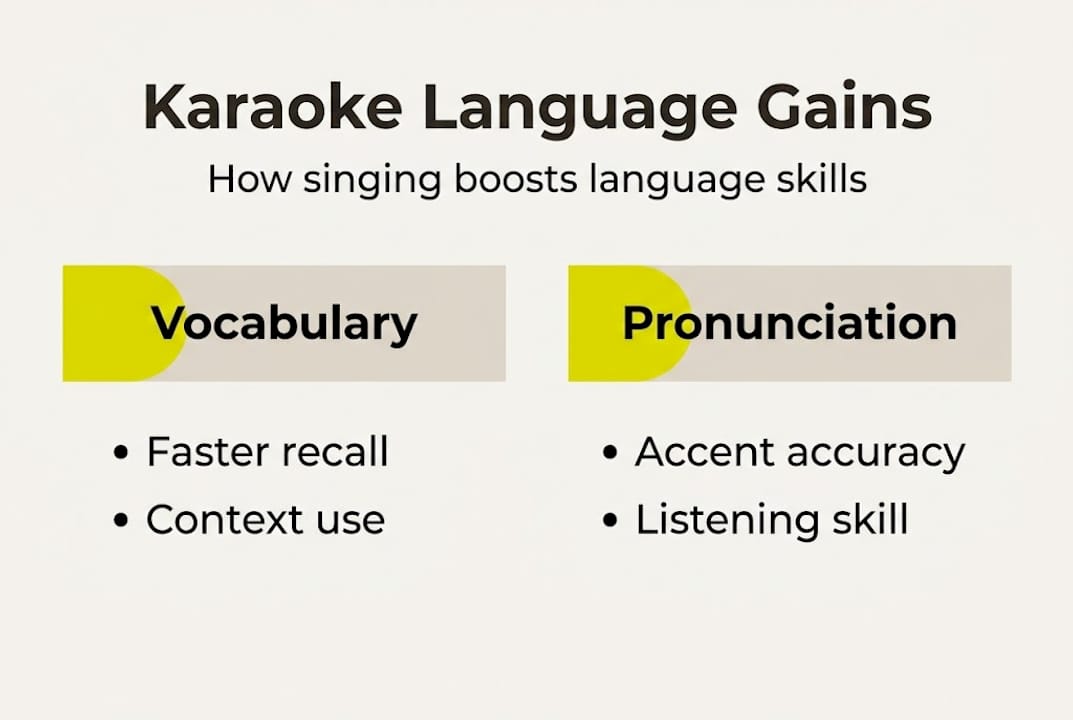
Repetition is the other engine driving karaoke’s vocabulary power. Songs loop. You play a track five, ten, twenty times because you enjoy it, not because you’re forcing yourself to study. Each replay deepens the neural pathway connecting that word to its meaning, sound, and context. That’s passive reinforcement working in your favor without any extra effort.
But the real magic happens when you move from listening to singing. Active engagement with lyrics, actually vocalizing the words, produces significantly greater learning gains than passive listening alone. Music and language success stories consistently show that learners who sing outperform those who only listen.
The numbers back this up. Research on vocabulary gains through song found that learners using karaoke-style methods scored an average of +33 points on vocabulary assessments, compared to just +15 points for control groups using traditional methods. That’s more than double the gain.
| Learning method | Avg. vocabulary gain |
|---|---|
| Karaoke/song group | +33 points |
| Traditional control group | +15 points |
Here’s what makes the difference in practice:
- Choose songs at your current level. A track with too many unknown words becomes overwhelming rather than enriching.
- Read the lyrics first, then sing along. This two-step approach builds comprehension before production.
- Focus on one new phrase per song rather than trying to absorb everything at once.
- Repeat the same song across multiple sessions before moving on.
Pro Tip: Search for songs in your target language that use everyday conversational phrases. Pop songs and folk music tend to use simpler, more practical vocabulary than classical or literary genres.
Boosting pronunciation and speaking accuracy through karaoke
Vocabulary is critical, but speaking and pronunciation are where karaoke really shines next. You can know a thousand words and still struggle to be understood if your pronunciation is off. Karaoke gives you a built-in pronunciation coach: the original recording.
Every time you sing along, you’re comparing your output to a native speaker’s in real time. You notice when your vowels don’t match, when your rhythm is off, or when a consonant cluster trips you up. This immediate self-monitoring is something that traditional reading and writing exercises simply can’t replicate. Karaoke fluency techniques work because they force you to produce language at the same speed and rhythm as a native speaker, which trains your mouth and ear simultaneously.
Structured lyric reading before singing also plays a role. When you read lyrics slowly, you map spelling to sound. Then when you sing, you reinforce that mapping under the natural pressure of keeping up with the melody. This combination of reading, listening, and producing is more powerful than any single approach on its own.
“Empirical results show speaking performance improvements at p<0.05, with accuracy and fluency both significantly enhanced in the karaoke group compared to traditional learners.” Karaoke-Based Strategies for Speaking Skills
The data on music’s role in language learning confirms that structured singing practice improves not just pronunciation but overall fluency, the ability to speak smoothly and naturally without long pauses.
| Skill area | Karaoke learners | Traditional learners |
|---|---|---|
| Vocabulary gain | +33 points | +15 points |
| Speaking accuracy | Significantly improved (p<0.05) | Baseline |
| Fluency | Measurably enhanced | Minimal change |
| Pronunciation | Improved via real-time comparison | Limited feedback |
Here’s a step-by-step approach to deliberate pronunciation practice with karaoke:
- Listen to the song once without reading lyrics to train your ear.
- Read the lyrics aloud slowly, focusing on sounds you find difficult.
- Sing along with the track, paying attention to rhythm and stress.
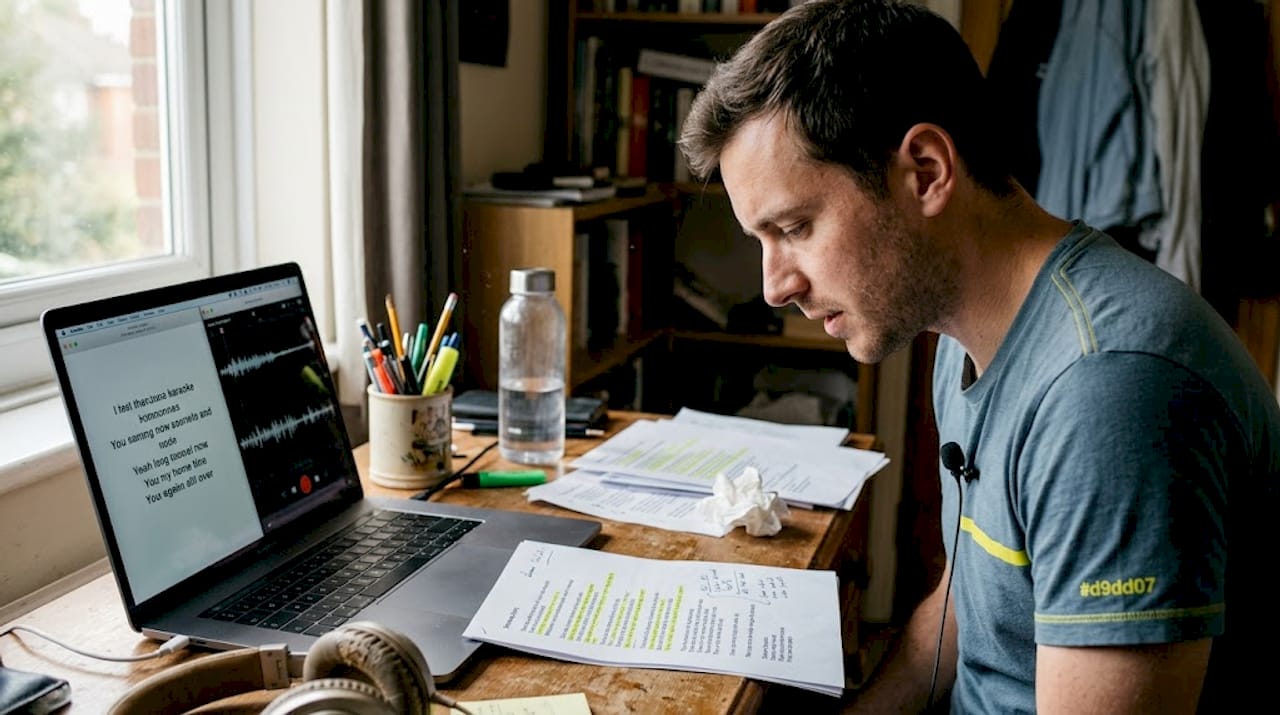
- Record yourself singing a verse and compare it to the original.
- Isolate problem phrases and repeat them until they feel natural.
The music-driven learning benefits go beyond accent alone. Regular karaoke practice trains your ear to distinguish subtle phonetic differences, which directly improves your listening comprehension in real conversations.
Increasing language learning motivation and confidence
Having developed new words and accurate pronunciation, let’s see how karaoke raises your engagement and self-confidence. This is where the emotional dimension of music-based learning becomes impossible to ignore.
For many learners, speaking a new language feels terrifying. The fear of making mistakes, sounding foolish, or being misunderstood creates a wall between knowing a language and actually using it. Karaoke dismantles that wall by reframing speaking as performance rather than evaluation. Nobody judges a karaoke singer the way they judge a student in a grammar test.
Here’s why karaoke builds confidence so effectively:
- Low stakes, high repetition. You can sing the same song badly ten times in private before ever performing it in front of anyone.
- Immediate feedback. You hear yourself and know instantly whether you matched the original or not.
- Emotional connection. Music triggers positive emotions, and positive emotions make you more willing to take risks and try again.
- Social reinforcement. Group karaoke sessions create shared experience and mutual encouragement, which music activities for confidence show is a powerful motivator for continued practice.
The real-world music learning evidence supports this. Speaking performance improvements in karaoke groups were statistically significant at p<0.05, meaning the confidence gains translated directly into measurable speaking ability, not just self-reported feelings of improvement.
Pro Tip: Join a group karaoke session, even online, at least once a week. The social pressure of singing with others accelerates your willingness to speak in real conversations faster than solo practice alone.
Expert tips: Maximizing the learning value (and avoiding pitfalls)
While karaoke is powerful, optimal results come from using it wisely. Here’s how to ensure your learning sticks and boredom never slows you down.
Karaoke is not a magic solution. Used carelessly, it can actually reinforce mistakes rather than correct them. The biggest risk is what linguists call error fossilization: when you repeatedly sing a mispronounced word, your brain locks in that incorrect version as the default. Without someone pointing out the error, you can practice the wrong thing confidently for months.
“Karaoke risks fossilizing errors without feedback, may cause boredom if repetitive, and is less effective for spontaneous communication. It works best as a supplement to a broader learning strategy.” Joyner, 2025
Here are five expert recommendations to maximize your gains and sidestep the common traps:
- Get feedback regularly. Work with a teacher, tutor, or language partner who can flag pronunciation errors before they become habits. Music lover language tips consistently emphasize feedback as the missing ingredient in self-study.
- Rotate your song selection. Singing the same five songs for six months builds comfort but limits exposure. Introduce new vocabulary and new phonetic challenges regularly.
- Match songs to your level. A beginner singing advanced rap lyrics will absorb very little. Choose tracks where you understand at least 70% of the words already.
- Supplement with spontaneous conversation. Karaoke trains scripted language. Real communication requires improvisation. Balance your practice by also having unscripted conversations in your target language.
- Prioritize quality over quantity. Singing one song with full attention to meaning, pronunciation, and rhythm beats singing ten songs mindlessly. Active engagement is what drives the results.
The research from Joyner, 2025 makes it clear: karaoke is most effective as a structured supplement, not a standalone curriculum.
Our take: What most language learners miss about karaoke
Here’s something most language learning content won’t tell you: passive music exposure, streaming foreign songs in the background while you cook or commute, does almost nothing for your actual language skills. It feels productive. It isn’t. Real gains come from active, intentional engagement with the language in the music.
Karaoke forces that engagement. You can’t sing along without processing the words. You can’t match the rhythm without internalizing the stress patterns. That’s the difference between entertainment and practice.
What we’ve seen consistently is that learners who treat karaoke as a structured activity, with song selection, lyric study, recording, and feedback, achieve breakthroughs that years of passive listening never produced. The biggest missed opportunity is the social dimension. Singing with other learners creates an environment of shared vulnerability and mutual support that no app or textbook can replicate. More song-based learning advantages become visible when you combine music with community. That combination is where real fluency starts to form.
Start your karaoke-powered language journey
Ready to make your language practice more engaging? The research is clear, the method is proven, and the only thing left is to actually start singing.
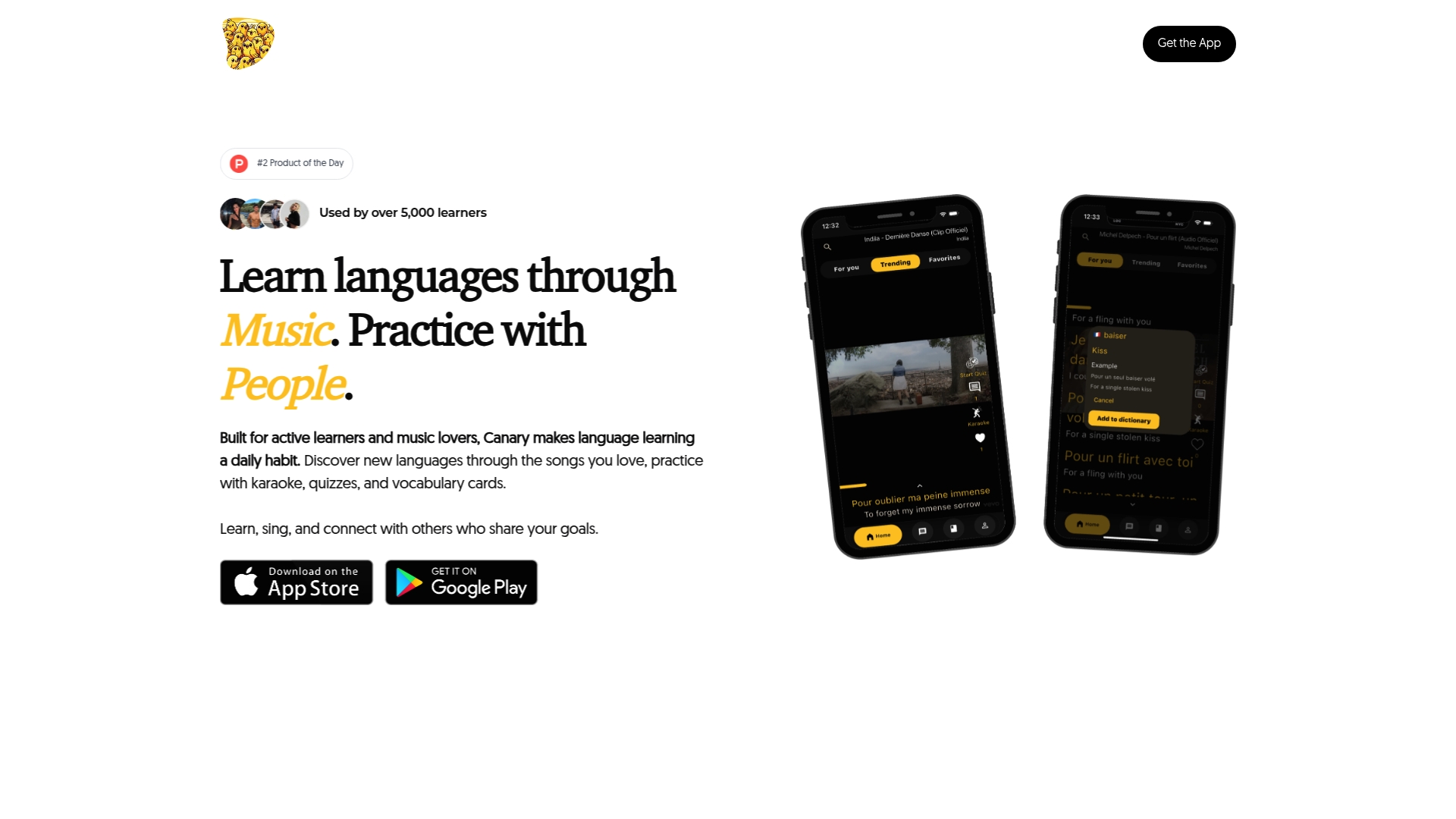
Canary is built exactly for this. As a platform that learns languages with music and connects you with learners around the world, it turns karaoke into a structured, social, and genuinely effective learning experience. You get interactive karaoke practice with real lyrics, vocabulary cards, and quizzes built in. If you’re still wondering how the method works, the full breakdown of karaoke learning explained will answer every question. Your next language breakthrough might just start with a song.
Frequently asked questions
Does karaoke really improve language fluency?
Yes. Studies confirm karaoke boosts fluency, accuracy, and vocabulary when used actively alongside other practice methods, with speaking performance improvements reaching statistical significance.
Should karaoke be my only language learning method?
No. Experts recommend combining karaoke with teacher feedback and spontaneous conversation, since karaoke alone risks reinforcing errors and limiting real-world communication skills.
How do I choose the right karaoke songs for learning?
Pick songs at your language level that use everyday vocabulary, and rotate them regularly. Matching songs to your level prevents overwhelm and keeps the challenge productive.
Is singing necessary, or does listening work too?
Singing actively with lyrics greatly outperforms passive listening for vocabulary and pronunciation gains, because it forces real-time language production rather than background absorption.